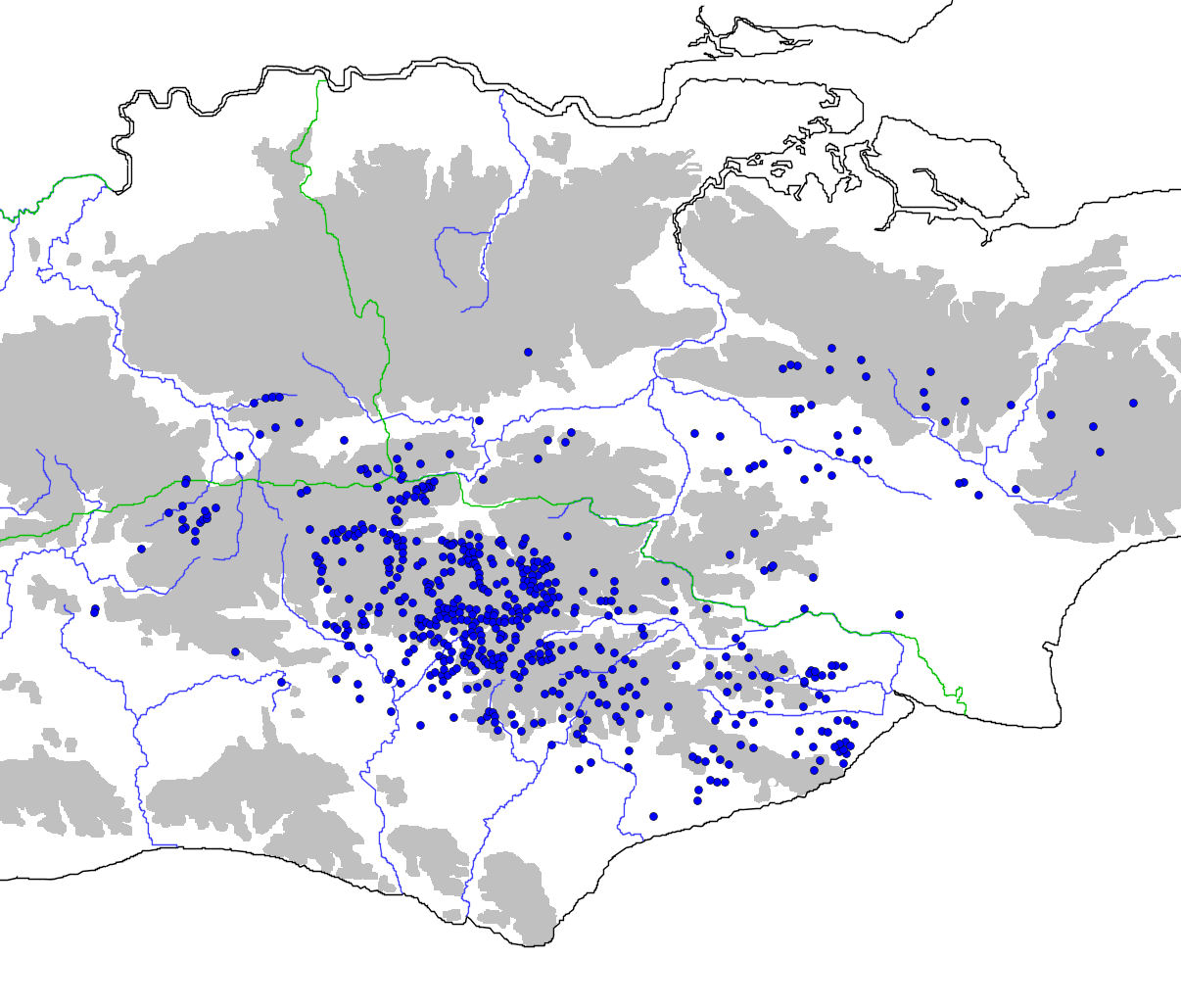
The Weald of Sussex, Kent and Surrey has long been associated with iron making. From the pre Roman Iron Age to the early 19th century, the iron ore in the Wealden clays, the abundant woodland, and latterly the many small ghylls, have provided the raw materials and power to sustain an industry which was, for two periods in our history – during the Roman occupation and in the time of the Tudors – paramount of its type in the land. There are few parishes in the Weald which do not have some association with iron, and it is said that there is scarcely a farm road in the region on which iron slag has not been used as a metalling.
The earliest evidence of iron making in the Crawley Down area has been found near the foot of Hophurst Hill, beside the Felbridge Water. In 1980, members of the Wealden Iron Research Group discovered a dense concentration of iron slag, and debris from the remains of an early furnace. During the next two years excavation revealed a smelting hearth and a smithing hearth. The finding of two pieces of medieval pottery initially led to the belief that the site was of that period. However, when the lining of the smelting hearth was subjected to archæo-magnetic dating a working life going back to the 1st century AD was discovered. Archæo-magnetic dating uses the magnetic orientation of iron oxide particles in burnt clay, which become fixed along the alignment of the earth’s magnetic field at the time when they were heated, to determine when that heating took place.
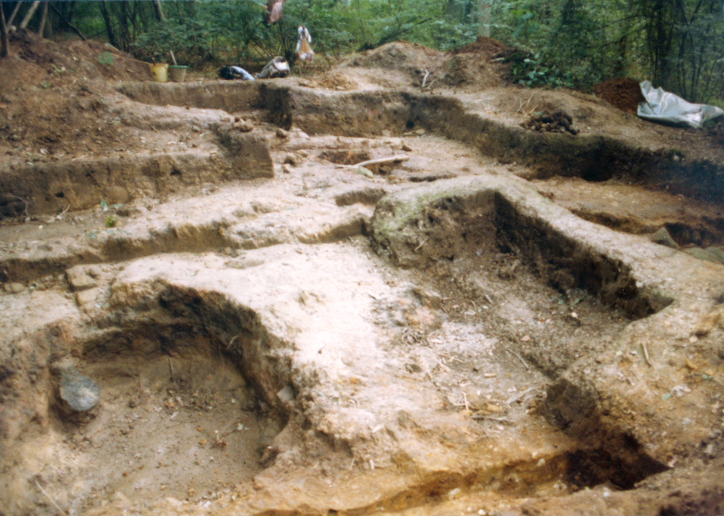
This little site, which has been given the name Smythford after the old name for the land on which it was found, is known as a bloomery because its principal product was a lump or ‘bloom’ of iron. The smelting hearth consisted of a depression about 3 feet long and 2½ feet wide, at one end of which was a clay chimney. Into this, charcoal and iron ore were loaded and the charcoal burned at a temperature of about 1200°C, with a forced draught from hand-powered bellows. This melted the ore and allowed the iron to coalesce at the bottom in a disparate mass. It is not entirely clear whether the slag or waste material from the process, was allowed to run out of this particular furnace. It was from some, but the slag found during excavation did not have the appearance of having run along the ground. After several hours, by which time a sufficient quantity of iron had accumulated the bloom was removed and reheated on an open bed of charcoal, the hearth found adjacent to the smelting hearth. Here the bloom was consolidated and the pieces of slag adhering to it melted off. The iron could then be shaped by a smith.
The site dated from the late Iron Age or early in the Roman occupation, and was probably worked by native Britons for a season or two, until the source of iron, which probably lay on the north bank of the stream, was exhausted or too difficult to dig. It has been suggested that the Roman road which passes a few hundred yards to the east, was surfaced with the slag from such works. However, the likely date of the building of the road, which is late in the 2nd or early in the 3rd Century, would have made it unlikely that the slag from the Smythford site was used, as it probably would, even then, have been buried under a hundred years of leaf litter.
Another small bloomery site was discovered a little to the east, in a field opposite a house called ‘Ascotts’, off the Crawley Down Road in Felbridge. An elderly local resident mentioned to the author that there used to be a cottage near where the site was found, and that the tenants had thought that a meteorite had landed there as they kept finding pieces of metallic material in the ground. On investigation it proved that these were in fact lumps of early iron slag! Further to the east, in the field adjacent to The Birches, on the south side of the Felbridge Water, evidence of a further site has been found, although ploughing over many centuries has dispersed the slag.
There are hundreds of bloomery sites in the Weald, dating from the Roman and the mediæval periods, and they show that, from as far back as the 3rd Century BC iron was being smelted in the region, and that during the Roman occupation such exploitation was a major industry. The early date, and scale, of the Smythford site suggests that it may have been the work of local people, rather than of an organised group exploiting iron over a wide area.
There is no doubt that a connection exists between the iron industry and the Roman road, from London to Brighton, that crosses Rushetts Wood and Hophurst Farm, for ploughing has brought to the surface pieces of iron slag and sandstone, in a broad strip about 12 metres wide in fields to the south of Hophurst farmhouse. Donald Margary, who first identified the route of the road in the 1930s, noted the same mixture of materials, both across the farm and to the north, beyond the Surrey border. The slag found at the Ascotts site may be from the surface of the road.
Some fifteen hundred years separate the little iron working site at Smythford and the blast furnace that was built in what is now called Furnace Wood. Again the appearance of iron in the district coincided with a major expansion of the industry in the Weald, but on this latter occasion the scale was altogether different. The blast furnace began to supersede the bloomery following the establishment of what was probably the first, at Queenstock, near Buxted, in 1490. The process had been introduced from northern France, and although the spread of new technology was slow initially, by the 1550s furnaces and forges were being built throughout the Weald. Essentially a bloomery writ large, the blast furnace differed in a number of important ways. Firstly, it was considerably larger, being about 7 metres (23 feet) high, compared with 1 to 1.5 metres (3 – 5 feet). Secondly, its bellows were powered by a water wheel; and thirdly, instead of producing a bloom, weighing several pounds, of fairly pure iron after several hours of smelting, a ton or more of cast iron could be tapped from a blast furnace every day over a period of seven or eight months. Furthermore, the cast iron then had to be refined before it could be beaten into shape and this necessitated a second process, which was undertaken at a finery forge, whereby the cast iron was remelted in a blast of air to remove the carbon absorbed from the charcoal in the furnace and then re-formed under a water-powered hammer into bars of wrought iron.
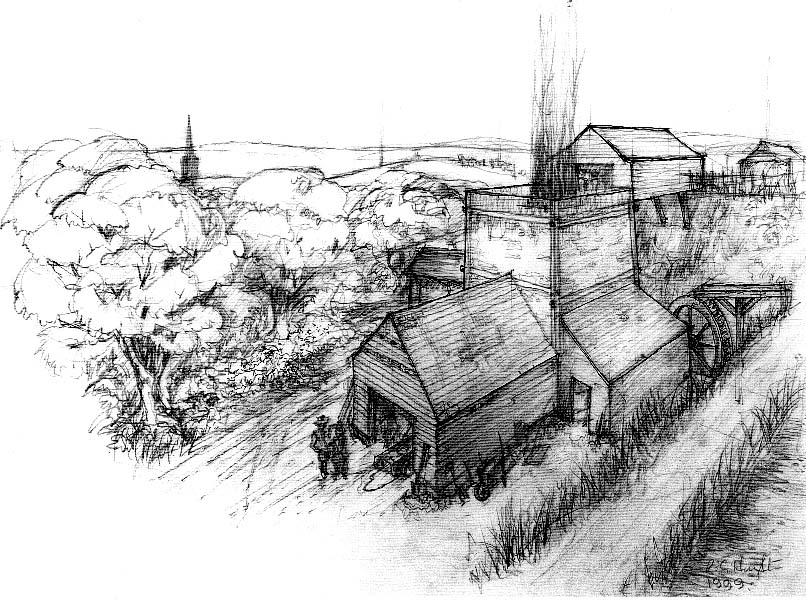
The furnace in what was then known as the Myllwood was set up in 1567 by two ironmasters, John Fawkener, who operated the forge at Maresfield, and John French of Waldron, who ran a forge at Chiddingly. Their respective works were leased from Sir Edward Gage, and it was presumably through him, as lord of the manor of Hedgecourt in which the Myllwood lay, that they came to build the furnace. Their lease was for 21 years at 10 shillings a year, and they were allowed to purchase up to £120 worth of wood from the Gage estates in the area, to convert into charcoal for the furnace. They were also permitted to have up to 1000 loads of ‘myne’, or iron ore. At the same time Sir Edward Gage leased the manor of Hedgecourt, except the furnace, to John Thorpe of Horne, for 21 years at £40 a year, and Thorpe must have come to some sort of arrangement with Fawkener and French to sub lease the furnace for it is Thorpe’s name which appears as occupier of ‘a furnace and forge about Copthorne and Lingfield’ in a survey of Wealden ironworks carried out for the Privy Council in 1574. It was also Thorpe who, that same year, entered into a bond of £2000 not to cast guns except for the Crown. The forge was Woodcock Hammer, at what is now known as the Wiremill, north of Felbridge. It is not known precisely what was produced at the furnace, but it is likely that iron sows (ingots of cast iron up to 11 feet in length) were taken from there to Woodcock forge to be converted into wrought iron. Nor is it known for precisely how long the furnace continued to be worked. The lease expired in 1588, the year of the Spanish Armada, and reference to the old furnace in 1627 suggests that it was no longer in operation then. However, Woodcock Hammer seems to have continued in use, in the hands of the Thorpe family, although it could have been refining iron from one or more other furnaces. At about the time of the expiry of the original lease of the furnace, the Thorpes came to live at Gibbshaven Farm, and they continued to be recorded there until the 1660s.
The iron industry in the Weald reached the peak of its importance in the early years of the 17th century but during the ensuing decades the importation of Swedish iron began to make inroads into the traditional markets for Wealden bar iron in eastern England. At the same time, in the west Midlands, at too costly an overland journey from the east coast for Swedish iron to penetrate, an iron industry based on the rich ores of the Forest of Dean began to spring up in the Severn valley. The marketability of Wealden bar began to dwindle and many furnaces and forges in the Weald went out of use. However, Britain’s interest in overseas trade and influence was growing and there was an increasing demand for guns, not only for the ships that sailed to India, Africa and the Americas, but also for the fortification of the settlements and outposts that began to be established overseas. A few Wealden furnaces had been engaged in this specialised trade since late in the reign of Henry VIII when the technique for casting iron guns was mastered, and by the end of the 16th century English iron cannon were much sought after by our European neighbours, notably Denmark and the Netherlands. The English Civil war strengthened the iron industry in the Midlands so that by the 1660s furnaces in the Weald were increasingly concentrating on the lucrative, but fickle, gun trade; fickle because it relied heavily on the political situation and its fortunes rose and fell with alternating periods of war and peace. A series of wars in the latter part of the 17th century, together with burgeoning overseas expansion of trade, ensured a steady demand. Further wars in the mid 18th century enabled the region to continue to dominate the production of ordnance as guns were known.
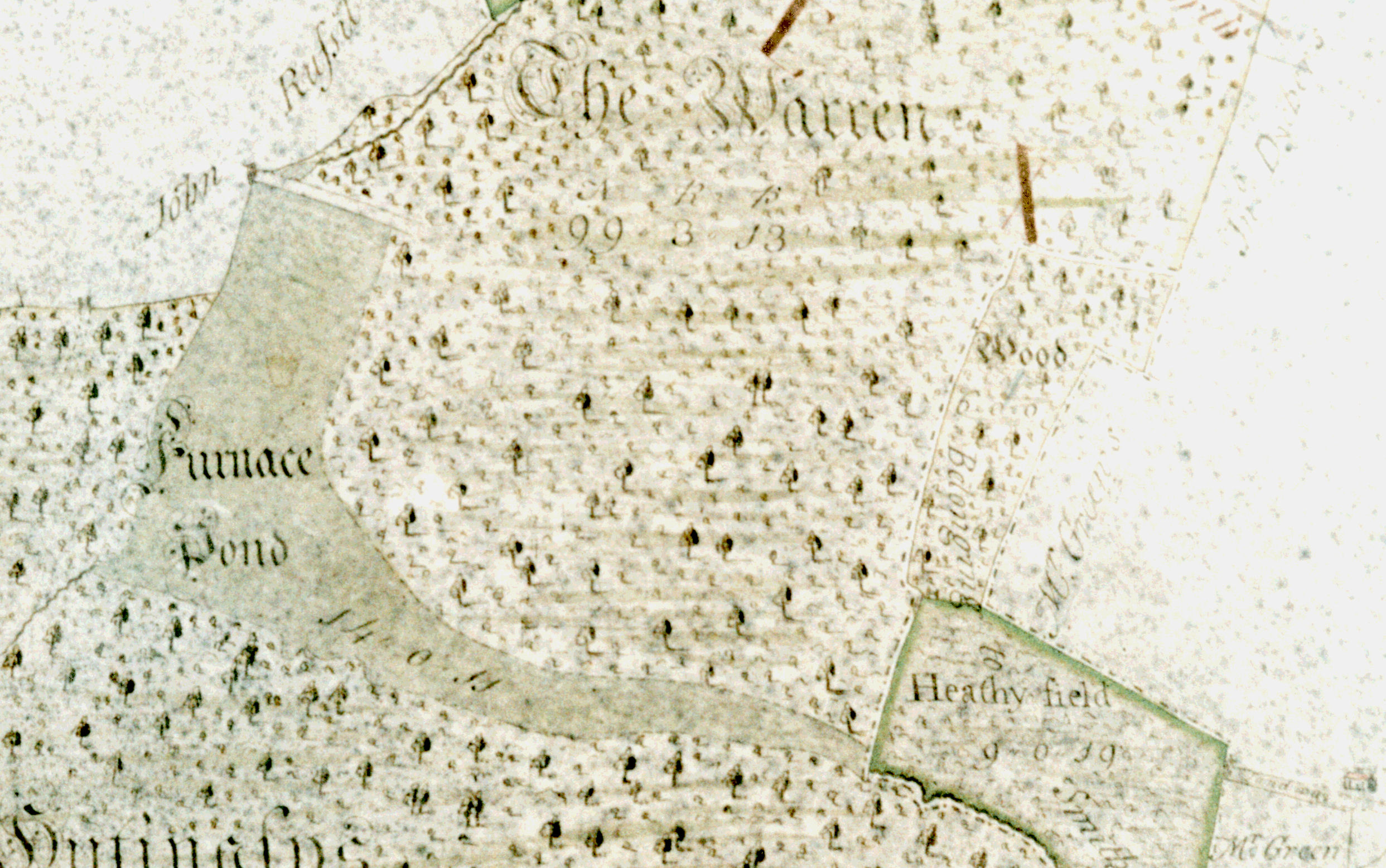
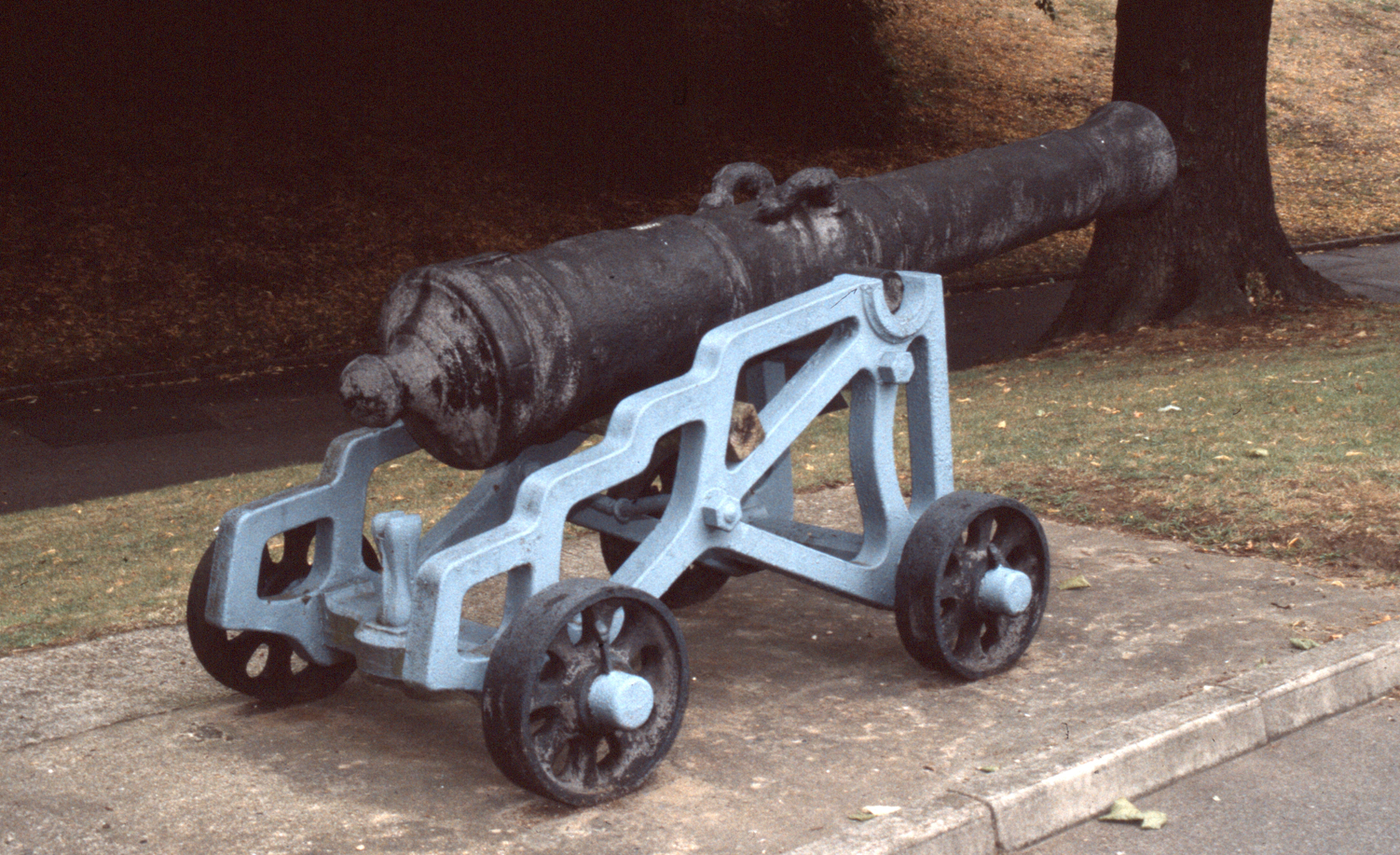
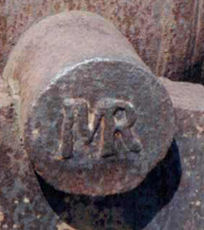
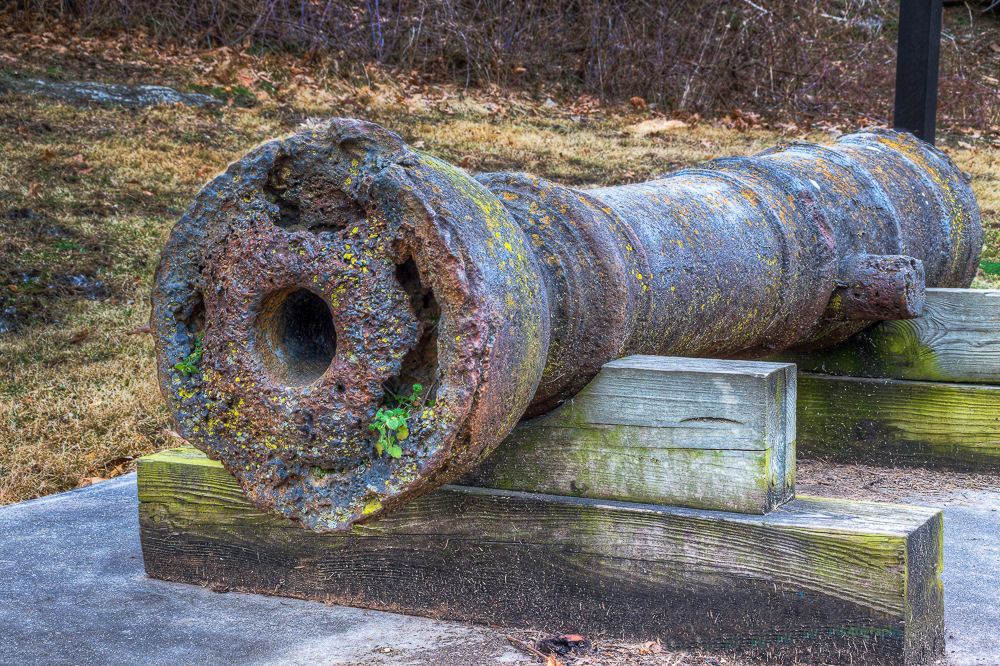
It was during one of these conflicts, the Seven Years’ War, when Britain and Prussia were opposed by France, Austria and Russia, and where the theatres of war ranged between continental Europe, India and America, that the furnace in the Myllwood was revived after a period of idleness that had lasted perhaps 150 years. War was declared in 1756 but it was not until about 1758 that Edward Raby, a London ironmonger, together with his partner, and brother-in law, Alexander Master, must have taken a lease from Edward Evelyn of Felbridge Place. By this time the wood had been renamed The Warren, and it had been recorded as such on a map that Evelyn had had made in 1748, when he purchased the estate from the Gages. Raby and Master had already being doing business selling bar iron and steel to the Board of Ordnance, the government organisation that purchased guns for the navy, but gun founding seems to have been a departure for them. In September 1758 they offered to cast 200 tons of iron ordnance and 200 tons of round shot (cannon balls) for the following year and their offer was accepted. Wealden blast furnaces were not generally capable of casting as much as 400 tons of iron in a year, and it is apparent that Raby had sub contracted the supply of round shot to a founder in Bristol for, when the time came for the iron to be delivered to the Board’s arsenal at Woolwich, he had to plead the excuse of contrary winds delaying the seabound arrival of the shot. In 1760 the Board of Ordnance placed no new orders for guns or shot, the massive rearmament of the previous four years having been enough and money being tight, but in 1761 and 1762 Raby and Masters continued to supply guns to Woolwich. An example of their work, a 12 pounder, seen in the photograph at the beginning of this article, used to stand outside the Artillery Museum at Woolwich Rotunda. It is unusual for having ‘dolphins’, which were elaborately modelled lifting handles on the upper part of the barrel; Raby was the only founder to cast guns with ‘dolphins’.
Raby and Master must have invested heavily to set up a gun foundry in the Warren and would have committed themselves deeply with regard to ore, charcoal and labour. It must therefore have come as a blow when peace was declared early in 1763 and the Board placed an immediate stop on further orders. We do not know the circumstances but within a year the partners were bankrupt, with the principal creditor being a fellow ironmonger, Robert Macky. The fact that Edward Raby’s name appears most frequently in dealings with the Board suggests that he was the partner who supervised the gun founding operations in Sussex, while Alexander Master remained in control of the ironmongery business in Smithfield. As the bankruptcy was brought about by a fellow ironmonger it is reasonable to suppose that the greater burden of responsibility for it was Master’s. If so it would more easily explain the re-emergence of Edward Raby, without his former partner, into the gun trade two years later, once again offering to cast guns for the Board as his furnace in Sussex was in blast.
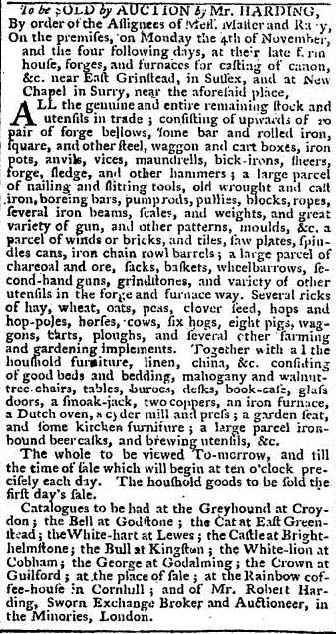
In 1762, two years before Master and Raby had been declared bankrupt, a fellow gun founder William Clutton, who operated a newly-built furnace at Gravetye, near West Hoathly, had fallen foul of his creditors in the same way. Unlike Raby, Clutton, who was only in his late 20s, seems to have been inexperienced in the iron business, and his venture into gun founding lasted only two years. By 1765 the assignees appointed to deal with his affairs had put the lease of Gravetye and its furnace up for sale. Re-establishing himself after his financial setback, Raby seems to acquired the Gravetye lease and operated the furnace together with the one at The Warren. Robert Knight, a local carrier, who had worked for both Master and Raby, and for Clutton, recorded in his account book the guns he transported from Gravetye to The Warren and then on to Woolwich. Raby used the better facilities at The Warren to finish the guns he cast at Gravetye, for Knight was carrying them away from Gravetye with their ‘heads’ on. The heads were the heavy projections on the muzzles of guns which, during vertical casting, allowed impurities and gas bubbles to accumulate while the iron was molten, reducing the danger of voids and weaknesses in the gun metal. The heads were sawn off once the core forming the barrel had been removed, and the guns were then bored to smooth the barrel. Clearly, all Raby’s guns were being bored at The Warren. In addition, Raby continued to work the Woodcock Hammer, and also Howbourne forge at Buxted, which had been operated by Clutton before him.
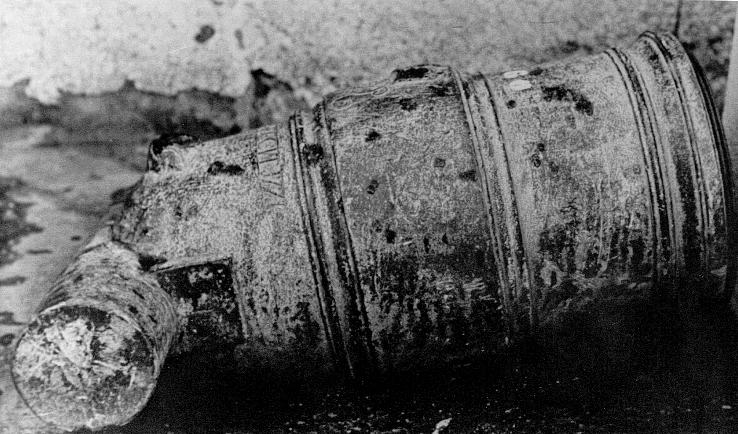
At the end of the Seven Years’ War the high prices the gun founders were able to charge for their products fell, and when contracts for guns were resumed in 1764 a new contractor entered the arena. The Carron Company, which had furnaces near Falkirk in Scotland, offered to cast guns for the Board at £6 a ton cheaper than wartime prices. For most founders this was too low to be afforded, but Raby seems to have been able to match it and win new contracts for his two furnaces. He was clearly regarded as a skilful founder for, in addition to ordnance he was casting trucks – the wheels for gun carriages – and shells. Shells were considerably more difficult to cast than round shot because they were hollow. By 1769 he seems to have diversified and was casting guns in bronze as well as iron, and selling to the East India Company, a substantial purchaser of guns in this period when it had just wrested commercial control of Bengal from the French. Raby offered bronze guns to the Board of Ordnance which placed an order, but in 1771 Raby died. He left no will so it can only be assumed that his death was sudden. His son, Alexander, who had been apprenticed to Raby’s former partner, and who had worked with his father at The Warren in the early 1760s, took control of the furnaces. But he had his mind on greater things and saw his chance in other branches of the iron industry, operating iron mills on the River Mole in Surrey before moving to South Wales and playing a prominent part in the coal industry. Without surviving leases we cannot know under what conditions the furnaces at The Warren and Gravetye were operated, but it seems that Alec Raby quit the works without much, if indeed any, notice, for The Warren at least was occupied for a short period by the Southwark firm of Joseph Wright and Thomas Prickett who had been operating as gun founders at the North Park furnace at Fernhurst, near Midhurst. Their revival of The Warren, and also the Gloucester furnace at Lamberhurst, could be seen as an attempt to fill the vacuum caused by the death of two important gun founders of the period: Raby, and William Bowen who had operated the furnaces at Barden, near Tonbridge, and at Cowden, who died the same year.
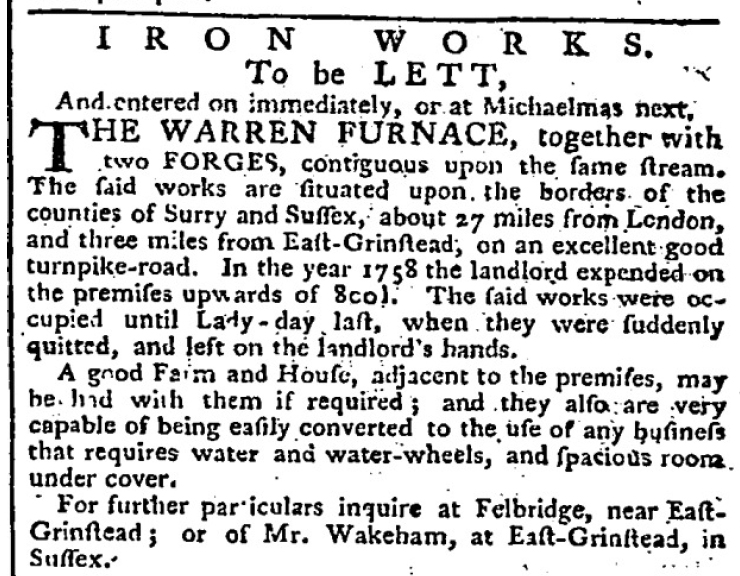
(General Evening Post, 5-7 May 1772)
For how long Wright and Prickett had The Warren is not known, but it does not appear to have been used as a furnace after about 1774. Fairly soon after, it was converted into a water mill, for it was described as such in 1782, and it was still there when the Tithe map was drawn in 1841, although its history is not known after that. The legacy of this last period of activity is to be seen beneath the undergrowth in Furnace Wood. The pond bay, or dam, collapsed in about 1865, perhaps putting an end to the mill there, and it was not restored until after the Great War. Lionel Robinson had bought the pair of cottages that had probably been erected by Raby for two of his key workmen and their families, and in the process of repairing the breach in the bay, which had been attempted unsuccessfully during the war, apparently with the assistance of some German prisoners of war, he discovered some of the original wooden flumes that carried the water to the furnace water wheel. Older residents of Furnace Wood recall the evidence of a culvert which carried the water away from the furnace, and which had a series of brick lined inspection shafts. But even nowadays there is plenty of the glassy green slag to be seen, together with a great deal of brick and timber in the stream. The former cottages survive, much altered, as the house called ‘Furnace’.