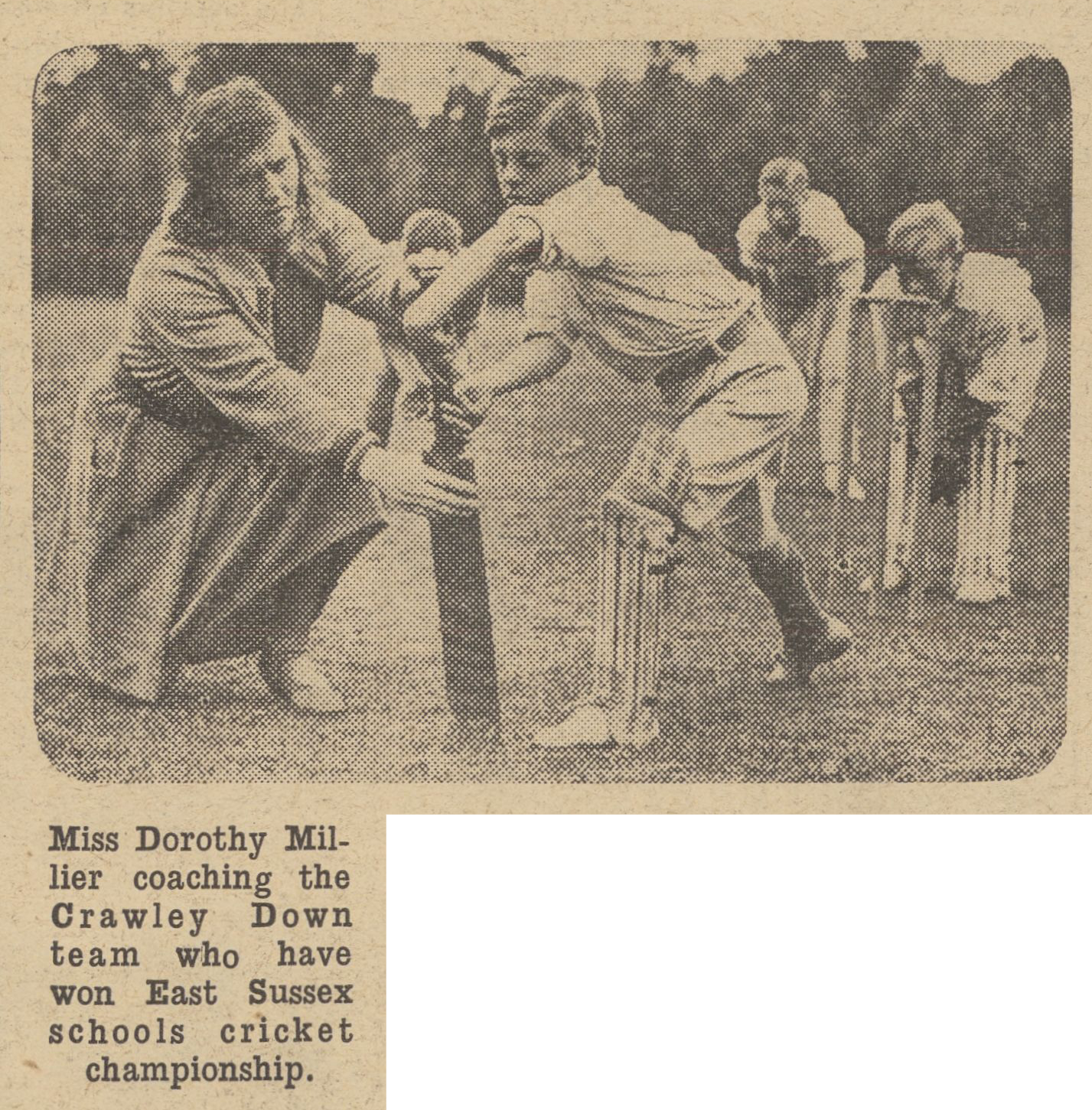
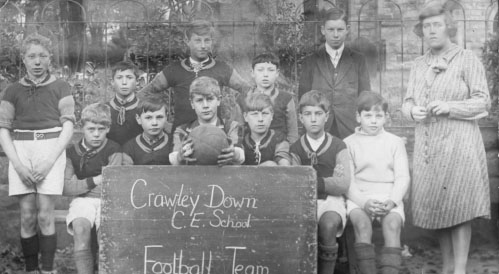
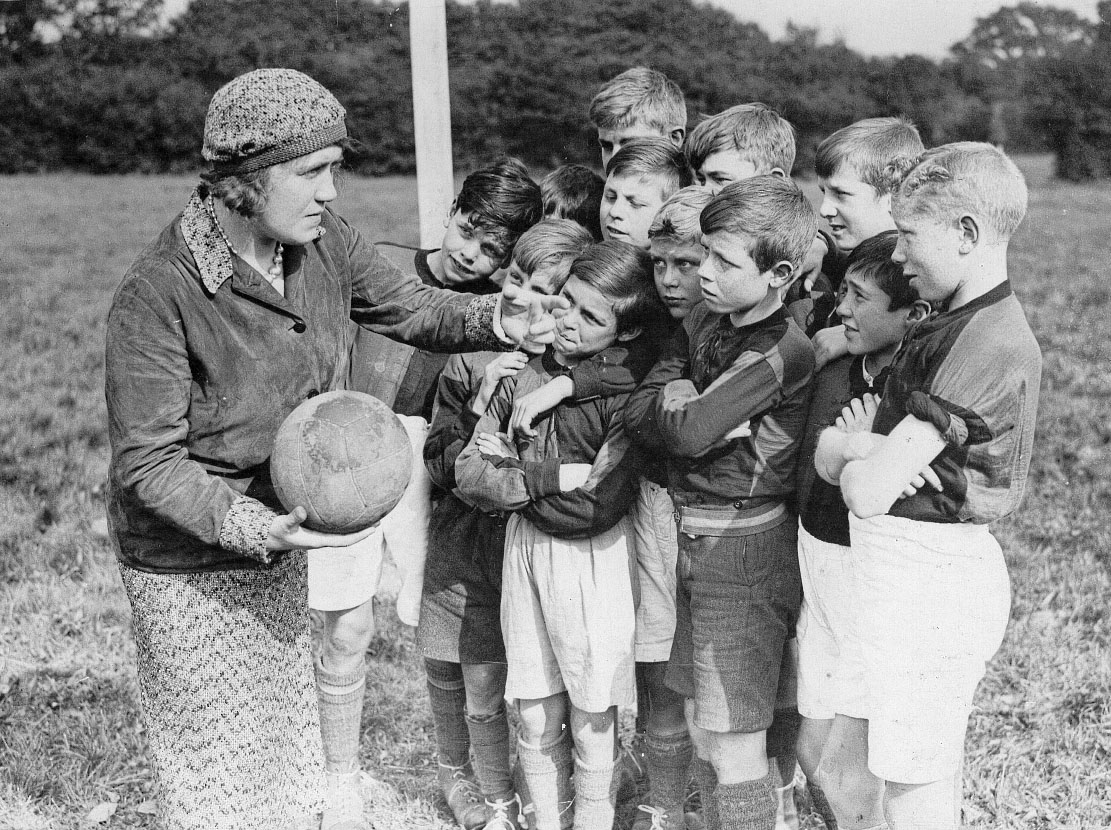
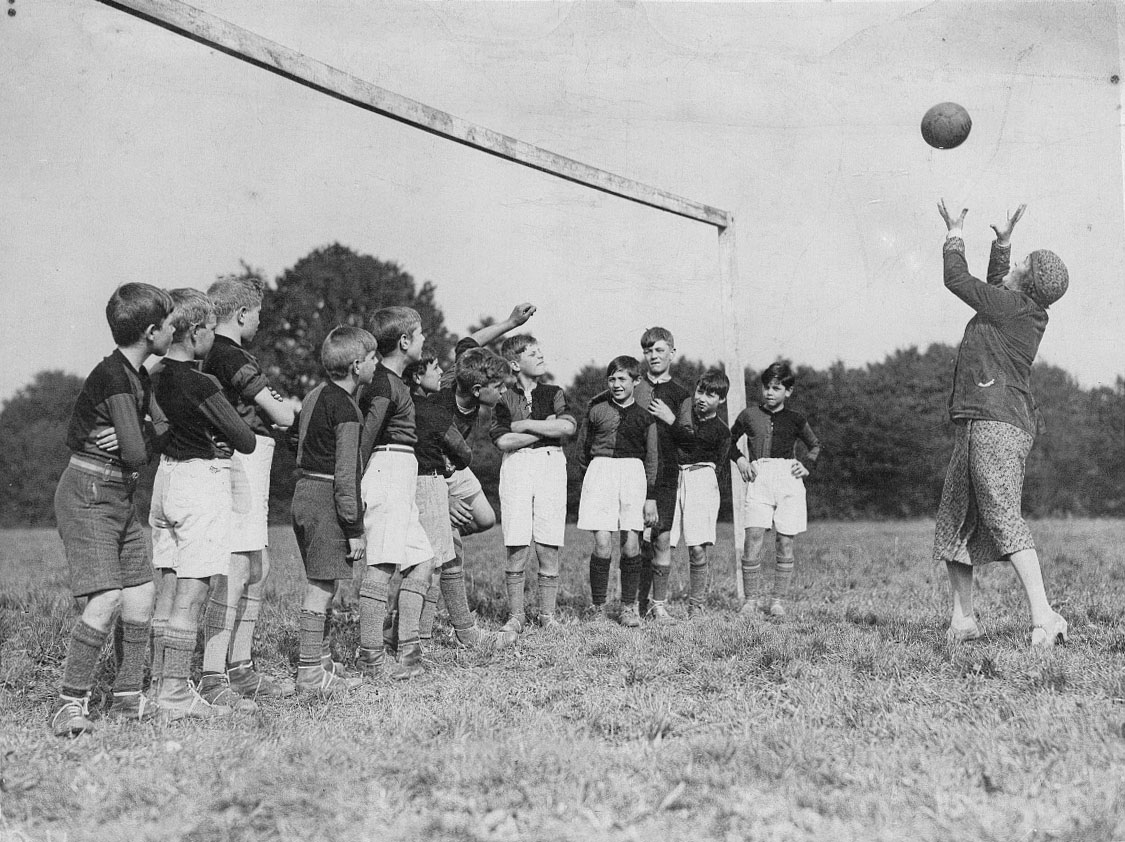
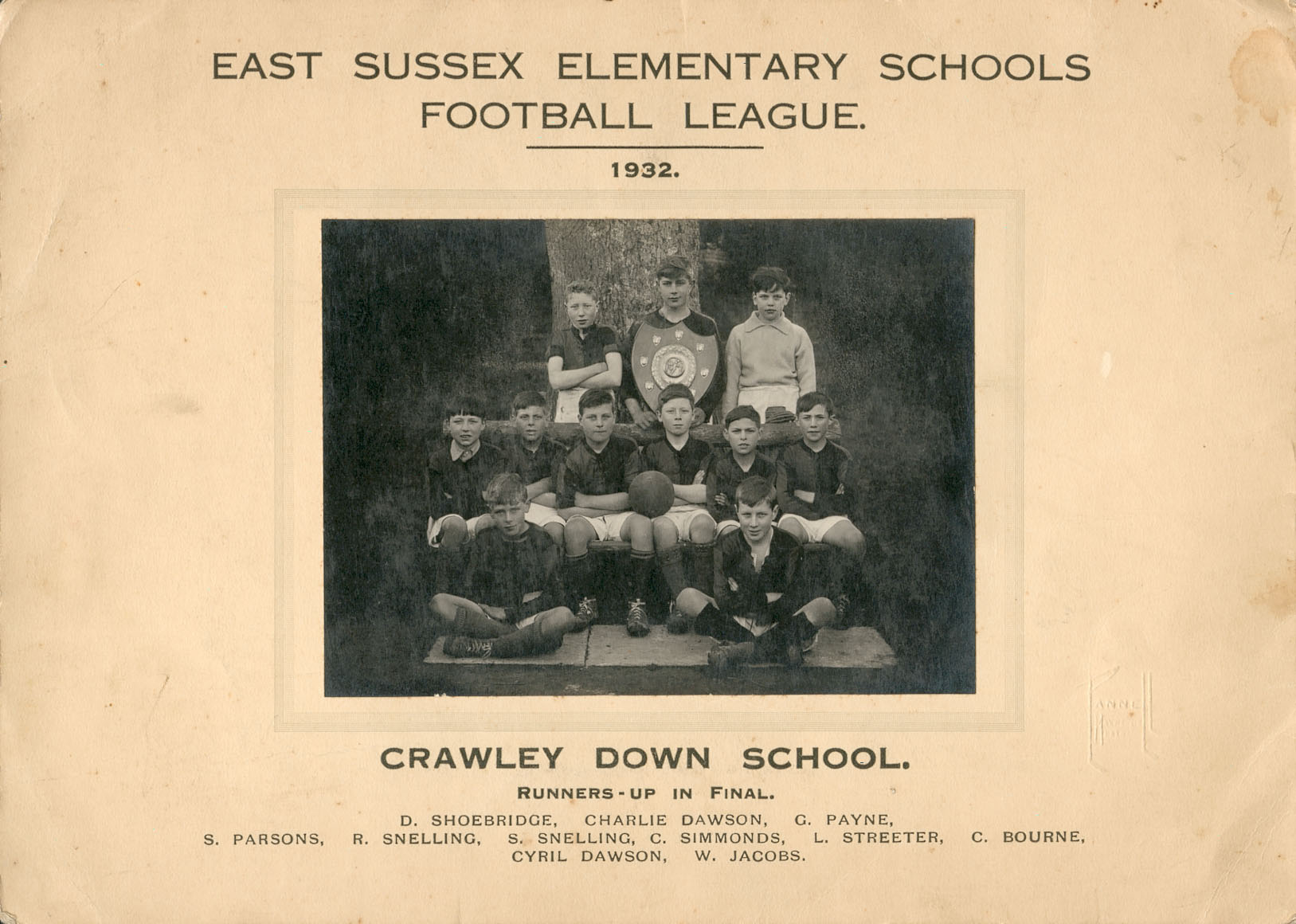
In 1930 Miss Dorothy G. Millier, Lit. Dip., joined the staff of Crawley Down School, I suspect as a temporary Head Teacher. Of her background or life after leaving the school I know absolutely nothing (if anyone does, I will be only too delighted to amend this brief account). All I have are some photographs of the children’s sporting achievements during her reign which I regarded as interesting but not remarkable until I came across this cutting from the Daily Mirror of the 18th July 1931.
It appears that Miss Millier was imbued with a dynamism that raised the standard of sporting prowess among the boys in her charge. I suspect that the staff of the school at the time were all female and that social expectations regarding gender and sport were firmly entrenched. So perhaps it was her apparent disregard of those norms that gained Miss Millier the approval of the national press as well as, I hope, that of her pupils and their parents. She was evidently prepared to practise what she preached, as these photographs show. They were presumably posed for the local press to illustrate her team’s successes at cricket and football in county competitions, and her proactive role in them.
Miss Dorothy Millier with her football team posed beside the churchyard railings in the school playground in 1932
The photographs speak for themselves and maybe there will be readers of this whose grandparents or great-grandparents are among those pictured.
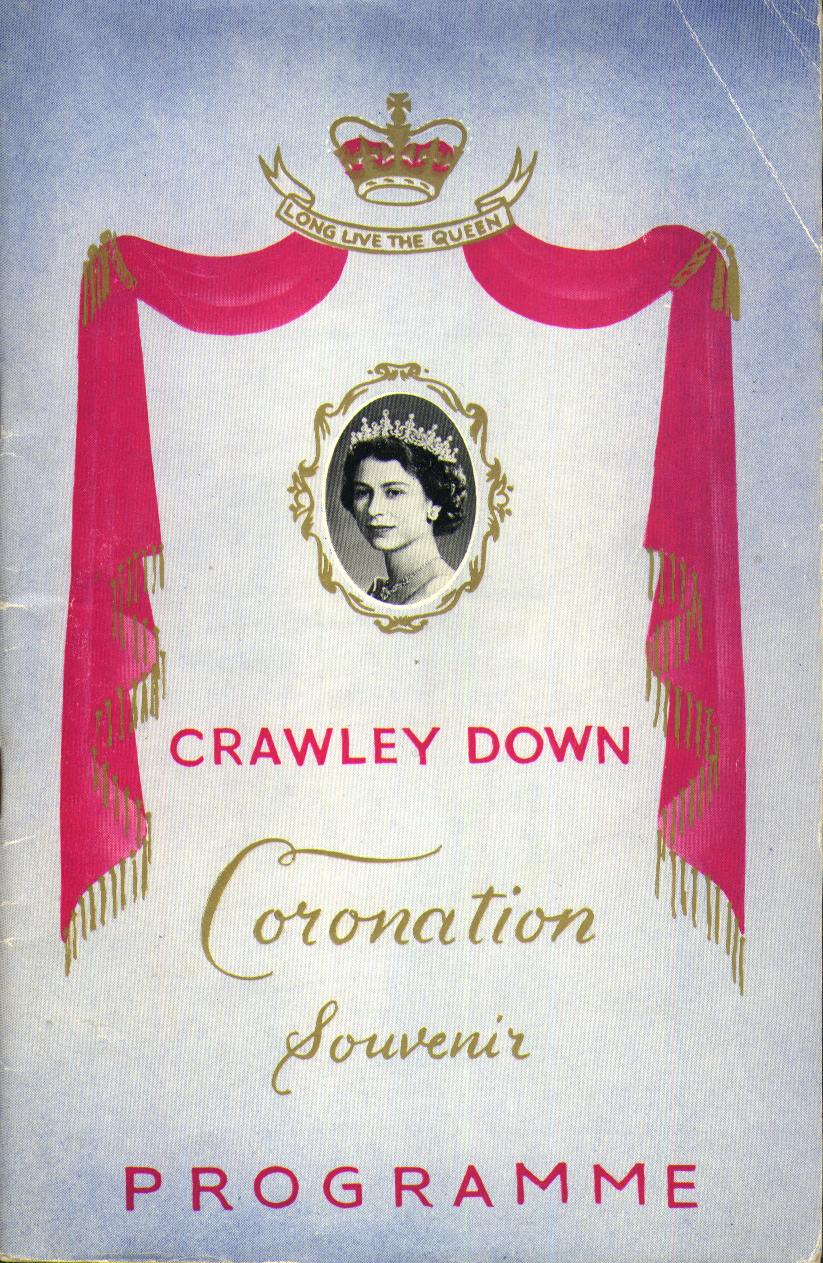
In the year of the Coronation of Queen Elizabeth II, and with the end of the Second World War just eight years in the past, Crawley Down, then in East Sussex, had changed little since the modest building boom that followed the break-up of the Grange Estate in the 1930s. Two triangles of roads made up the main outline of the village: Turners Hill Road and Sandy Lane, Grange Road and Bowers Place/Station Road, and Vicarage Road between them. Hophurst Lane led away to the north-east and Sandhill Lane/Burleigh Lane to the south. Only Sunny Avenue lay between either of those triangles, and of that only the western end had been built.
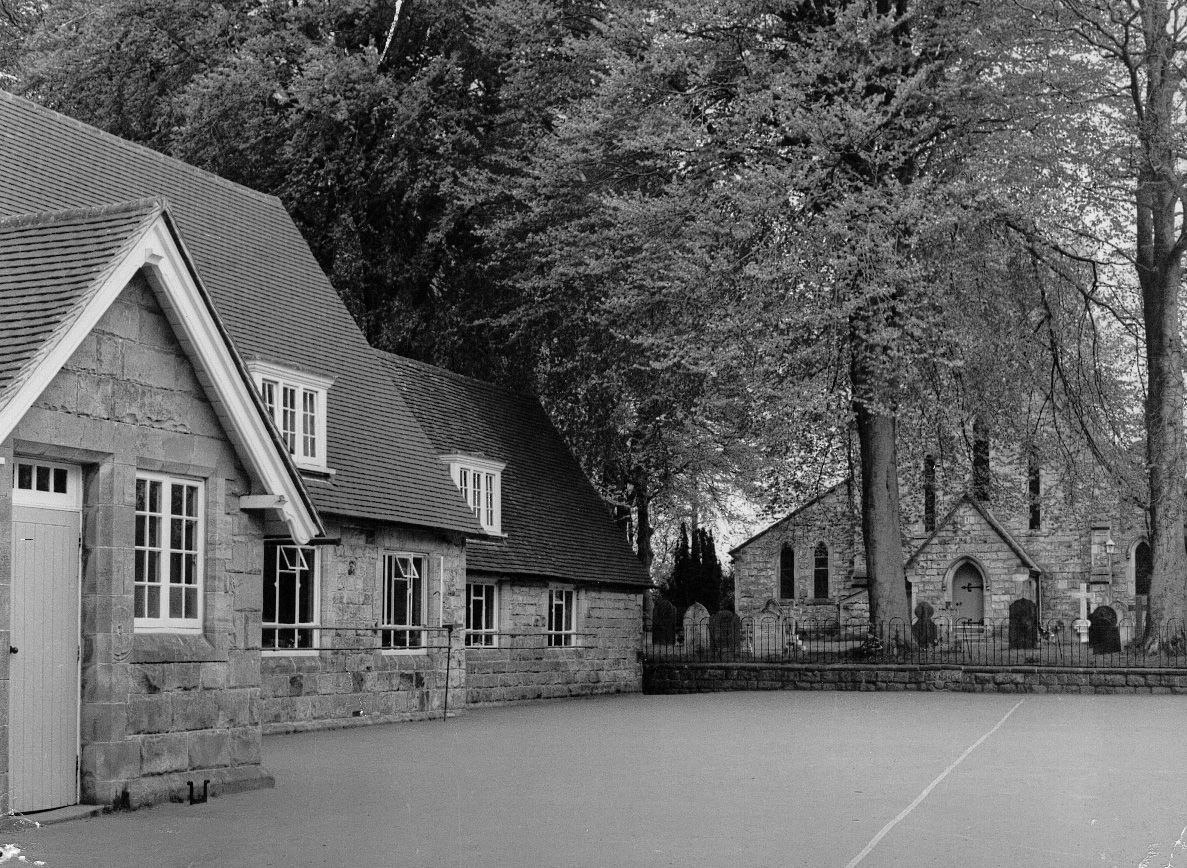
Crawley Down CE Primary School
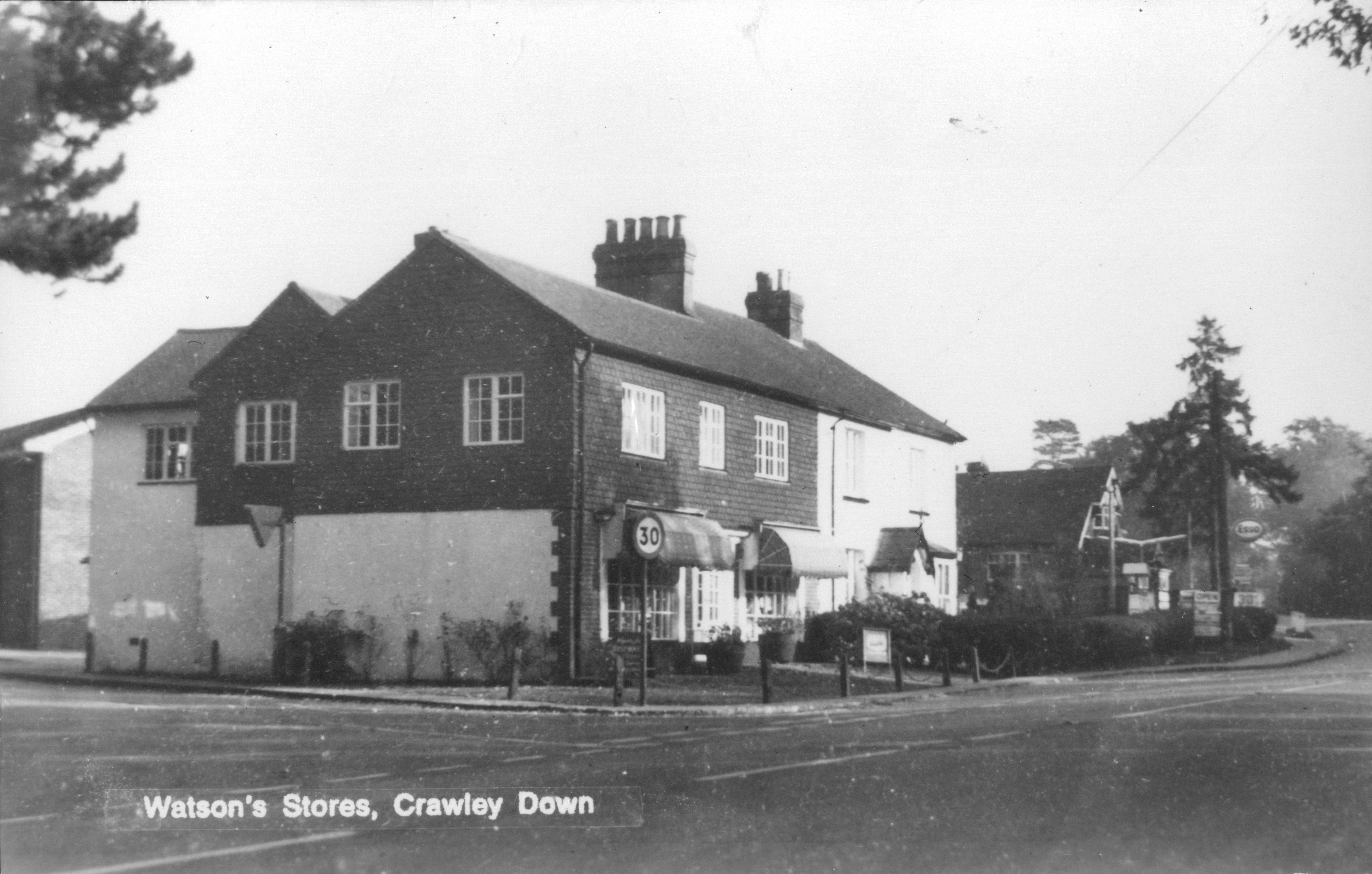
Village institutions still familiar to day were in place, though some were in different locations: All Saints’ Church with its Parish Room, the Village Hall and the Royal Oak. The Post Office was then on the Turners Hill Road, just round the corner from the end of Sandy Lane (seeCrawley Down’s post offices), and the School was next to the church, also along the Turners Hill Road. There were the allotments and the Village Green, the Cricket Ground and King George’s Field, the last of these opened just before the war. There were shops, but not in the places where we have them now. Where the undertakers is now was Watson’s Stores and just along the road, between there and the Village Hall, was Hartley House petrol station. Halfway along Sandy Lane was a little shop, and there was a baker’s at the top of Bowers Place and a newsagent at the bottom. Away to the north, along the road from the Duke’s Head towards Felbridge was Snowhill Stores. Also in Sandy Lane there was a garage for car repairs, and the Methodist Chapel that had been built in 1895, but which was to close in 1965 and be successfully repurposed as an industrial unit.
Watson’s Stores, with the filling station and Village Hall beyond
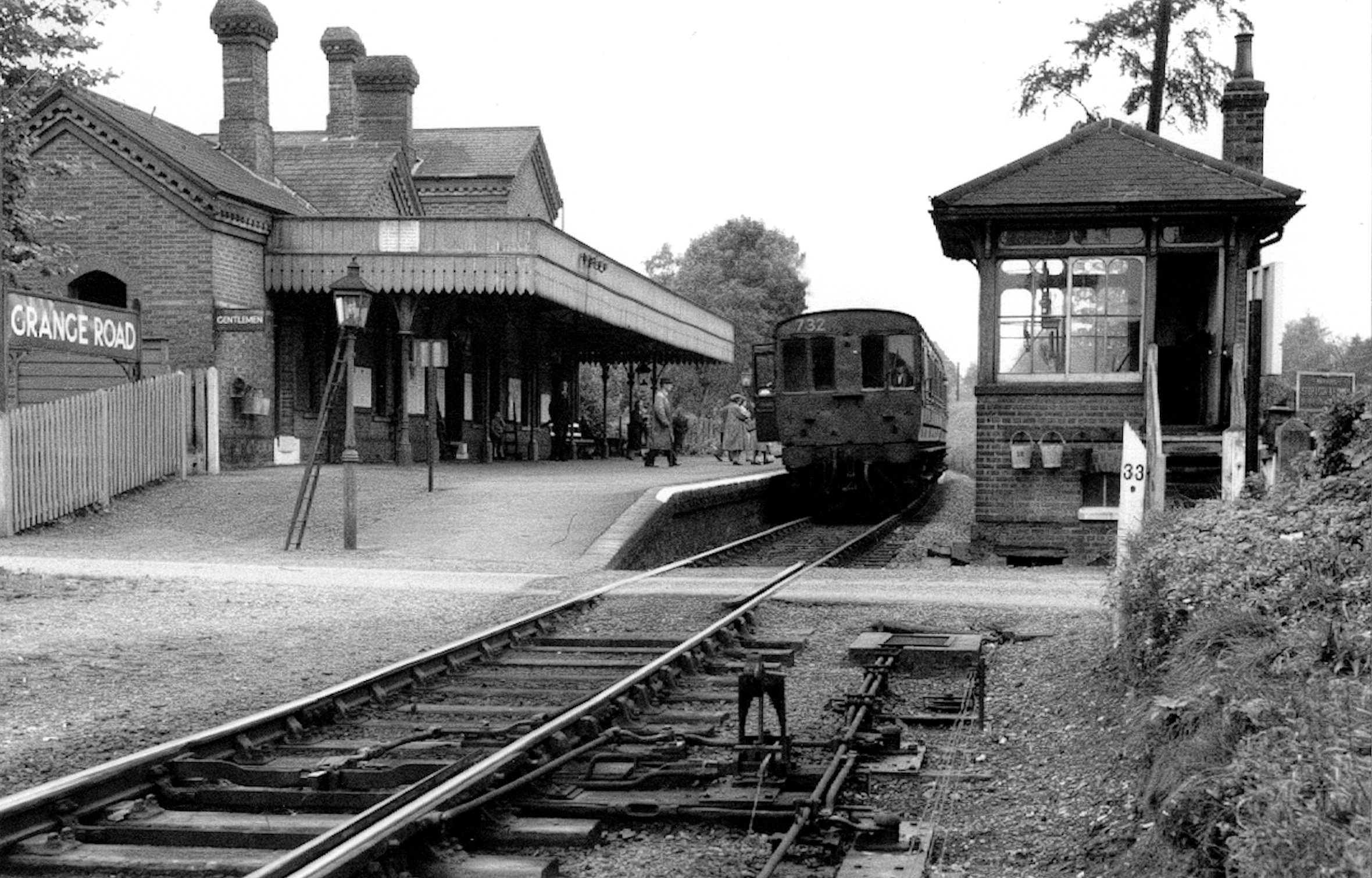
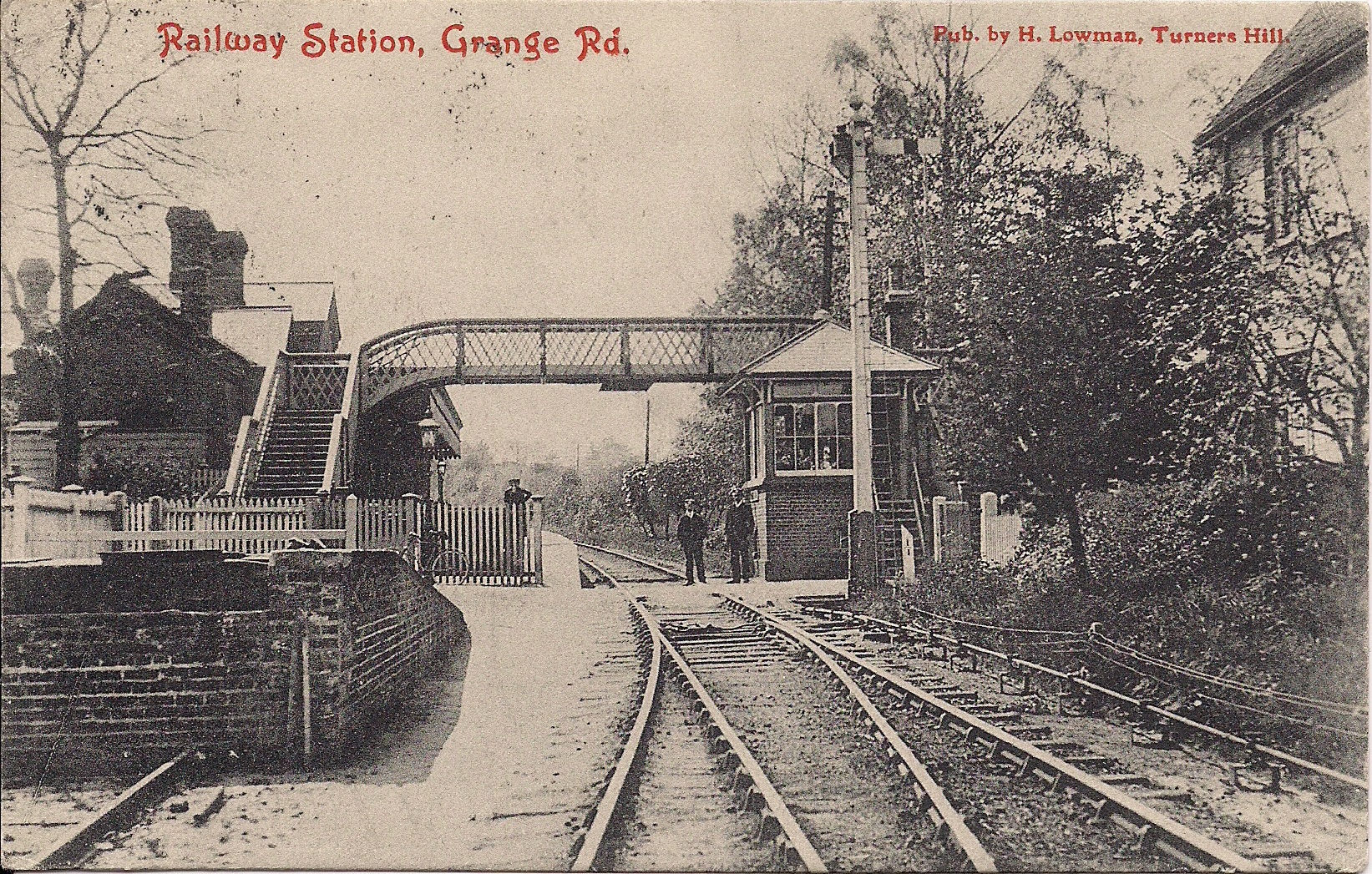
Grange Road railway station
The most significant presence in the 1950s village was the railway with Grange Road station, a signal box and level crossing. The single-track line saw goods and passenger services between Three Bridges and Tunbridge Wells via East Grinstead. Where Auchinleck Court is now, there was a siding that used to serve the brickworks. Scrub land, once the site of other brickworks, lay behind Bowers Place.
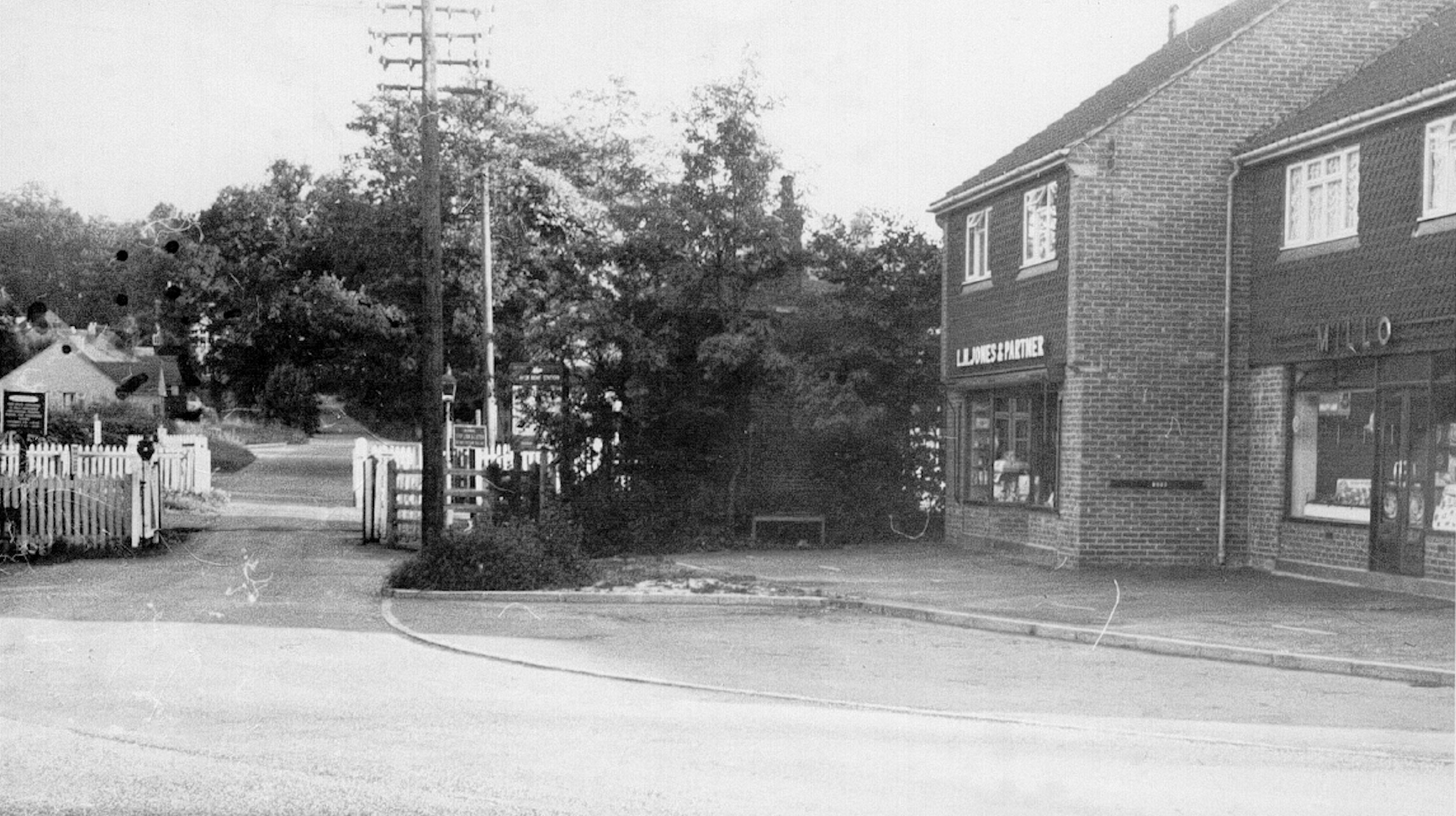
The first post-war developments were Buckley Place, built by Cuckfield Rural District Council on what had been part of Vicarage Farm, and Ruffwood, a small, select group of houses in a close off the Turners Hill Road. That was followed by Grange Crescent and the completion of Sunny Avenue. The old brickworks site opposite the bottom of Grange Road became Kiln Road and Woodlands Close towards the end of the 1950s. This growing number of people living near the railway station, some of whom will have used the railway for a daily commute, prompted the need for three new shops – the present Co-op, Flanagan’s and The Pantry/hairdresser – that were built next to the signal box in the early 1960s. The rest of the old Vicarage Farm land was next, becoming Squires Close, and Hazelwood Close next to Ruffwood. And not long after, Beech Holme and Beech Gardens were built on land north of the allotments.
The level crossing and the new shops built in the early 1960s
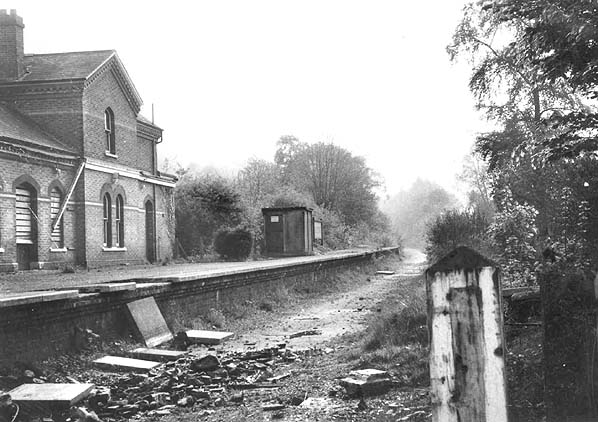
The closure of the railway line at the beginning of 1967 looked likely to stagnate Crawley Down. Ironically the line from Grange Road station to Three Bridges was still viable but Dr Beeching’s plans to close uneconomical lines looked at the whole route from Tunbridge Wells so the only part that was retained briefly was the stretch from the old wartime fuel depot at Rowfant to Three Bridges. Within a short time the track had been taken up and the Victorian station, that dated back to 1874, had been demolished.
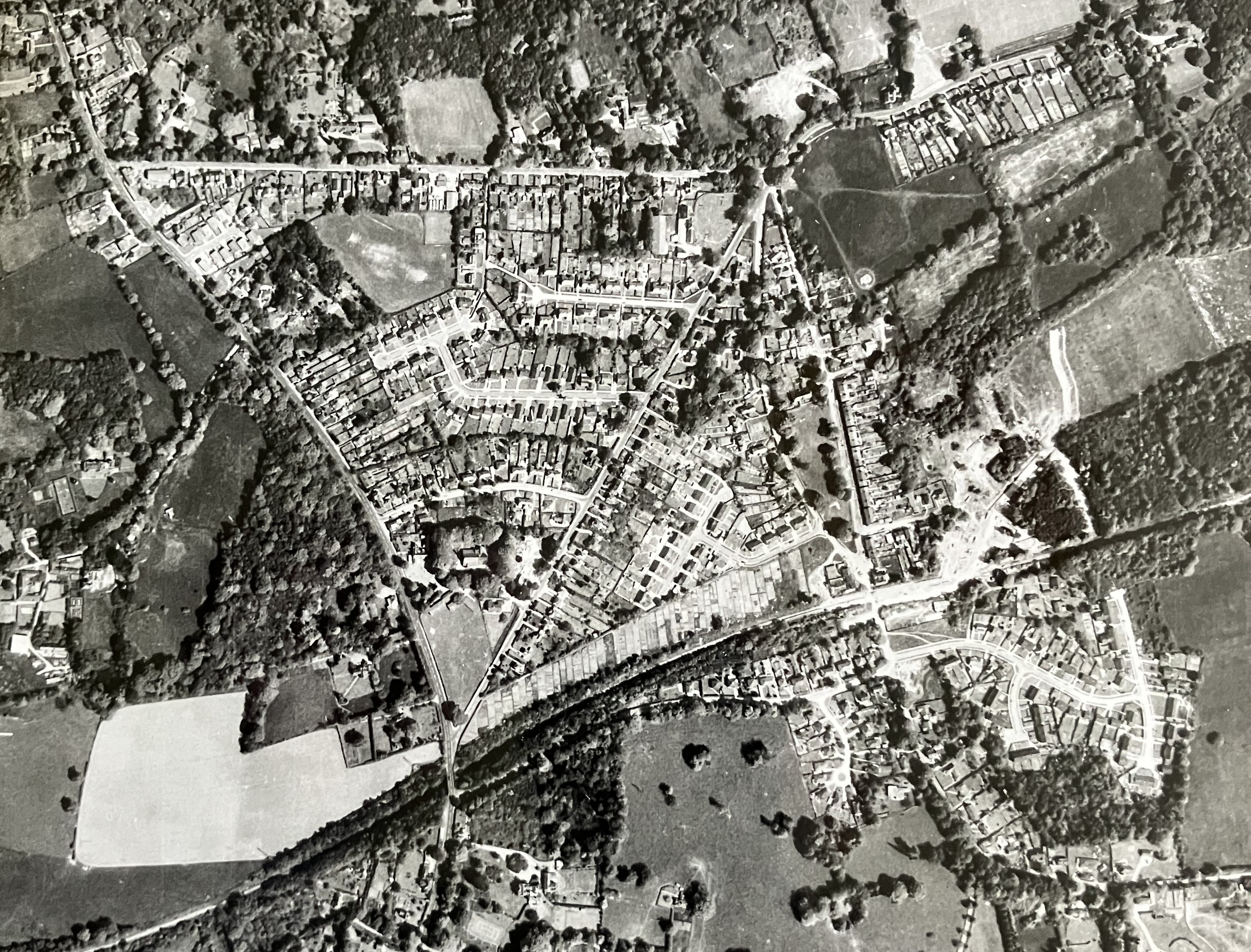
Aerial photo of Crawley Down in the early 1970s, showing the first work starting on the Burleighwood development (just above the railway line east of Bowers Place)
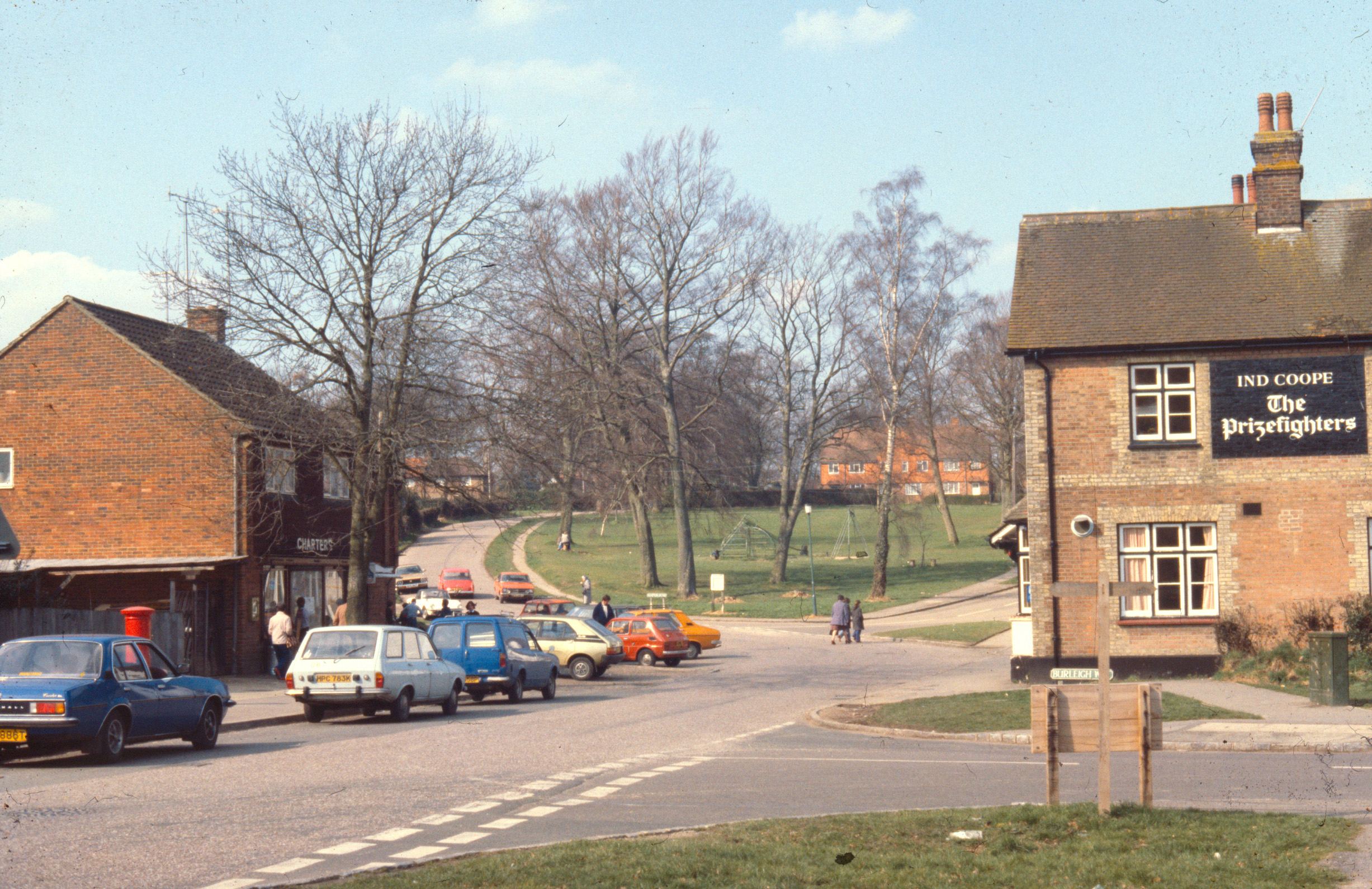
The sale of the old brickworks land east of Bowers Place and of the railway line to the south of it in the early 1970s led to the biggest change in Crawley Down since the village had begun to grow in the 1860s. The gradual construction of the Burleighwood Estate of over 800 houses over the next 10 years resulted in other changes as well: a new First School (Burleigh); a Health Centre , the previous surgery having been in a house in Hophurst Lane (seeThe History of Crawley Down Health Centre); more shops where the station had been; and the removal of the Post Office to what had become the centre of the village. Even the Royal Oak, which had started life as the Railway Hotel in 1866, was revamped and renamed The Prizefighters, ostensibly commemorating the sport of which Crawley Down had been a famous venue during the Regency period (seePrize Fighting), but which somewhat inappropriately displayed mementoes of the career of the 1940s boxer Freddie Mills.
The Prizefighters public house, the shops opposite and the Village Green in the 1970s
In 1974, local authority reorganisation caused Cuckfield Rural District and, with it, Crawley Down to be transferred to the county of West Sussex and become the new Mid-Sussex District. Notwithstanding that, the expansion of the village led to three other small developments at the time, notably the Fermandy Place estate, on land cleared after the demolition of a large house that had been a private school, Crawley St Mary’s (see Lost Buildings of Crawley Down). Another was the land where the railway station had been, which became Old Station Close. The line itself to Three Bridges was designated a linear country park – Worth Way – so named after a competition in 1976 that was won by the Junior School’s pupils. Thirdly, the remainder of the old brickworks land behind Kiln Road was developed for social housing and appropriately named Bricklands.
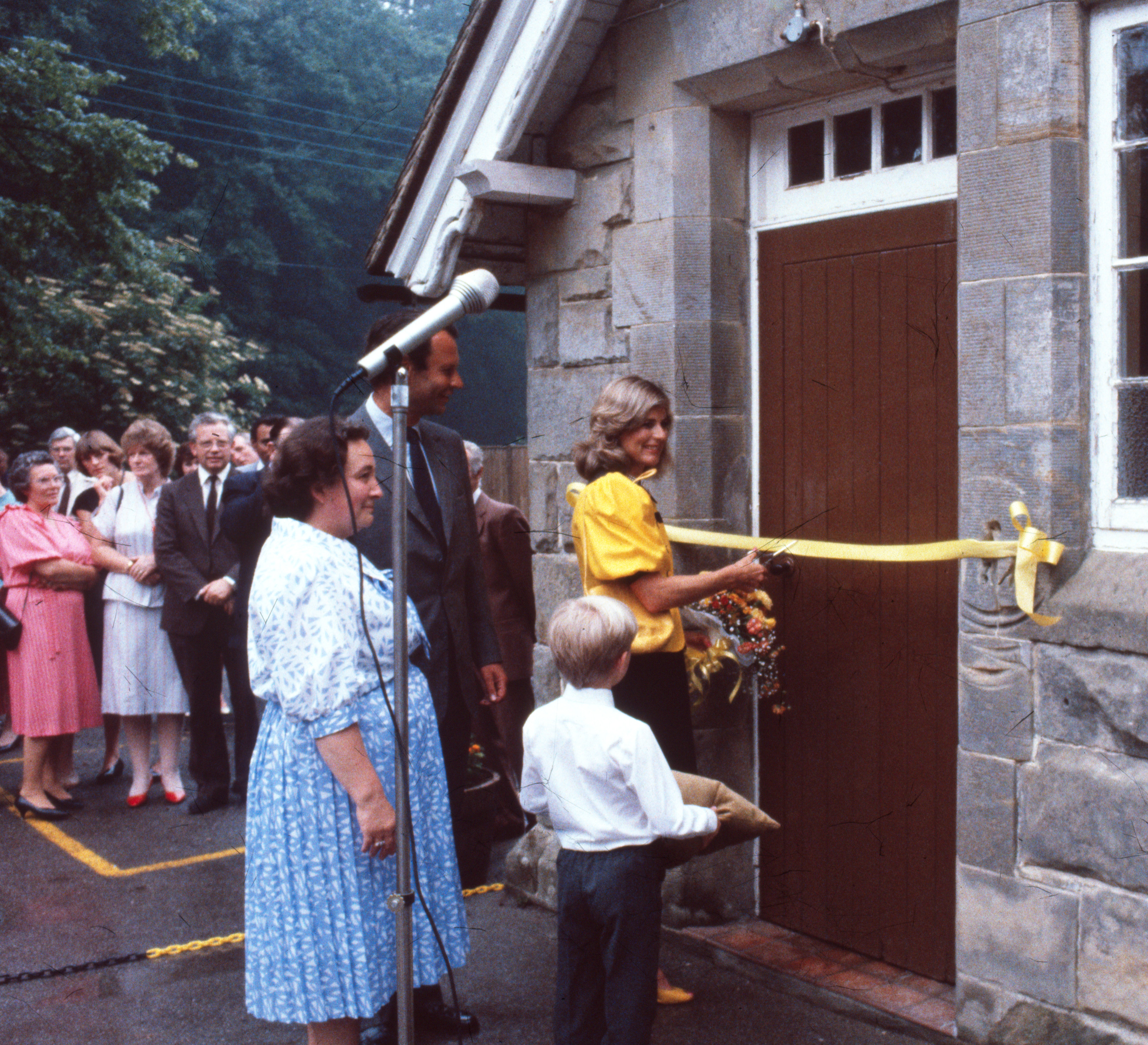
The Countess of Chichester cutting the ribbon to open the first community centre in the old school in 1986
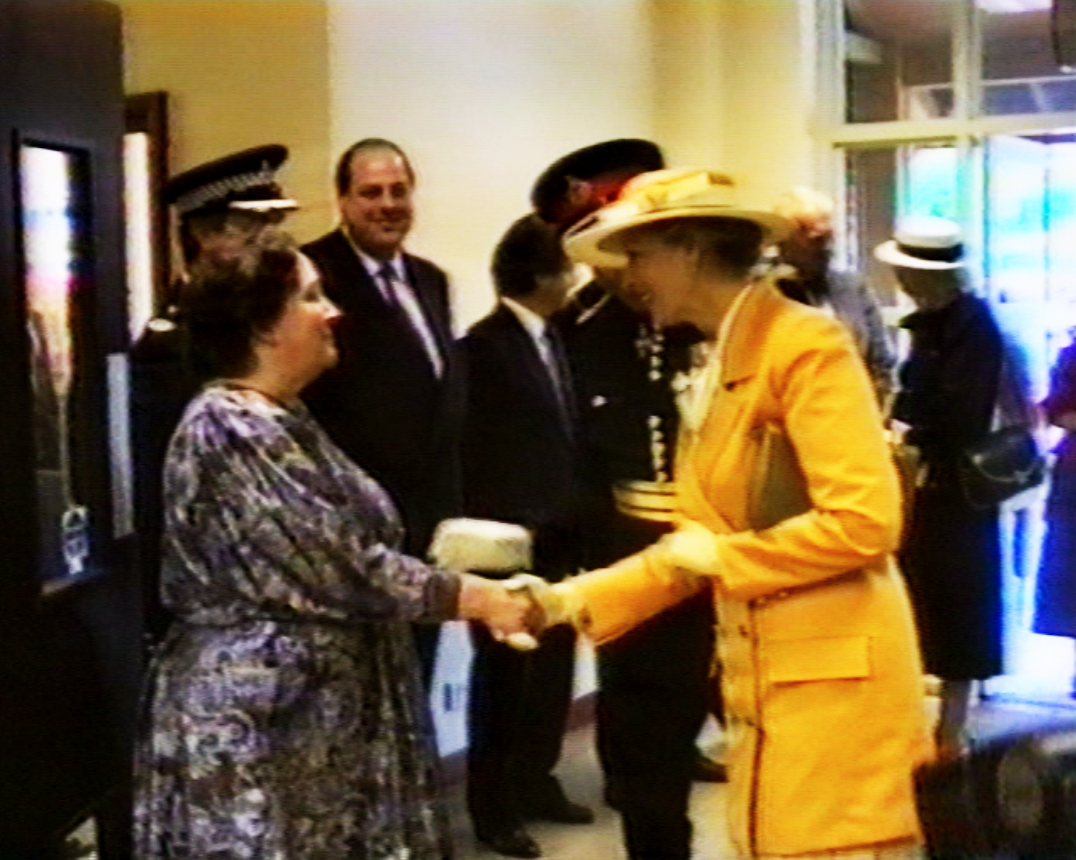
When the Junior School was rebuilt next to Burleigh School and opened in 1981 the old school buildings became redundant, though not before the Earl of Chichester, whose ancestor had given them to the village back in 1851, claimed his right under the original deed of foundation to have them returned to him. West Sussex County Council came to a financial arrangement with the Earl which, in time, enabled him to support efforts in the village to build a community centre. The considerably increased village population meant that the Village Hall, which dated back to 1890, was no longer able to cope on its own with the increased demands for amenity space. So in 1986 the old school became a proto-community centre while funds were raised for a purpose-designed centre to occupy a corner of the Haven Sports Field, which had been created out of the old Haven Farm in the 1970s to provided extra village open space. The Haven Centre opened its doors in 1990, and was officially opened by HRH Princess Alexandra in June 1991.
Dorothy Hatswell, Chairman of the Crawley Down Community Centre Association, greeting Princess Alexandra at the opening of the Haven Centre, 24 June 1991 (from a video of the event)
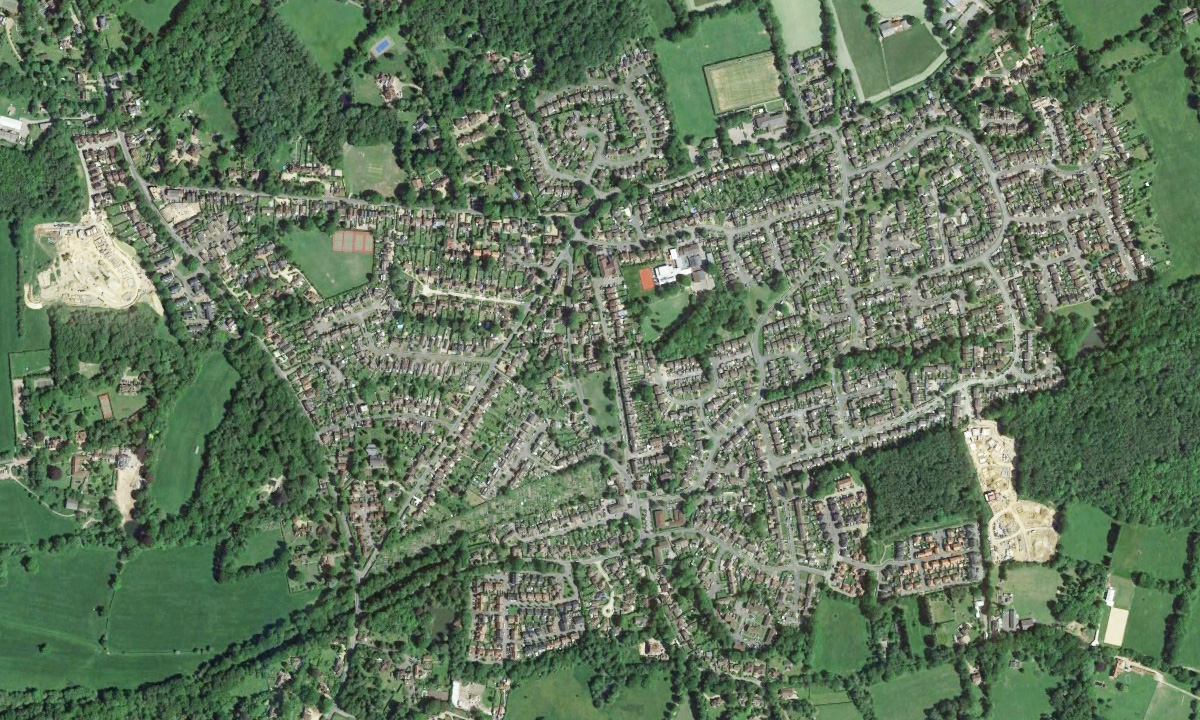
Crawley Down has continued to grow since then. New parish rooms have been built next to the church, the Junior and Infant Schools merged in 2006 and have been enlarged, the Health Centre, too, has been enlarged. On the down side the Royal Oak, in its revived form, now lies unoccupied. More houses have been built, on land in front of the Grange and on the north side of Hophurst Lane in 2012, on the west side of the Turners Hill Road from 2014 (and continuing) and, from about the same time, in the south-east of the village behind Woodlands Close and Hazel Way. If the fact that between 1921 and 1931 the population of Crawley Down had grown from 1,021 to 1,134, in 1953 it was probably not much more than about 1,200. In the census of 2021 Crawley Down’s population was 5,774.
Aerial photo of Crawley Down in 2021, showing development of the village since the early-70s photo above
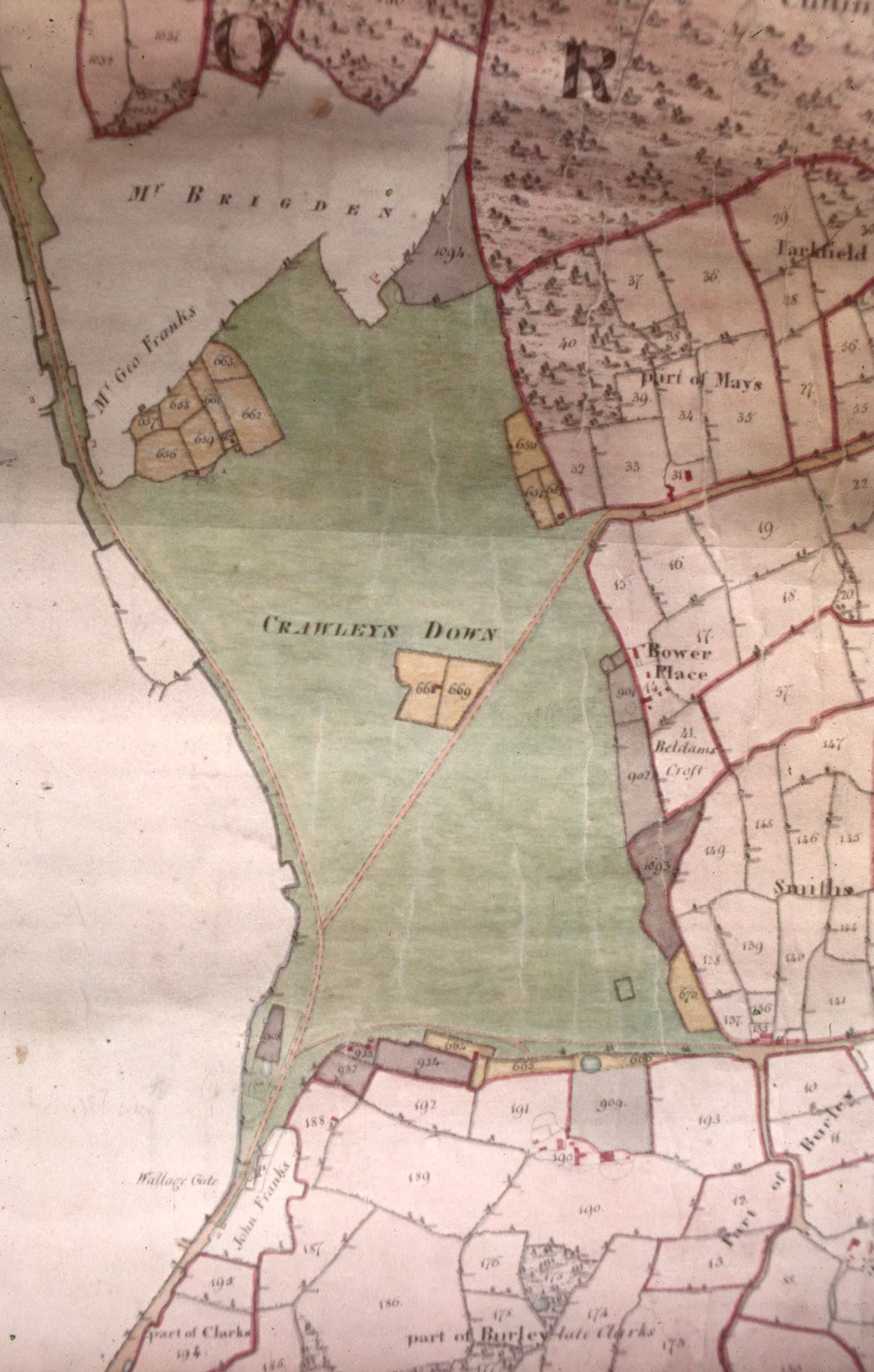
In the East Sussex Record Office at Brighton there is a large map of the properties held by the Manor of South Malling-Lindfield, a very ancient manor that dated back to Saxon times. The map, which was drawn by a surveyor named William Figg in 1829, and is orientated north-south, shows land belonging to the manor in the parishes of Worth, West Hoathly, Lindfield and Wivelsfield, in a continuous sheet at a scale of 1:47,520 (1 inch to 60 chains, if you are curious). Parcels of land are shown in four different colours, denoting the type of tenure: Red for freehold; Grey for leasehold; Yellow for copyhold; and Green for waste. Each parcel has a number which relates to a separate reference book. Below is the portion of the map showing Crawley Down.
In 1829 Crawley Down, which was sometimes called Crawleys Down or Crawley Downs, was manorial waste – a common. It had first been mentioned in historical documents back in 1274 and was probably waste then. It may have extended further to the north, the uncoloured area at the top of the map, and in 1829 owned by ‘Mr Brigden’ and by Mr George Franks, had evidently been purchased from the manor previously.
We can also see that several small parcels of land, coloured grey and yellow, had been enclosed from around the edges of the waste. The grey ones had been enclosed on long leases back in the 17th century, while the yellow ones were copyholds granted in the 30 or so years before the map was made. Copyholds were a sort of tenancy where the only proof was a copy of the roll of the manor court, and was surrendered when the tenant died. The location of the leaseholds suggests that they were acquired from the lord of the manor to increase the size of agricultural holdings around the edge of the waste, while the copyholds were probably ‘squatter’ enclosures where people had erected dwellings swiftly and then claimed retrospective permission from the lord to enclose land around them. Provided there were no local objections, the lord usually granted a tenancy and he could then claim a rent. In 1829 the lord of the manor was the earl of Chichester who lived at Stanmer Park near Brighton.
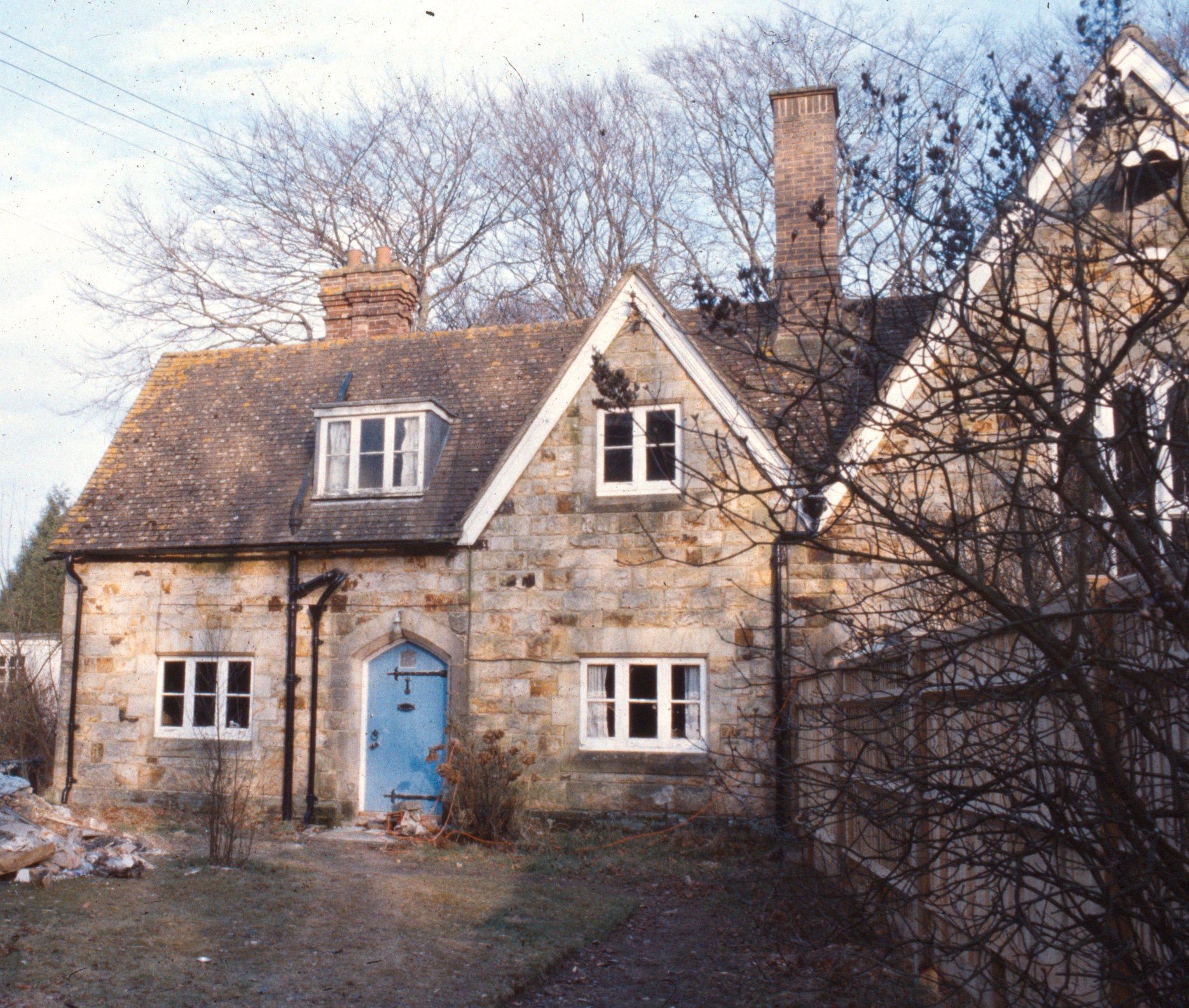
Squires Cottage
One such copyhold is shown in the middle of the waste with a dwelling on one of the parcels of land. This is Squires Cottage in what is now Squires Close. The Grange is shown to the south of Crawley Down, but not identified by name, even though it was so-called by the 1780s. On the east side of the waste, just south of Bower Place is the intriguingly-named ‘Beldams Croft’. A beldam was an old woman, a grandmother or, less respectfully, a witch or hag. I wonder which definition this piece of land relates to and when was it so-named. It is evidently part of the freehold of Bower Place farm so it is likely to be a field name of ancient origin. The earliest mention of the word in the Oxford Dictionary is from the 15th century. Down on the left side of the map, where the waste peters out, you should be just able to make out ‘Wallage Gate’. This was the toll-gate on the turnpike that ran from New Chapel (between East Grinstead and Blindley Heath) down to Brighton. William Cobbett (1763-1835), the journalist and social reformer, wrote in his Rural Rides (1822) that this road was ‘by far the pleasantest coach-road from the WEN to Brighton’. The WEN (i.e. a wart or tumour) was Cobbett’s sarcastic word for London. At the Wallage Gate, travellers on horseback or in waggons would have to pay a charge for the distance to the next toll-gate, like you do if you go over the Dartford Crossing or travel on French motorways. The gate was later moved to the top of Wallage Lane, and the turnpike was abandoned completely in the 1880s.
Apart from the turnpike, the only roads across the waste in 1829 were what is now Vicarage Road and one along the southern edge of Crawley Down which no longer exists. From the map we can get no indication of what vegetation there was. Was it heath, with furze, or gorse bushes, like Ashdown Forest, or was it wooded like the surviving remants of Copthorne Common? Presumably there would have been areas of grass as the tenants that lived close to the waste would have used it to graze animals, and I suspect that the universal need for wood for domestic heating and other uses would have meant that this patch of waste would have been largely devoid of mature trees.
In 1974 a short series of articles appeared in the All Saints’ church parish magazine. They were the recollections of an old lady who, as a girl, had grown up in Crawley Down. Her name was Annie Smith and she had been born, the daughter of Edward and Amelia Smith, at their home on Copthorne Common in May 1850. By the time Annie was old enough to remember, the family had moved into a small cottage which used to stand in the south-west corner of the junction of the Turners Hill Road and Wallage Lane. At that place there were gates across both roads because the Turners Hill Road was a turnpike, established in 1770, and tolls were levied on users of the road at strategic points along its route to pay for its upkeep. A condition on the Smith family’s occupation of the cottage was that they were responsible for collecting the tolls, and that role fell to Annie’s mother. Her father was employed as a gardener at Rowfant House, in those days the home of Sir Curtis and Lady Lampson.
Opposite the toll cottage was the Wallage, then a farm. In the census of 1851 it was also a beer shop and was the home of Annie’s grandfather and grandmother, Edward and Elizabeth Smith. Edward was the Parish Road Surveyor, so it was Elizabeth who sold the beer, assisted by her 14-year-old namesake daughter. The job of the parish surveyor was to maintain the condition of the roads, filling in potholes and clearing ditches to keep the roads from flooding. Annie recalled coaches passing their house on the way between London and Brighton before the opening of the railway station at Grange Road in 1860.
The headline from the Sussex Advertiser of 7th August 1855
It was the railway that resulted in tragedy for the Smith family, for on Monday 30th July 1855 Annie’s grandfather was fatally injured at Three Bridges station. The Sussex Advertiser reported on the inquest held at Brighton the following week. He and some of his men had been at the station unloading some flints and he had paused to watch the London-bound express come past, but had stepped back onto the line and failed to notice an approaching goods train shunting some wagons. The engine driver could not see Smith who was hit in the back by the engine’s buffer knocking him under the wheels. Despite desperate efforts by the railway staff a doctor could not be found, even along the line in Crawley, so the station master, Mr Savage, put on a train specially to take Smith to the County Hospital in Brighton, but he died of his injuries on the way, between Burgess Hill and Hassocks. Edward Smith was buried at All Saints’ church on the 2nd of August.
Annie Smith attended the village school, which had only opened in 1852. She recalled the master’s name as being ‘Mr Horsen’. This was, in fact, James Hallson who had been appointed, aged 38, in 1859. He was assisted by his wife, Martha, who taught the girls. They and their growing family lived in the school house, which was provided for them rent free.
The school house and the original schoolroom, built in 1851
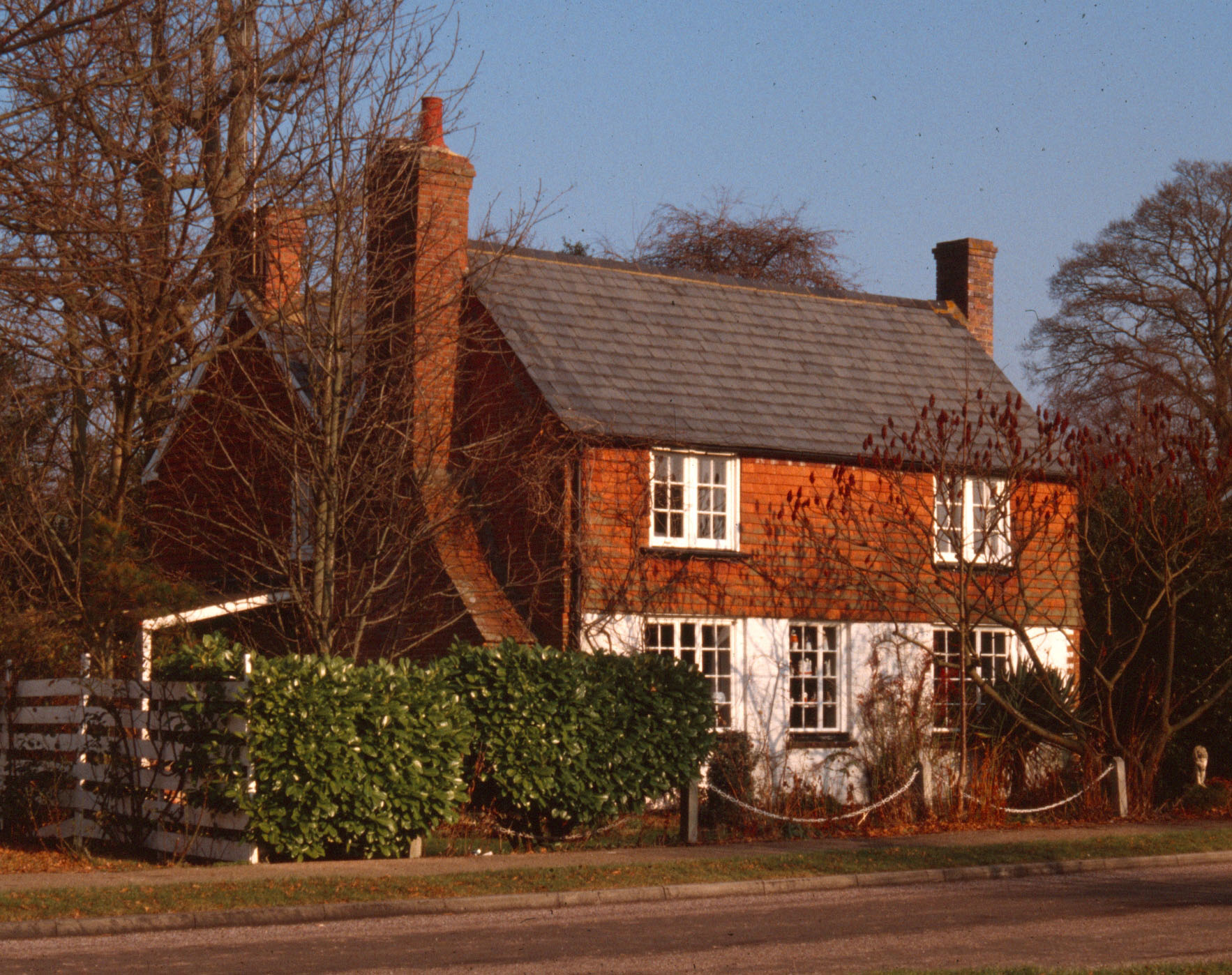
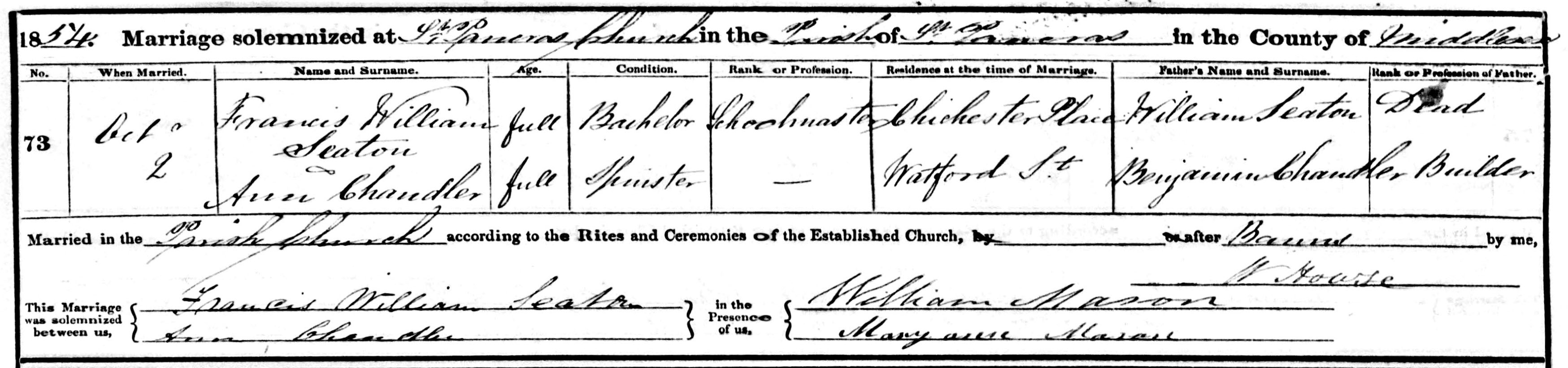
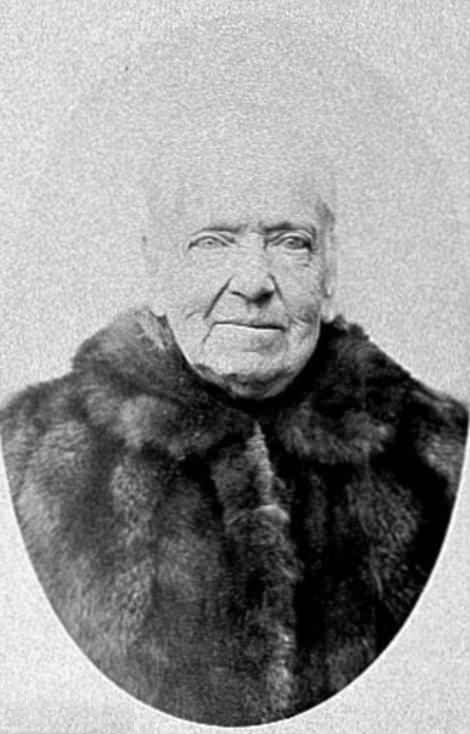
However, Annie would probably have started there when Mr Hallson’s predecessor had been in post. He was Francis Seaton and he was assisted in his role, initially, by his half-sister Martha Sheard. This arrangement did not last for long, though, for in 1854 Francis married Ann Chandler, the eldest daughter of the local builder, grocer and post-master, Benjamin Chandler, whose self-built house still stands on the west side of the Turners Hill Road just south of the railway bridge. Set into the brickwork at the front is a stone on which are his initials BC and the date 1834. Clearly, Francis Seaton’s tenure as master was short, and by 1861 his wife was a widow and had returned to live with her parents. Ann remarried at All Saints’ in March 1863 to Alfred Colven and went to live in Camberwell, but in a little over two years she too had died, aged only 35.
The register entry of Francis Seaton and Ann Chandler’s marriage at St Pancras church, London. Seaton’s name is incorrectly entered; his middle name was Wilson not WilliamThe house that Benjamin Chandler built in 1834. The roof has been altered since this photograph was taken in about 1905
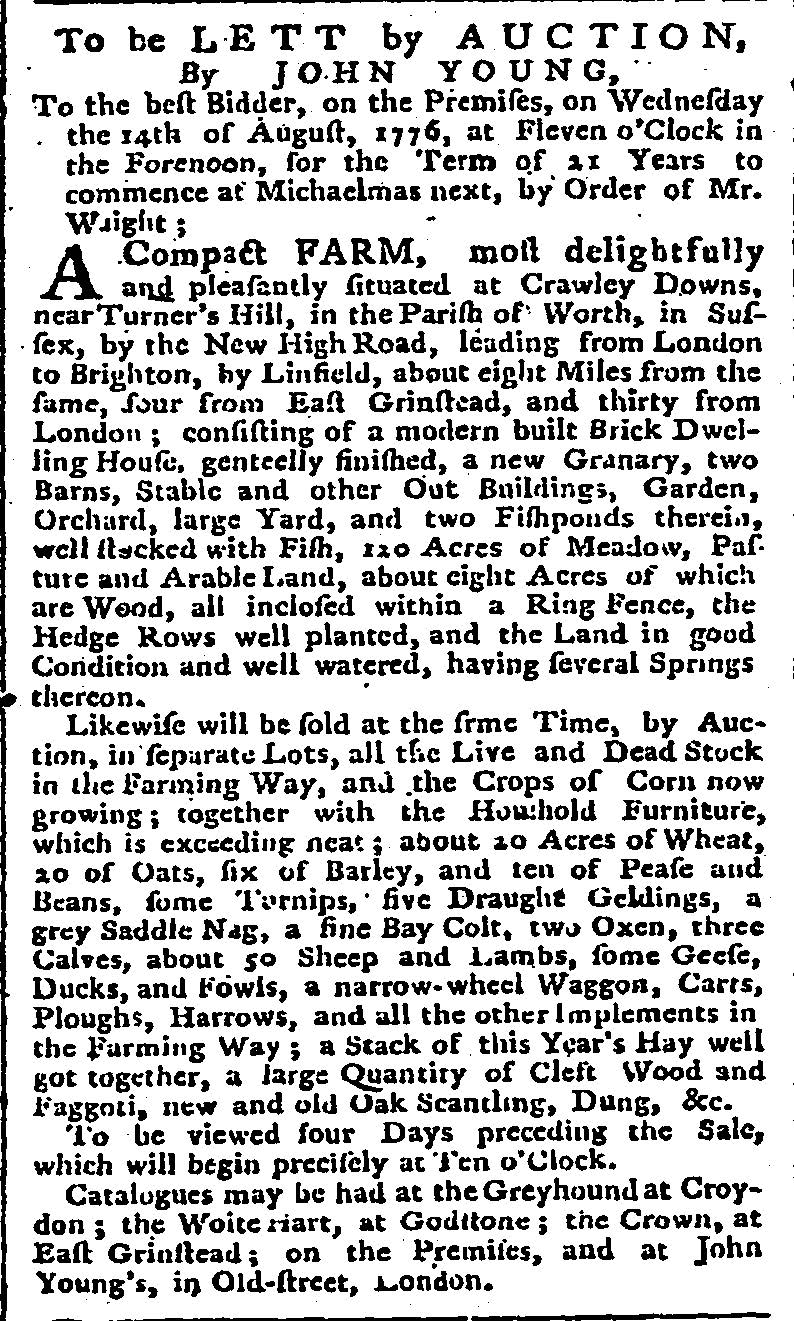
Advertisement for the lease of The Grange estate (Public Advertiser 7 Aug 1776)
It is not known exactly when The Grange was built. Up to 1738 it is referred to in the records as two properties: the Chequer, formerly known as Shadburns, which sounds as though it might have been an inn (indeed one record indicates that it had a sign); and Clarkes, which when Richard Michelborne died in 1583, was described as a manor or ‘capital messuage’. The next time we hear of it is in 1776 when this advertisement appeared in a London newspaper. By then the Chequer had been replaced and Clarkes Farm had been incorporated into a new estate.
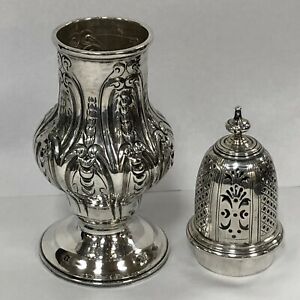
Silver shaker by Charles Wright, 1772
It was being advertised to let by a Mr Wright who, when he mortgaged the property two years later, was described as Charles Wright, silversmith, of Ave Maria Lane in the City of London. He had been working at that address since 1757 in partnership with a Thomas Whipham, to whom he had earlier been apprenticed. In 1775 Whipham retired so Charles Wright carried on as sole proprietor for nine years until he moved his premises to The Strand and then merged his business with fellow silversmiths, Thomas and Henry Chawner. He was a fine silversmith and surviving pieces by him fetch high prices in the present day.
Advertisement for the sale of The Grange estate (Morning Post & Daily Advertiser 28 Oct 1788)
Charles Wright put The Grange up for sale in 1788, two years short of when he seems to have retired, and the sitting tenant was named as a David Knox. Knox may have been tenant for a few years for he had been married at Worth church in 1784. But he attracts our attention in relation to a rather bizarre set of circumstances. In the 1787 edition of a short book extolling the virtues of a styptic, a treatment used to stem the flow of blood, a letter from a Dr Thomas Young of East Grinstead was quoted. In it he described the shocking instance when a blood vessel in a patient of his burst suddenly and how almost certain death was averted by the application of this styptic which had been formulated by the then celebrated ‘surgeon-dentist to the Prince of Wales’ Bartholomew Ruspini. The patient was none other than David Knox. If you want to read the full account, it is a somewhat gory tale.
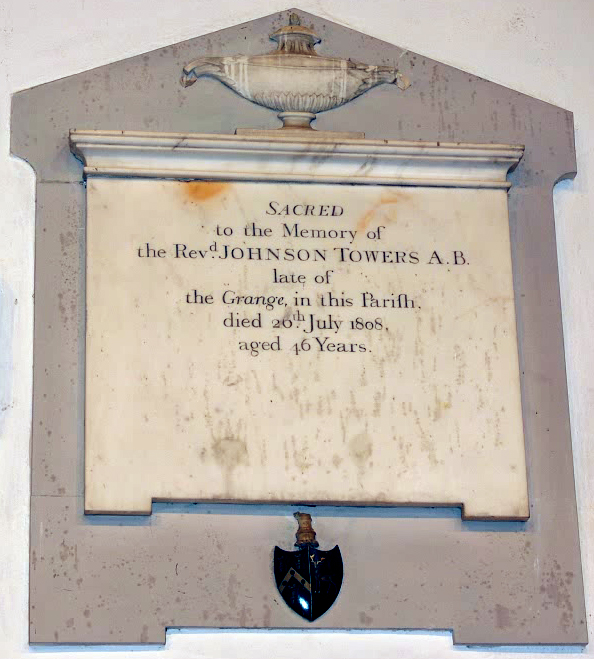
Memorial to Revd. Johnson Towers, St Nicholas’ Church, Worth
The Grange was sold in 1789 and David Knox moved to Charlwood, where he died in 1793. The new owner was the Reverend Johnson Towers whose father had been the headmaster of Tonbridge School. Towers had been a curate at Leatherhead but does not appear to have had ‘cure of souls’ as they used to say. He was only 27 when he purchased The Grange and appears to have lived off the income from the estates his father left him. A memorial in Worth church records his death at the young age of 46, after which his widow, Elizabeth, sold The Grange and its farm for £7068 18s 0d in 1809.
Henry Hewetson (1755-1838)
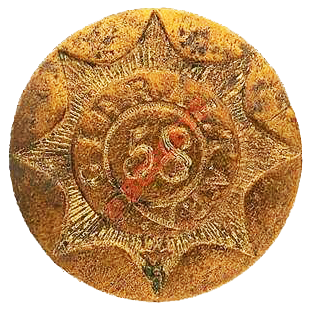
Gold-plated officer’s button, 58th (Rutlandshire) Regt. of Foot, stamped HEWETSON
Henry Hewetson, who was the purchaser, was unlike Johnson Towers and more like Charles Wright in his background. He was a laceman, that is a manufacturer of gold lace. He was in a very lucrative business at that time for the United Kingdom had been at war with France since 1792 and the huge demand for military uniforms and their gold accoutrements such as buttons, epaulettes and aiguillettes meant that a great deal of business and money came his way. He and his uncle Richard Hewetson, who he joined in business in King Street, Covent Garden, were successively Gold-lacemen to the king, George III, earning Henry the nickname ‘Gold-lace Harry’. He amassed a considerable fortune and when he died, unmarried, in 1838 bequests from his will amounted to about £500,000 (nearly £57 million in today’s money), which was divided between his 16 nephews and nieces. The Grange was left to John Hewetson Wilson, the son of his sister Isabella, and from then on for nearly a hundred years ownership of the property descended by inheritance rather than purchase.
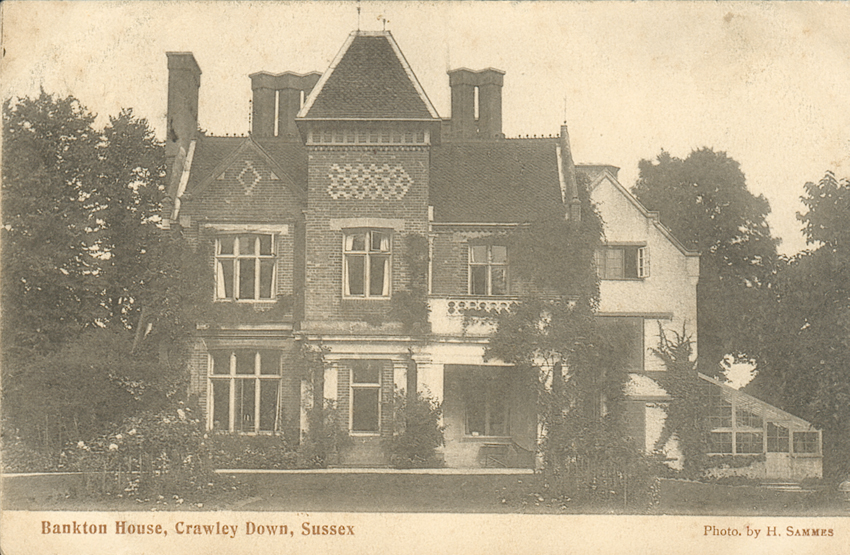
Bankton in about 1905. The house built in 1863 is nearest the camera; the part to the right side is a later addition
Bankton is a large house, now divided into two parts, set back from the corner of Grange Road and the Turners Hill Road. It was built in 1863 as a result of a dramatic set of circumstances. An earlier house had existed on the site. In the census of 1841 it was described as ‘Cottage on Crawley Down’ and was the home of its builder, Charles Milligan, aged 50, an army contractor who was born in Scotland, together with his wife Matilda and their 22-year-old daughter, also Matilda. They had previously lived in Woolwich, perhaps because of the military connection, as that is where the younger Matilda had been born. For the next 20 years we know little of the Milligans, apart from their appearance in the decennial census and the unseemly wrangle between Mr Milligan and Mr Wilson, his neighbour at The Grange, over the purchase at auction of two parcels of land in 1848 (see Mr Wilson and the railway). The younger Matilda lived with her parents, remaining unmarried and in 1851 we learn that she had a younger sister, Caroline, who was married and had two young daughters and a baby son.
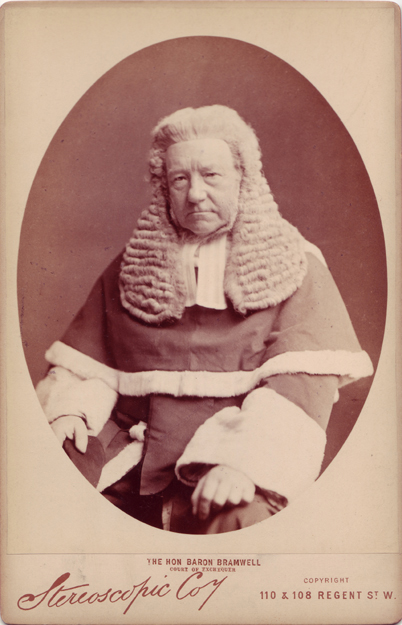
Justice Lord Bramwell
All this changed on the 19th of July 1861 when the Milligans’ house was destroyed by fire. But it was apparently no accident. A report repeated in newspapers across the country in August the next year recounted the case that was brought before Lord Bramwell at Lewes Assizes against a 17-year-old servant girl, Harriet Goble, on the charge of arson. The principal witness for the prosecution in the case was Charles Milligan’s daughter Matilda, by then in her early 40s, who was described as “a fashionably-dressed young lady of a very prepossessing appearance”. She confirmed that she and her elderly parents were at home at the time, as was a long-serving retainer, Robert Howes. Harriet Goble had been engaged on a temporary basis the previous February as cook and housemaid until a permanent appointment could be made. Matilda recounted that at about one o’clock on that day she noticed that the house was full of smoke, but assumed it to have been caused by the kitchen chimney. When the family dined an hour or so later the smoke had increased and it was discovered that a portfolio in an upstairs room was on fire and a coat and dress were smouldering. This was extinguished, but at around 6pm, Goble gave the alarm that there was another fire, this time of some books. Again this was put out. An hour and a half after that there was a fire in another room, which was again put out. About this time Goble cried out, “A man! a man! running up the attic-stairs”. Matilda, together with two neighbours who had been sent for, went up to look and found no-one. Finally at half past nine a fourth fire was discovered but this time it had taken hold too much to be extinguished, destroying the house and the greater part of its contents, estimated to be of the value of between three and four thousand pounds.
The defence barrister challenged Matilda about remarks she had been alleged to have made about her dislike of the house and that the only way she thought her father would leave was if it burnt down. Rumours had spread that it was she who had set light to the house. This she refuted by saying that on each occasion fires had started she was in the company of the neighbours, and they testified in her defence. Matilda went on to speak of a box and a watch which had gone missing when the last fire broke out. She said that she had questioned the accused about this who told her that she had gone into Matilda’s room at the time and had brought the box out with her but that she had met a man on the stairs who had knocked her down, with the flames rising around her, and taken the box. Matilda commented that she saw no mark on Goble’s face to indicate that she had been struck, nor any indication that any of her clothes had been burned. Matilda also stated that on several occasions in the past she had had cause to complain about Goble’s work.
Evidently Harriet Goble did not go into the witness box, as was her right. Hearing what was, in effect only one side of the case, with the defence concentrating on Matilda Milligan’s testimony, the jury found Goble not-guilty. The newspapers reported that the judge said after the jury had delivered their verdict that “he did not at all object to the verdict, but he could not help observing, in reference to a suggestion that had been thrown out in the course of the case, that it was absurd to suppose that the act could have been committed by Miss Milligan, especially when it appeared she would be so great a loser by it”.
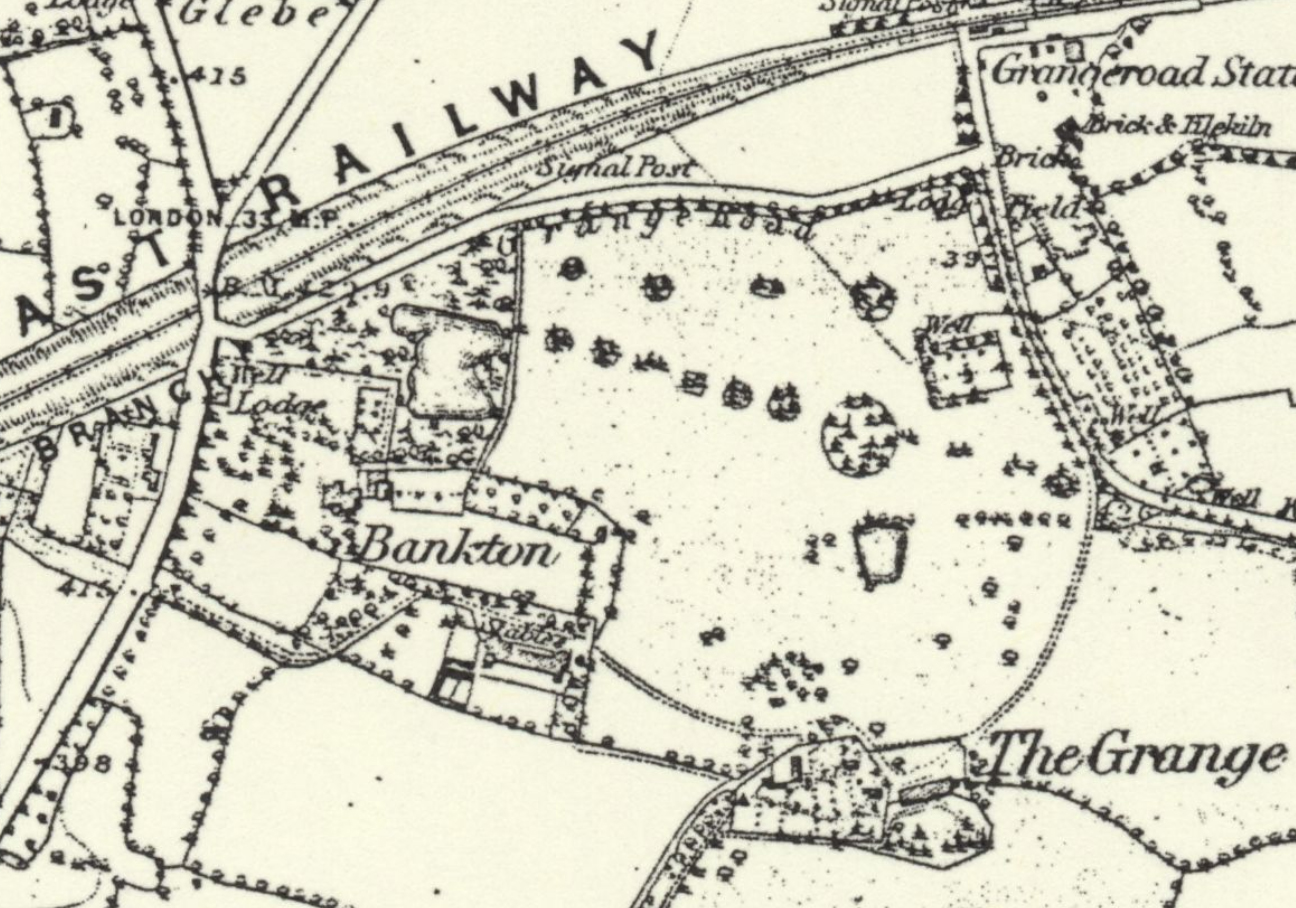
Part of the Ordnance Survey map of Crawley Down in 1874 showing Bankton and its Lodge
Matilda Robertson Milligan in about 1898; a photograph taken in Holloway Hospital
The house had not been insured, but Charles Milligan had Bankton built to replace it, though he did not survive to enjoy it for very long. He died there in 1865, his invalid wife having predeceased him two years earlier. I am guessing that his two daughters retained ownership and let the property, for by 1891 Matilda had returned and was living in the lodge, built on the land that her father had bid so hard to buy over 40 years earlier. In a sad coda to this story Matilda was admitted to Holloway Hospital with dementia, and died in 1906 at Brookwood Hospital, near Woking, aged 87. She, her parents and their faithful servant of over 40 years, Robert Howe, are buried together in Brookwood Cemetery next to the grave of Matilda’s sister and some of her family.
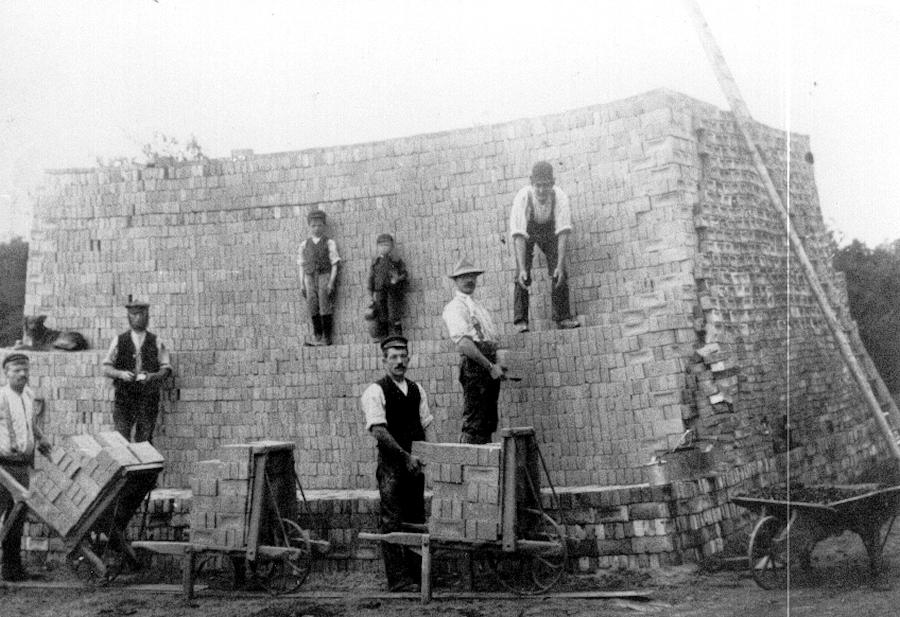
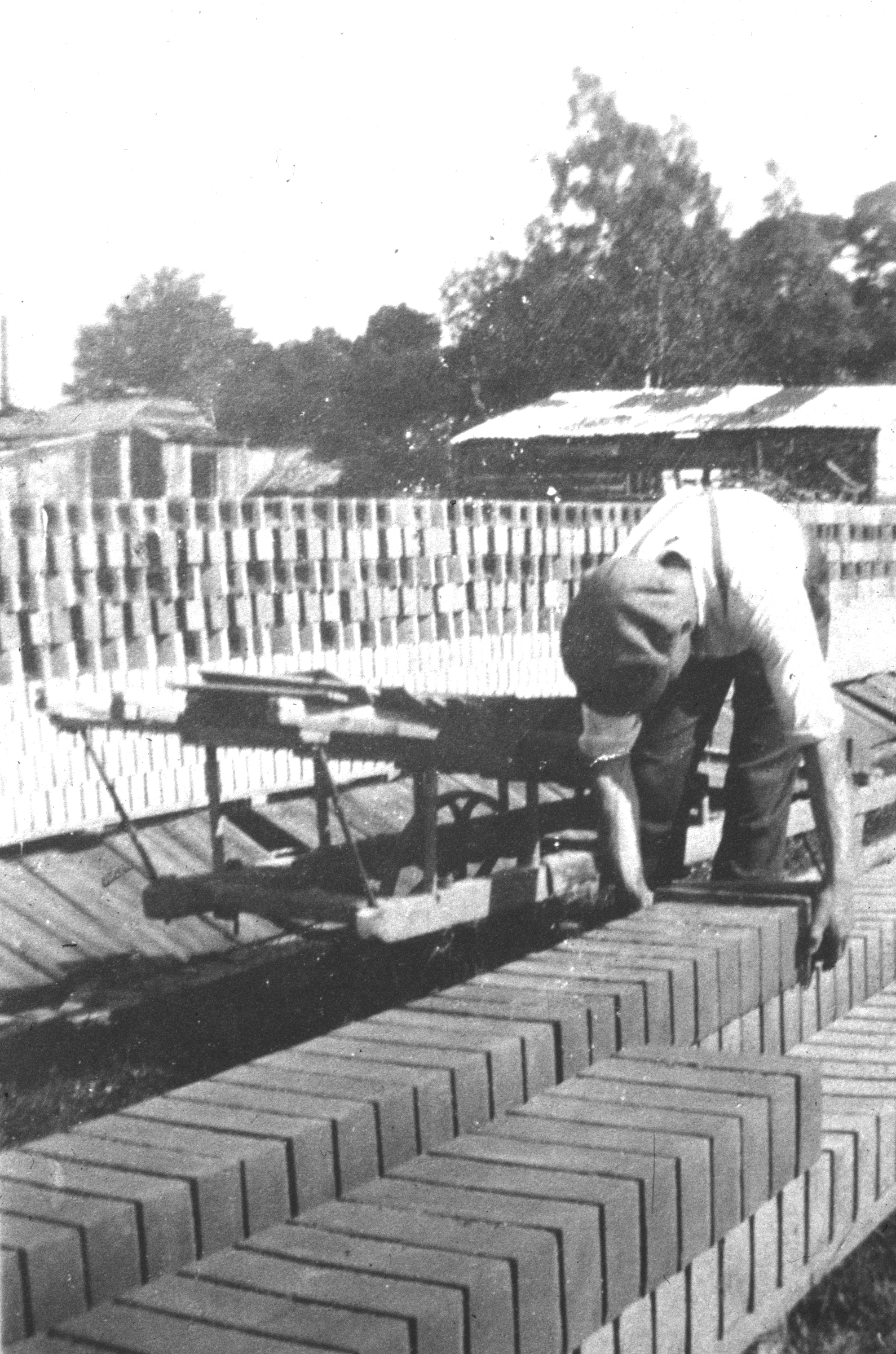
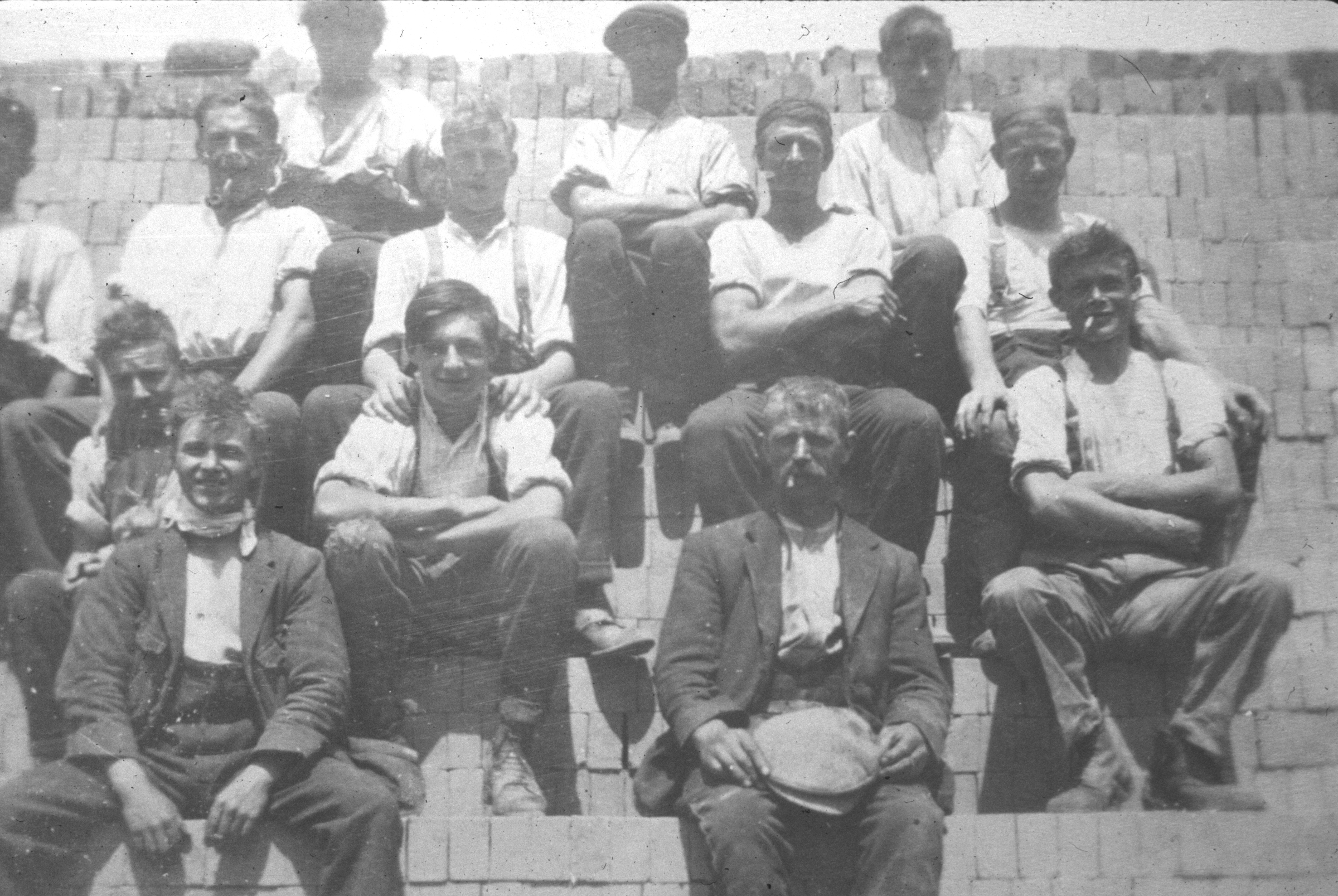
Brickmakers at the Grange Road yard building a brick clamp
For nearly a hundred years bricks were made at Crawley Down, and provided an important but limited source of local employment. The legacy of brick making in the village lies in the names of Kiln Road and Kiln Close, Bricklands and Brickyard Lane, as well as in the steep banks behind Forest Close, Ash Close and Hawarden Close, and Bricklands, which were the quarries where clay was extracted.
The first record of brick making in the area is in the records of the building of the railway from Three Bridges to East Grinstead in 1853. Mr W. A. Commerell, who owned the land of Bower Place Farm, claimed £2260 14s. from the East Grinstead Railway Company for:
300,000 kiln bricks @ £2 per 1000
£500 0s 0d
Brick kiln
£150 14s 0d
Sheds and stacks
£110 0s 0d
3½ acres of brick earth 8 feet deep – as worth taken as Royalty
£1400 os od
TOTAL
£2260 os od
As the railway company were anticipating spending just over £3000 on land purchases for the whole line, the sum claimed was considerably beyond what they were prepared to pay. However, they eventually settled with Mr Commerell for a payment of £300 on condition that they would construct a level crossing to link the severed parts of his land. Mr Commerell’s tenant at the time was John Riddle, who had previously been associated with a brickworks at West Hoathly in 1848. The existence of so many bricks implies that brick making had been established on the land in question (approximately the site of the Royal Oak public house) for at least a year, although the fact that in the 1851 census Riddle is recorded as having a two year old son born in Slinfold (where his landlord Commerell also had land) suggests that he can only have been tenant at Bower Place for a short time, and that the start of his tenancy may have marked the beginning of brick making in Crawley Down. John Riddle was still resident in 1858, so it is possible that he continued to make bricks, perhaps confining his operations to the area south of the railway line where brick making was to continue for the next eighty years.
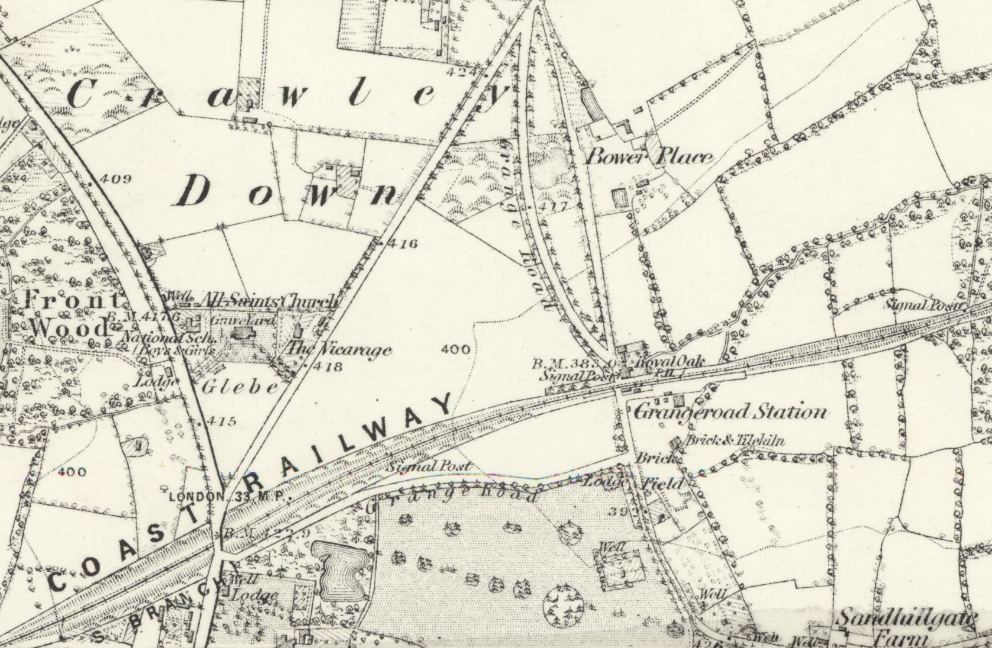
Crawley Down’s first brickyard shown on a map of about 1870; it also shows Grange Road station where it was originally sited
In the census of 1861 Henry Hurst is recorded as a brickmaker. He and his family hailed from Wiltshire. Ten years later William Rice, a local man, was to have the same occupation. From such scanty information it is hard to judge what status either of these men held, but is likely that they were in charge of operations at the local brickworks and that their workers were merely described as labourers.
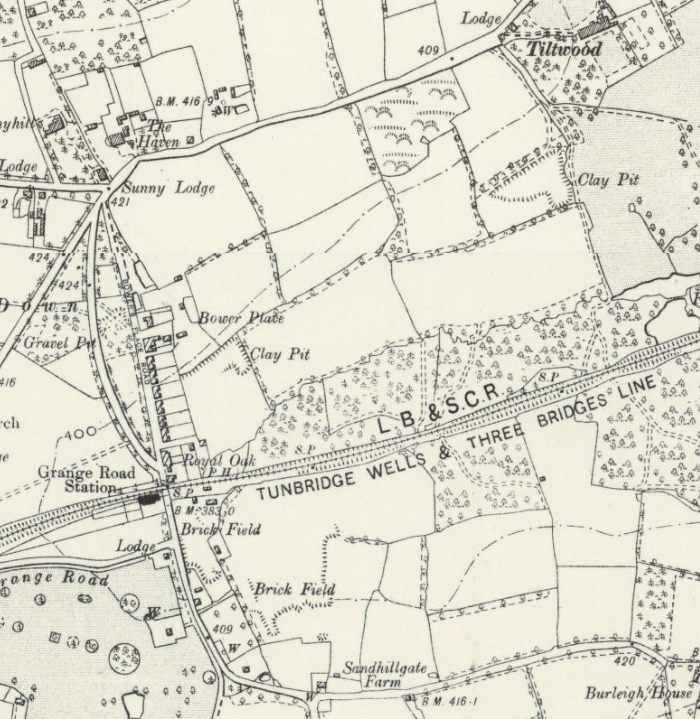
In 1874 Samuel Ellmer was noted as a brick and tile maker. He was still there in 1882, but in addition Bennett & Rapley are recorded as brick makers at Grange Road station. It is not clear, therefore, where Ellmer’s brickyard was located, and it seems likely that he occupied the yard behind where Bowers Place now stands. Five years later, Bennett & Rapley were still there, but Ellmer had ceased business. That year, William Bennett of Turners Hill obtained a seven year lease, from George Scaramanga, of Tiltwood, of the land of Sandhill Gate Farm (now Burleigh Cottage) for digging clay and making bricks, extending the existing yard beside the old Grange Road station. The description of the land in the lease, as meadow, suggests that it had not been dug before, and that 1887 may mark the commencement of clay extraction there. John Sivyer, who is mentioned as a brick maker in 1890, probably ran his own yard, but it is not clear whether it was the one behind Bowers Place, or one further to the east.
In 1893 a one year lease for Sandhill Gate land was granted to Ambrose Bennett who, six years earlier, had been listed as a grocer. In 1895 Winter & Co. are recorded as brick makers, but two years later the land at Sandhill Gate was leased, for 21 years, to the four Smith brothers – John, George, Arthur and Harry – of South Norwood. By this time a number of buildings connected with brick making had been erected on the land. These included two brick kilns, two stables, each for three horses, a disused railway carriage used as a fowl house and store, three sheds, and a three-bedroomed bungalow with piggery and privy. In the years before the First World War, bricks made at Crawley Down were used in the construction of Larchwood, and for the building of the cottages on the north side of the western end of Sunny Avenue.
After the war the Paddockhurst Estate purchased many bricks from the Grange Road yard, and George Wells used them to build the houses along the east end of Wallage Lane, with the stone quoins coming from the Selsfield quarry which he also ran. Transporting the bricks was done on horse-drawn wagons, though later a petrol lorry was used. The lorries carried 1000 bricks at a time, which could be loaded by four men in an hour.
That at least one other brickyard was in operation at this time is evident from the appearance of another brick maker, George Hall, in 1899 and again in 1903. The yard behind Bowers Place was remembered as Hall’s yard in this period, and Alfred Bennett was foreman. In the 1920s he became foreman at the Grange Road yard, and lived in the bungalow next to the yard. Just after the turn of the century Harry Nickalls, who lived in Imberhorne Lane, began operating a small yard off Hophurst Lane, just west of Tiltwood. He had a small workforce and the yard was seldom very profitable. In an effort to compete with the many small yards in the area he charged low prices and used only horses, which he kept at the yard. Bricks from Nickalls’ yard were used in the building of the Whitehall cinema in East Grinstead (bombed in 1943). He continued into the early years of the First World War, when demand slackened drastically and the army requisitioned his horses. George Wells bought him out in 1915, his equipment was sold to the Hackenden brickworks in East Grinstead, and Webber’s, the builders, bought Nickalls’ stock of 100,000 bricks for £100.
During the First World War the Grange Road yard ceased making bricks, and a steam engine was installed to saw timber for use as trench props. George Wells took over the Smith Brothers’ lease in 1916, and in a directory of the same year three brick makers are listed; among them Albert Philpott, whose family were mainstays of brick making in Crawley Down between the wars. Wells was a builder, and he also ran the brickworks at Rowfant. He was therefore ideally placed to take advantage of the upsurge in building after the end of the war in 1918; he always maintained that he made more money out of brick making than he did out of any of his other interests. The Grange Road yard continued in use until the outbreak of war in 1939, when the use of open clamps for burning bricks was prohibited because of the blackout regulations, and uncertainty about the demand for bricks caused most small brickworks to close down. The half a million bricks there and at Rowfant were sold for making air-raid shelters and repairing bomb-damaged buildings.
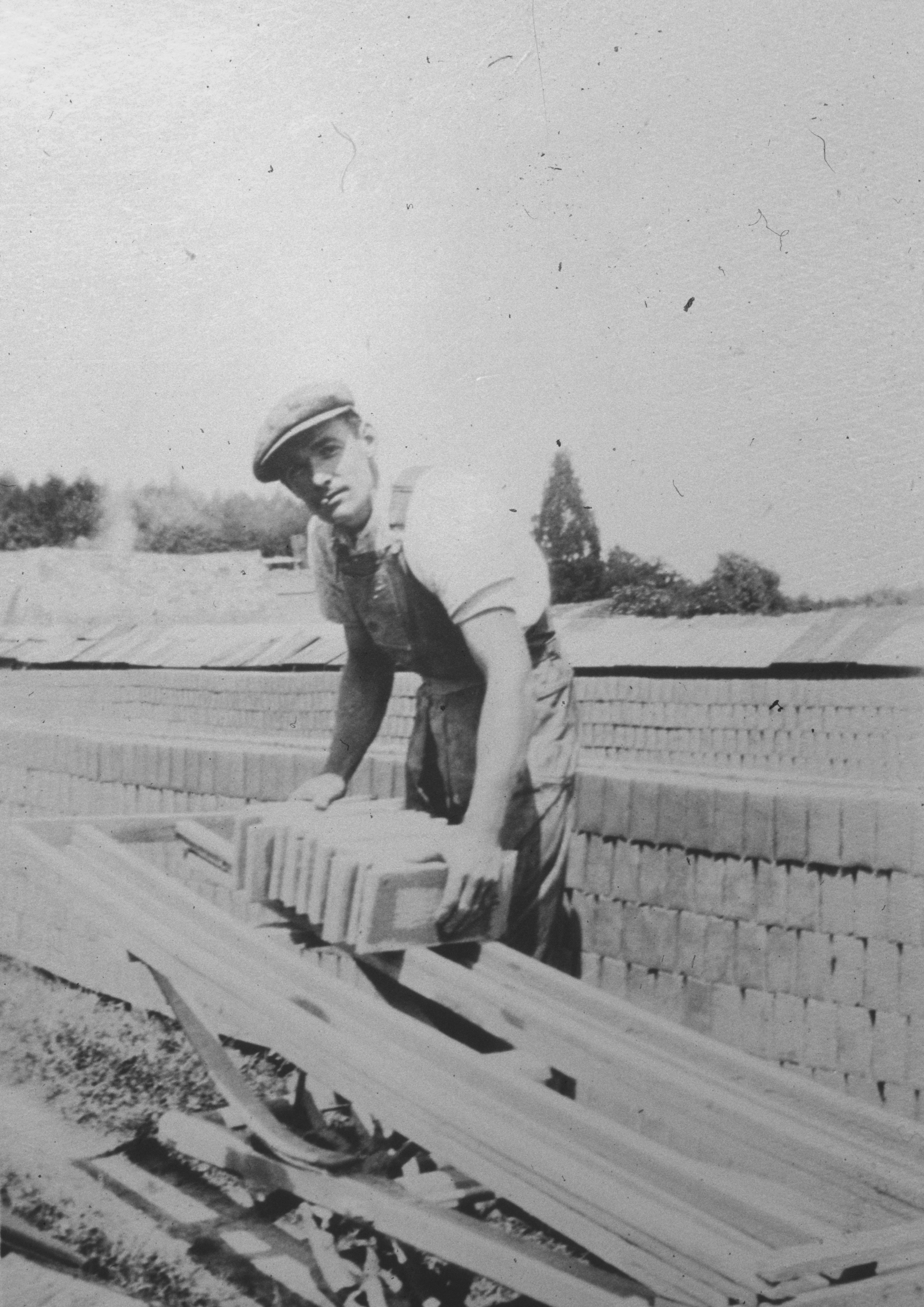
Bert Philpott with some pallets that were used to stack the bricks when they had just been made, which made it easier to handle the soft bricks
Brick making by hand involved a number stages, all of which had their specialised terms, which varied slightly from yard to yard. Clay was dug in the winter, by a few workers, and left to weather in heap about 6ft. deep in a shallow pit, known as a ‘hummocking hole’. The clay was covered with a layer of breeze, which was brought by train from the London rubbish heaps and gas works. This had to be sieved to remove any metal and glass which might have been mixed with it. The breeze stiffened the clay, and resulted in a distinctive speckled colouring.
Brick making began in late March or early April, depending on the weather. A ‘hummocker’ would take a mass of clay to the pug wheel or ‘pan’, where it would be mixed with breeze, in the proportions of 1 cu.ft. of clay to 3 cu.ins breeze, and with water from a pond, and then ground to a paste for two or three minutes. The pug wheel consisted of a cylindrical pan, about 10-12 ft. across, which rotated, and the clay was mixed by a pair of wheels set vertically, opposite each other. The ‘pan man’ would take the ‘pug’ from the ‘pan’ to a ‘stall’ where a ‘flatter-in’ would cut a small lump, or ‘walk’, of clay using a two-handled knife, called a ‘coggle’, and pass it to the brick maker. He (or sometimes she) would dust the wooden mould with sand, and then press the clay into the mould, cutting off the surplus clay, which was known as the ‘cod piece’! The mould would consist of an open wooden frame against which would be held a wooden pallet, which might have a raised surface that would form the ‘frog’ of the brick. The ‘green’ brick would then be tipped out of the mould onto another flat pallet, which would enable the brick to be placed on to a ‘bearing-off’ barrow. Carrying 32 or 34 bricks the barrow would carry them to the drying ‘hacks’. An experienced brick maker might make as many as 1700 bricks in a day, starting at four or five in the morning and continuing, with a long break in the heat of the day, until early evening. In the course of a season a brick maker might average 125,000 bricks.
Bricks drying on hacks
The ‘hacks’ were long, double rows of new bricks, as much as 75 yards long, where they were air dried. The length of the row allowed the bricks to dry before another row was placed on top. In good weather the ‘hacks’ could be nine or ten bricks high, with the top four or five rows ‘skintled’, or laid criss-cross. Drying would take about three weeks in good weather, and protective boards were used to keep off rain; a watch had to be kept 24 hours a day. When they were dry the bricks were taken and stacked on a clamp. This was known as ‘crowding’, and a clamp might have as many as 300,000 bricks in it. The clamp would be built on a six-inch bed of coke and airbricks, and the breeze in the brick clay would cause the bricks to be self burning to some extent.
A clamp would burn for about a month, with the quality of the bricks varying considerably within the clamp. Those on the outside, which were less well burned were sold as ‘place’ bricks for the inside walls of houses, where they would be plastered over. The better-fired bricks were sold as ‘stock’ bricks and used for facings, where their more uniform colour would enhance a building. In a good season as many as four clamps might be burnt, and again it was important that a watch was kept, round the clock, so that protective sheets of corrugated iron, or soil could be used to prevent wind or rain from affecting the combustion process. Although bricks were burnt in clamps at Crawley Down in the twentieth century, a kiln had been used before, but fewer bricks could be made at a time. Tiles and clay pipes could also be made in the kiln, which was later used variously as a wood store, blacksmith’s and lorry shed.
Brickmakers on a clamp
The whole process of brick making was the responsibility of the foreman or manager of the yard. Oliver Styles, the manager for Smith Brothers at the Grange Road yard in 1912, was paid 24s. 6d. (about £1.22) per 1000 bricks, and out of that payment came the earnings of all the other brick workers. The ‘hummockers’ or ‘temperers’, who mixed the clay and breeze, were paid 4s. as were the ‘crowders’, although if there were a larger number of them the money might have to be shared among them all. The five or six brick makers earned about 4s. 6d. per 1000, and they paid the ‘pan man’ 3d. a 1000 bricks to save them having to fetch the mixture themselves. By the 1920s a brick maker might expect to earn between 9s. 6d. and 11s. a 1000, while George Wells sold the bricks for £4-5 per 1000.
The brickyards in Crawley Down in about 1900; the railway station had been moved across the road to the west in 1874
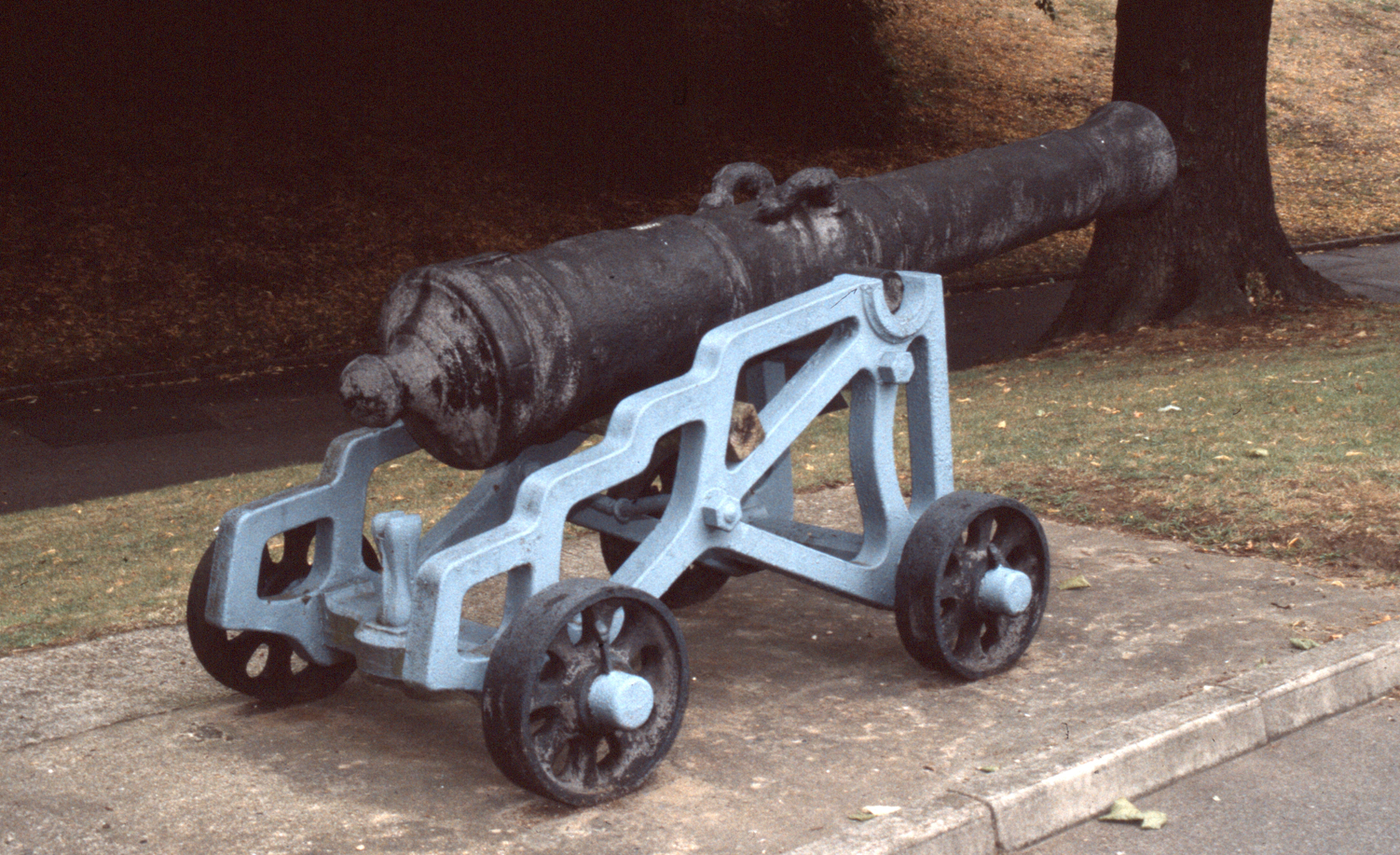
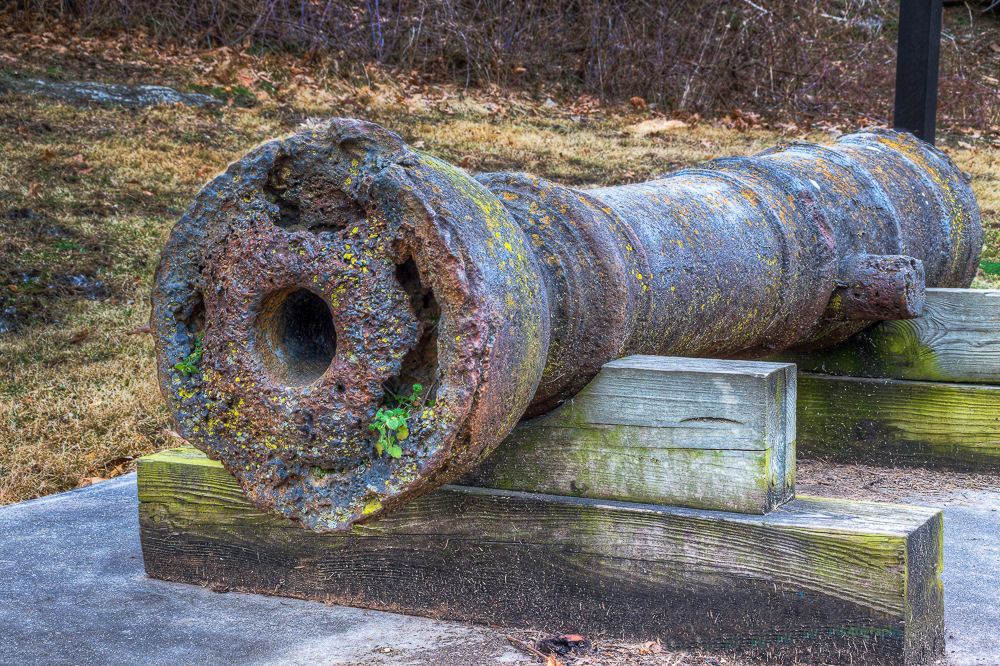
Twelve-pounder gun cast by Messrs Master & Raby at the Warren Furnace, Crawley Down c.1761
The Weald of Sussex, Kent and Surrey has long been associated with iron making. From the pre Roman Iron Age to the early 19th century, the iron ore in the Wealden clays, the abundant woodland, and latterly the many small ghylls, have provided the raw materials and power to sustain an industry which was, for two periods in our history – during the Roman occupation and in the time of the Tudors – paramount of its type in the land. There are few parishes in the Weald which do not have some association with iron, and it is said that there is scarcely a farm road in the region on which iron slag has not been used as a metalling.
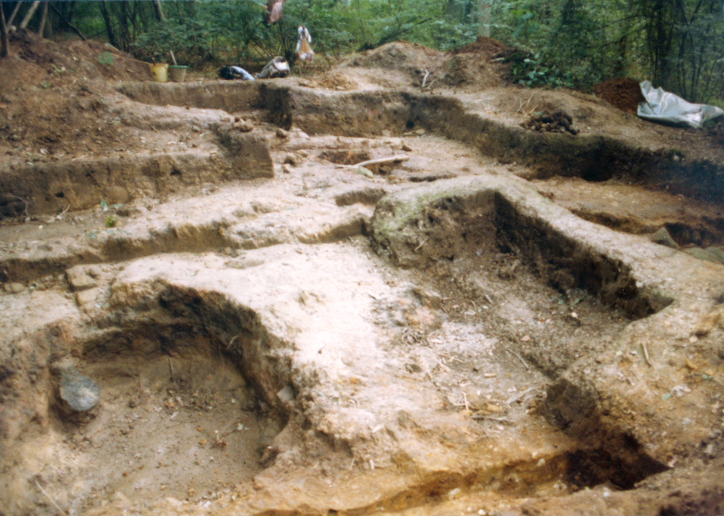
The earliest evidence of iron making in the Crawley Down area has been found near the foot of Hophurst Hill, beside the Felbridge Water. In 1980, members of the Wealden Iron Research Group discovered a dense concentration of iron slag, and debris from the remains of an early furnace. During the next two years excavation revealed a smelting hearth and a smithing hearth. The finding of two pieces of medieval pottery initially led to the belief that the site was of that period. However, when the lining of the smelting hearth was subjected to archæo-magnetic dating a working life going back to the 1st century AD was discovered. Archæo-magnetic dating uses the magnetic orientation of iron oxide particles in burnt clay, which become fixed along the alignment of the earth’s magnetic field at the time when they were heated, to determine when that heating took place.
The excavations at Smythford in the early 1980s
This little site, which has been given the name Smythford after the old name for the land on which it was found, is known as a bloomery because its principal product was a lump or ‘bloom’ of iron. The smelting hearth consisted of a depression about 3 feet long and 2½ feet wide, at one end of which was a clay chimney. Into this, charcoal and iron ore were loaded and the charcoal burned at a temperature of about 1200°C, with a forced draught from hand-powered bellows. This melted the ore and allowed the iron to coalesce at the bottom in a disparate mass. It is not entirely clear whether the slag or waste material from the process, was allowed to run out of this particular furnace. It was from some, but the slag found during excavation did not have the appearance of having run along the ground. After several hours, by which time a sufficient quantity of iron had accumulated the bloom was removed and reheated on an open bed of charcoal, the hearth found adjacent to the smelting hearth. Here the bloom was consolidated and the pieces of slag adhering to it melted off. The iron could then be shaped by a smith.
The site dated from the late Iron Age or early in the Roman occupation, and was probably worked by native Britons for a season or two, until the source of iron, which probably lay on the north bank of the stream, was exhausted or too difficult to dig. It has been suggested that the Roman road which passes a few hundred yards to the east, was surfaced with the slag from such works. However, the likely date of the building of the road, which is late in the 2nd or early in the 3rd Century, would have made it unlikely that the slag from the Smythford site was used, as it probably would, even then, have been buried under a hundred years of leaf litter.
Another small bloomery site was discovered a little to the east, in a field opposite a house called ‘Ascotts’, off the Crawley Down Road in Felbridge. An elderly local resident mentioned to the author that there used to be a cottage near where the site was found, and that the tenants had thought that a meteorite had landed there as they kept finding pieces of metallic material in the ground. On investigation it proved that these were in fact lumps of early iron slag! Further to the east, in the field adjacent to The Birches, on the south side of the Felbridge Water, evidence of a further site has been found, although ploughing over many centuries has dispersed the slag.
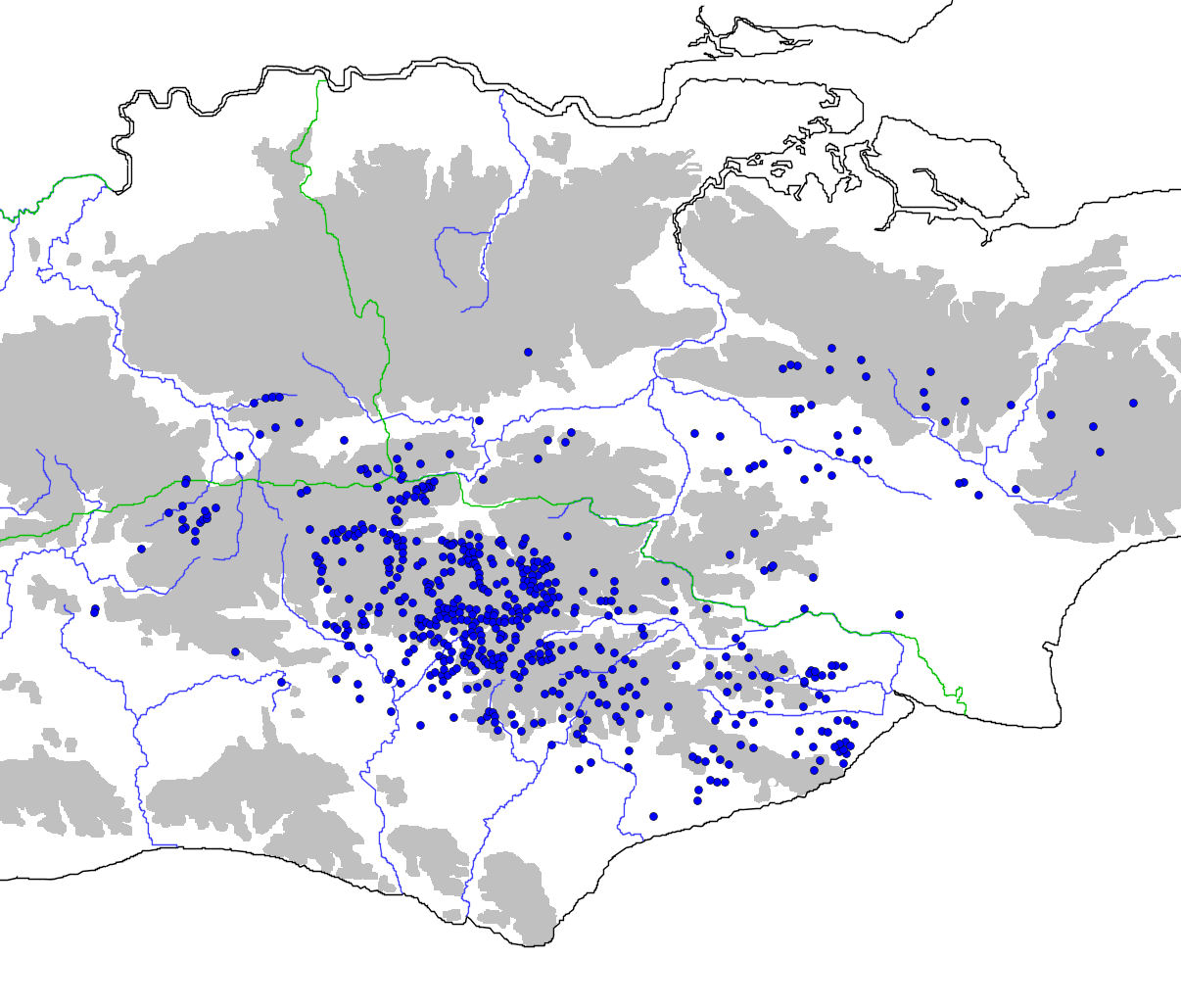
There are hundreds of bloomery sites in the Weald, dating from the Roman and the mediæval periods, and they show that, from as far back as the 3rd Century BC iron was being smelted in the region, and that during the Roman occupation such exploitation was a major industry. The early date, and scale, of the Smythford site suggests that it may have been the work of local people, rather than of an organised group exploiting iron over a wide area.
Bloomery sites in south-east England dating from the pre-Roman Iron Age to the Middle Ages
There is no doubt that a connection exists between the iron industry and the Roman road, from London to Brighton, that crosses Rushetts Wood and Hophurst Farm, for ploughing has brought to the surface pieces of iron slag and sandstone, in a broad strip about 12 metres wide in fields to the south of Hophurst farmhouse. Donald Margary, who first identified the route of the road in the 1930s, noted the same mixture of materials, both across the farm and to the north, beyond the Surrey border. The slag found at the Ascotts site may be from the surface of the road.
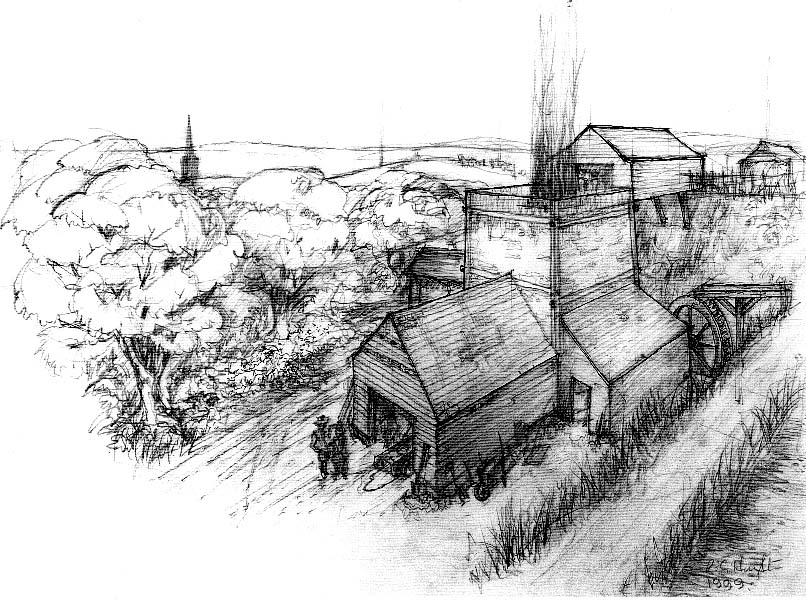
Some fifteen hundred years separate the little iron working site at Smythford and the blast furnace that was built in what is now called Furnace Wood. Again the appearance of iron in the district coincided with a major expansion of the industry in the Weald, but on this latter occasion the scale was altogether different. The blast furnace began to supersede the bloomery following the establishment of what was probably the first, at Queenstock, near Buxted, in 1490. The process had been introduced from northern France, and although the spread of new technology was slow initially, by the 1550s furnaces and forges were being built throughout the Weald. Essentially a bloomery writ large, the blast furnace differed in a number of important ways. Firstly, it was considerably larger, being about 7 metres (23 feet) high, compared with 1 to 1.5 metres (3 – 5 feet). Secondly, its bellows were powered by a water wheel; and thirdly, instead of producing a bloom, weighing several pounds, of fairly pure iron after several hours of smelting, a ton or more of cast iron could be tapped from a blast furnace every day over a period of seven or eight months. Furthermore, the cast iron then had to be refined before it could be beaten into shape and this necessitated a second process, which was undertaken at a finery forge, whereby the cast iron was remelted in a blast of air to remove the carbon absorbed from the charcoal in the furnace and then re-formed under a water-powered hammer into bars of wrought iron.
An artist’s impression of a Tudor blast furnace (Reg Houghton)
The furnace in what was then known as the Myllwood was set up in 1567 by two ironmasters, John Fawkener, who operated the forge at Maresfield, and John French of Waldron, who ran a forge at Chiddingly. Their respective works were leased from Sir Edward Gage, and it was presumably through him, as lord of the manor of Hedgecourt in which the Myllwood lay, that they came to build the furnace. Their lease was for 21 years at 10 shillings a year, and they were allowed to purchase up to £120 worth of wood from the Gage estates in the area, to convert into charcoal for the furnace. They were also permitted to have up to 1000 loads of ‘myne’, or iron ore. At the same time Sir Edward Gage leased the manor of Hedgecourt, except the furnace, to John Thorpe of Horne, for 21 years at £40 a year, and Thorpe must have come to some sort of arrangement with Fawkener and French to sub lease the furnace for it is Thorpe’s name which appears as occupier of ‘a furnace and forge about Copthorne and Lingfield’ in a survey of Wealden ironworks carried out for the Privy Council in 1574. It was also Thorpe who, that same year, entered into a bond of £2000 not to cast guns except for the Crown. The forge was Woodcock Hammer, at what is now known as the Wiremill, north of Felbridge. It is not known precisely what was produced at the furnace, but it is likely that iron sows (ingots of cast iron up to 11 feet in length) were taken from there to Woodcock forge to be converted into wrought iron. Nor is it known for precisely how long the furnace continued to be worked. The lease expired in 1588, the year of the Spanish Armada, and reference to the old furnace in 1627 suggests that it was no longer in operation then. However, Woodcock Hammer seems to have continued in use, in the hands of the Thorpe family, although it could have been refining iron from one or more other furnaces. At about the time of the expiry of the original lease of the furnace, the Thorpes came to live at Gibbshaven Farm, and they continued to be recorded there until the 1660s.
The iron industry in the Weald reached the peak of its importance in the early years of the 17th century but during the ensuing decades the importation of Swedish iron began to make inroads into the traditional markets for Wealden bar iron in eastern England. At the same time, in the west Midlands, at too costly an overland journey from the east coast for Swedish iron to penetrate, an iron industry based on the rich ores of the Forest of Dean began to spring up in the Severn valley. The marketability of Wealden bar began to dwindle and many furnaces and forges in the Weald went out of use. However, Britain’s interest in overseas trade and influence was growing and there was an increasing demand for guns, not only for the ships that sailed to India, Africa and the Americas, but also for the fortification of the settlements and outposts that began to be established overseas. A few Wealden furnaces had been engaged in this specialised trade since late in the reign of Henry VIII when the technique for casting iron guns was mastered, and by the end of the 16th century English iron cannon were much sought after by our European neighbours, notably Denmark and the Netherlands. The English Civil war strengthened the iron industry in the Midlands so that by the 1660s furnaces in the Weald were increasingly concentrating on the lucrative, but fickle, gun trade; fickle because it relied heavily on the political situation and its fortunes rose and fell with alternating periods of war and peace. A series of wars in the latter part of the 17th century, together with burgeoning overseas expansion of trade, ensured a steady demand. Further wars in the mid 18th century enabled the region to continue to dominate the production of ordnance as guns were known.
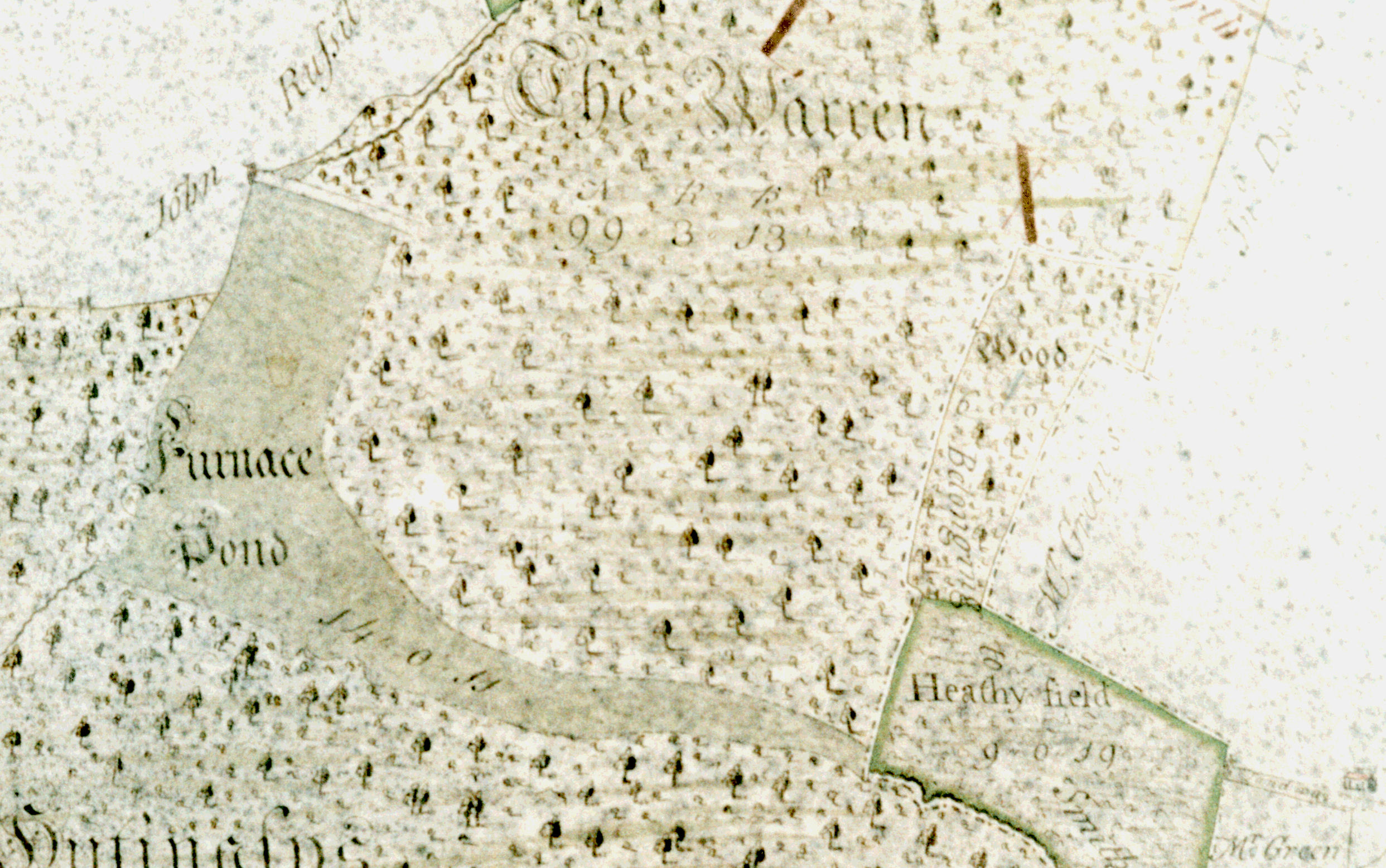
The Warren Furnace pond in 1748, about ten years before it was brought back into use by Edward Raby and Alexander Master (from a map belonging to the Mercers’ Company)
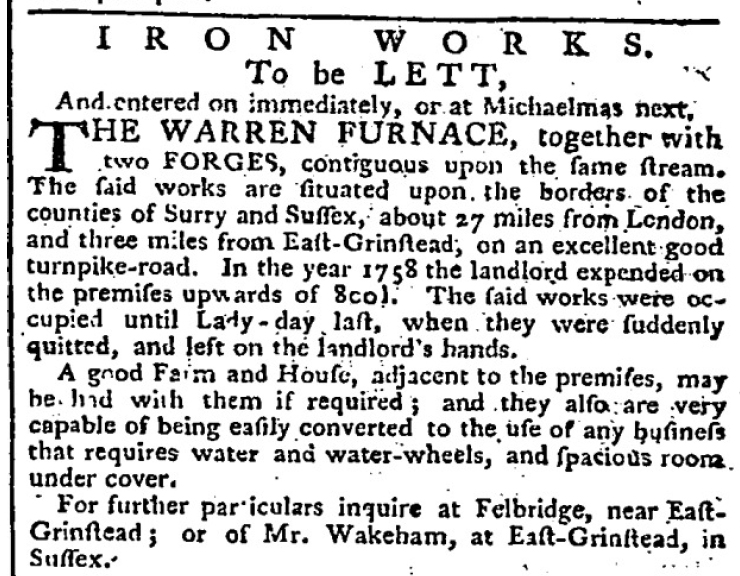
It was during one of these conflicts, the Seven Years’ War, when Britain and Prussia were opposed by France, Austria and Russia, and where the theatres of war ranged between continental Europe, India and America, that the furnace in the Myllwood was revived after a period of idleness that had lasted perhaps 150 years. War was declared in 1756 but it was not until about 1758 that Edward Raby, a London ironmonger, together with his partner, and brother-in law, Alexander Master, must have taken a lease from Edward Evelyn of Felbridge Place. By this time the wood had been renamed The Warren, and it had been recorded as such on a map that Evelyn had had made in 1748, when he purchased the estate from the Gages. Raby and Master had already being doing business selling bar iron and steel to the Board of Ordnance, the government organisation that purchased guns for the navy, but gun founding seems to have been a departure for them. In September 1758 they offered to cast 200 tons of iron ordnance and 200 tons of round shot (cannon balls) for the following year and their offer was accepted. Wealden blast furnaces were not generally capable of casting as much as 400 tons of iron in a year, and it is apparent that Raby had sub contracted the supply of round shot to a founder in Bristol for, when the time came for the iron to be delivered to the Board’s arsenal at Woolwich, he had to plead the excuse of contrary winds delaying the seabound arrival of the shot. In 1760 the Board of Ordnance placed no new orders for guns or shot, the massive rearmament of the previous four years having been enough and money being tight, but in 1761 and 1762 Raby and Masters continued to supply guns to Woolwich. An example of their work, a 12 pounder, seen in the photograph at the beginning of this article, used to stand outside the Artillery Museum at Woolwich Rotunda. It is unusual for having ‘dolphins’, which were elaborately modelled lifting handles on the upper part of the barrel; Raby was the only founder to cast guns with ‘dolphins’.
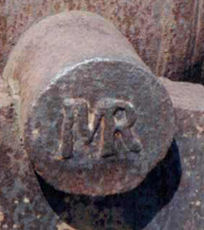
The mark of Master & Raby on the trunnion of one of the guns they cast, which is now on the island of St Vincent in the West Indies
Raby and Master must have invested heavily to set up a gun foundry in the Warren and would have committed themselves deeply with regard to ore, charcoal and labour. It must therefore have come as a blow when peace was declared early in 1763 and the Board placed an immediate stop on further orders. We do not know the circumstances but within a year the partners were bankrupt, with the principal creditor being a fellow ironmonger, Robert Macky. The fact that Edward Raby’s name appears most frequently in dealings with the Board suggests that he was the partner who supervised the gun founding operations in Sussex, while Alexander Master remained in control of the ironmongery business in Smithfield. As the bankruptcy was brought about by a fellow ironmonger it is reasonable to suppose that the greater burden of responsibility for it was Master’s. If so it would more easily explain the re-emergence of Edward Raby, without his former partner, into the gun trade two years later, once again offering to cast guns for the Board as his furnace in Sussex was in blast.
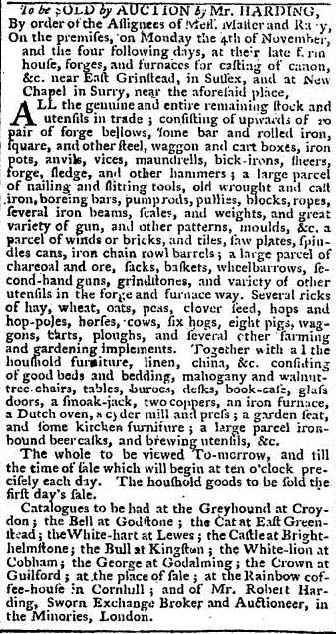
The notice of the bankruptcy sale of Master & Raby’s stock at the Warren Furnace and Woodcock Forge (Gazetteer and New Daily Advertiser, 30th October 1765)
In 1762, two years before Master and Raby had been declared bankrupt, a fellow gun founder William Clutton, who operated a newly-built furnace at Gravetye, near West Hoathly, had fallen foul of his creditors in the same way. Unlike Raby, Clutton, who was only in his late 20s, seems to have been inexperienced in the iron business, and his venture into gun founding lasted only two years. By 1765 the assignees appointed to deal with his affairs had put the lease of Gravetye and its furnace up for sale. Re-establishing himself after his financial setback, Raby seems to acquired the Gravetye lease and operated the furnace together with the one at The Warren. Robert Knight, a local carrier, who had worked for both Master and Raby, and for Clutton, recorded in his account book the guns he transported from Gravetye to The Warren and then on to Woolwich. Raby used the better facilities at The Warren to finish the guns he cast at Gravetye, for Knight was carrying them away from Gravetye with their ‘heads’ on. The heads were the heavy projections on the muzzles of guns which, during vertical casting, allowed impurities and gas bubbles to accumulate while the iron was molten, reducing the danger of voids and weaknesses in the gun metal. The heads were sawn off once the core forming the barrel had been removed, and the guns were then bored to smooth the barrel. Clearly, all Raby’s guns were being bored at The Warren. In addition, Raby continued to work the Woodcock Hammer, and also Howbourne forge at Buxted, which had been operated by Clutton before him.
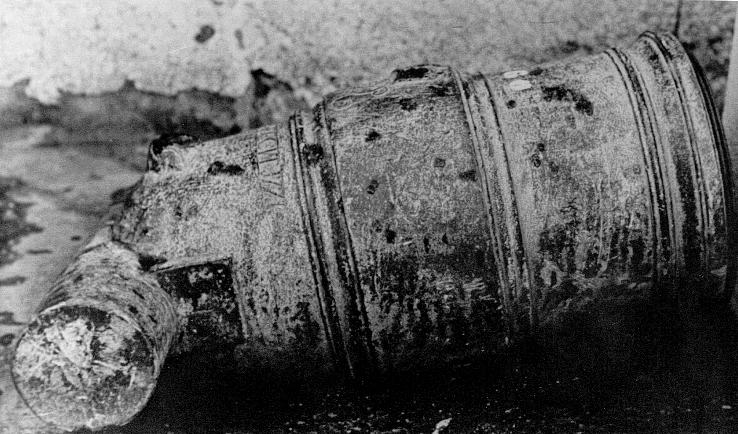
A cannon, like the ones cast at the Warren Furnace in the 18th century, with its gunhead still in place
A bronze 8 inch mortar cast by Edward Raby in 1771, now in the San Carlos Military Museum in Mallorca
At the end of the Seven Years’ War the high prices the gun founders were able to charge for their products fell, and when contracts for guns were resumed in 1764 a new contractor entered the arena. The Carron Company, which had furnaces near Falkirk in Scotland, offered to cast guns for the Board at £6 a ton cheaper than wartime prices. For most founders this was too low to be afforded, but Raby seems to have been able to match it and win new contracts for his two furnaces. He was clearly regarded as a skilful founder for, in addition to ordnance he was casting trucks – the wheels for gun carriages – and shells. Shells were considerably more difficult to cast than round shot because they were hollow. By 1769 he seems to have diversified and was casting guns in bronze as well as iron, and selling to the East India Company, a substantial purchaser of guns in this period when it had just wrested commercial control of Bengal from the French. Raby offered bronze guns to the Board of Ordnance which placed an order, but in 1771 Raby died. He left no will so it can only be assumed that his death was sudden. His son, Alexander, who had been apprenticed to Raby’s former partner, and who had worked with his father at The Warren in the early 1760s, took control of the furnaces. But he had his mind on greater things and saw his chance in other branches of the iron industry, operating iron mills on the River Mole in Surrey before moving to South Wales and playing a prominent part in the coal industry. Without surviving leases we cannot know under what conditions the furnaces at The Warren and Gravetye were operated, but it seems that Alec Raby quit the works without much, if indeed any, notice, for The Warren at least was occupied for a short period by the Southwark firm of Joseph Wright and Thomas Prickett who had been operating as gun founders at the North Park furnace at Fernhurst, near Midhurst. Their revival of The Warren, and also the Gloucester furnace at Lamberhurst, could be seen as an attempt to fill the vacuum caused by the death of two important gun founders of the period: Raby, and William Bowen who had operated the furnaces at Barden, near Tonbridge, and at Cowden, who died the same year.
Advertisement to let The Warren Furnace and Woodcock Forge after Alec Raby departed (General Evening Post, 5-7 May 1772)
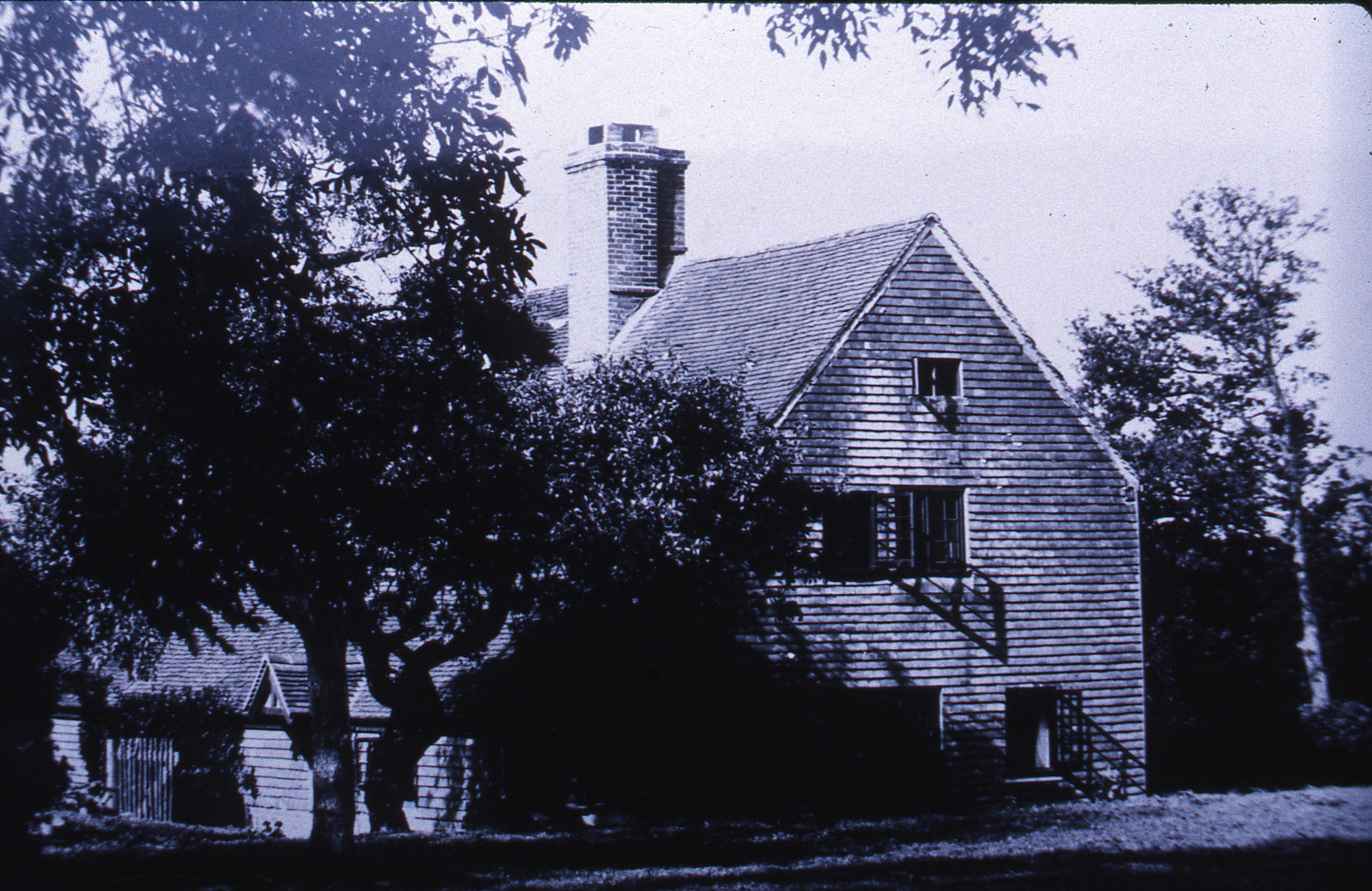
For how long Wright and Prickett had The Warren is not known, but it does not appear to have been used as a furnace after about 1774. Fairly soon after, it was converted into a water mill, for it was described as such in 1782, and it was still there when the Tithe map was drawn in 1841, although its history is not known after that. The legacy of this last period of activity is to be seen beneath the undergrowth in Furnace Wood. The pond bay, or dam, collapsed in about 1865, perhaps putting an end to the mill there, and it was not restored until after the Great War. Lionel Robinson had bought the pair of cottages that had probably been erected by Raby for two of his key workmen and their families, and in the process of repairing the breach in the bay, which had been attempted unsuccessfully during the war, apparently with the assistance of some German prisoners of war, he discovered some of the original wooden flumes that carried the water to the furnace water wheel. Older residents of Furnace Wood recall the evidence of a culvert which carried the water away from the furnace, and which had a series of brick lined inspection shafts. But even nowadays there is plenty of the glassy green slag to be seen, together with a great deal of brick and timber in the stream. The former cottages survive, much altered, as the house called ‘Furnace’.
The ironworkers’ cottages at Warren Furnace, as they were in about 1920
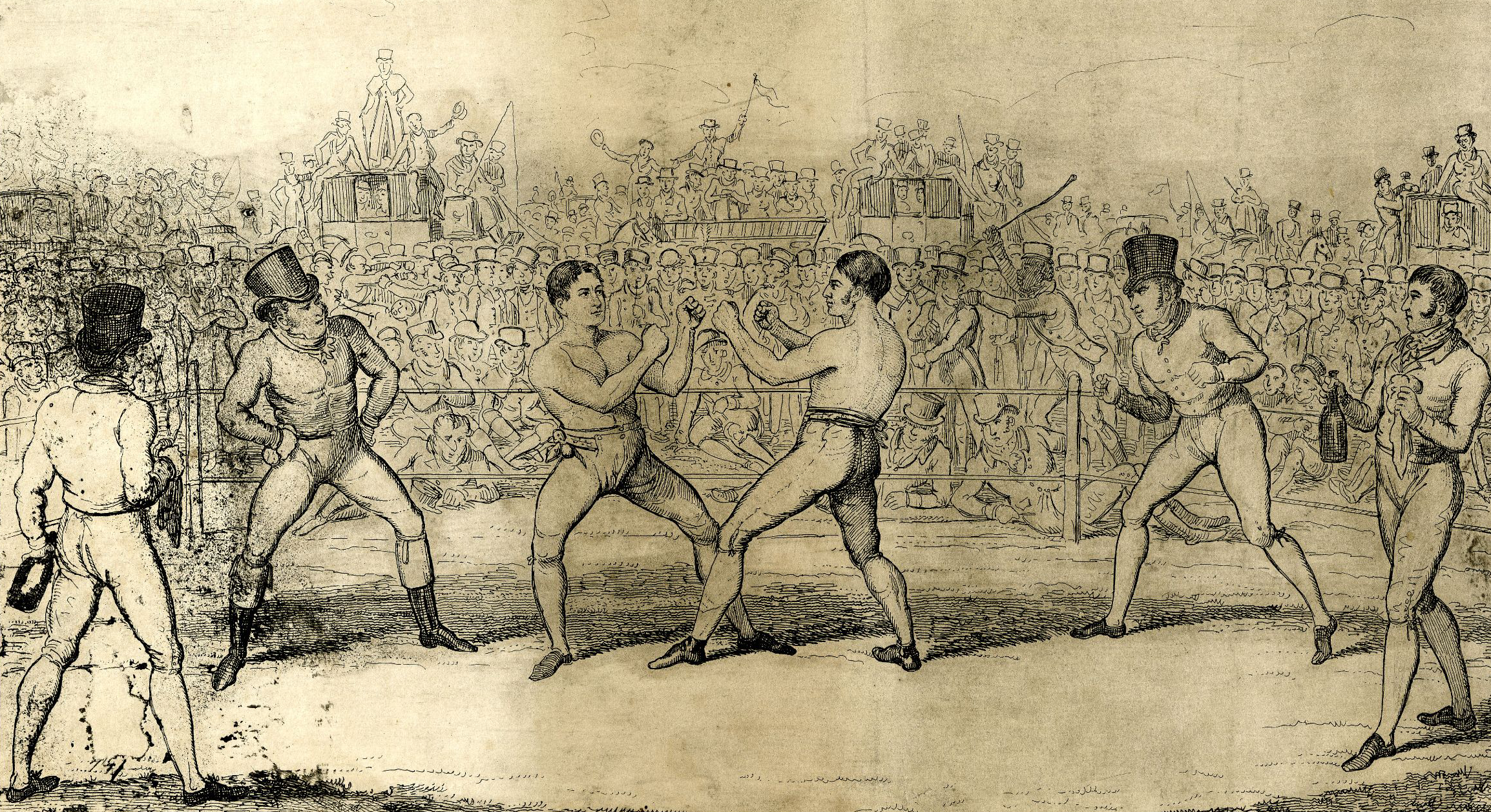
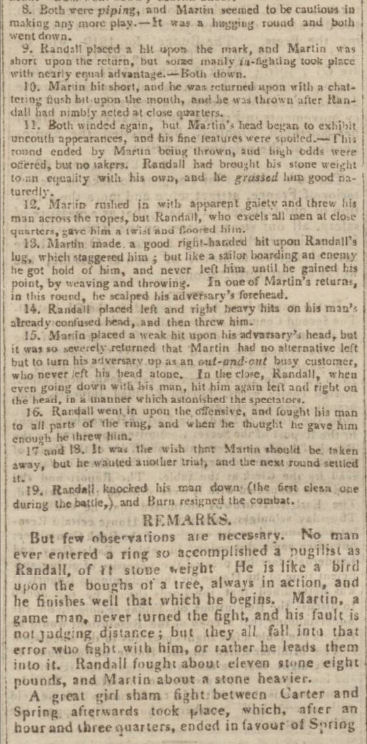
The match between Jack Randall and Jack Martin at Crawley Down, 4th May 1819
In the early 1970s, for about ten years, the Royal Oak public house in Crawley Down was renamed ‘The Prizefighters’. For that short time there was a tangible reminder in the village of the brief period in the first quarter of the nineteenth century when Crawley Down achieved fame and notoriety as a venue for prizefighting.
The sport of prizefighting grew in popularity throughout the second half of the eighteenth century, almost as a consequence of being made illegal in 1750. By the beginning of the 1800s, when Britain was at war with Napoleon, it had become a craze, with a following drawn from all levels of society. It was an almost uniquely British and colonial sport, which characterised in the minds of its devotees a patriotic brand of rugged manliness which would, they were convinced, be the ruin of Bonaparte. The boxers, or pugilists, came from humble stock, and their trades often gave them their distinctive nicknames: the Gas Man, the Master of the Rolls, the Navigator, etc. There was a strong following from the poorer sections of society, but the rich regarded prizefighting, as they did cock fighting or horse racing, as an opportunity for the excitement of the wager. In the order of £200,000 was bet on the outcome of Randall and Martin’s fight on Crawley Down in 1821.
It was with the wealthy clientele in mind that Crawley Down became a popular venue. It lay close to a turnpike road, about half way between London and Brighton, the twin centres of fashion during the Regency and the reign of George IV. Access along the lanes, however, cannot have contributed to its attraction, Sussex roads being notorious for their ghastliness. Many are the accounts of wrecked and stranded carriages and gigs seen on the morning after a fight. ‘The ring was at the end of a long, rutty and dangerous lane,’ wrote Pierce Egan of the approach to Hophurst Farm. A redeeming feature seemed to be the condition of the Down: ‘The situation was … on a rising ground; and although the weather was unfavourable [in December 1818], the turf remained in excellent order. Hundreds lay upon it regardless of the damp state of the weather.’ Egan went on to observe that ‘health or the catching of colds were not put into competition with the anxiety felt by the amateurs to see and be near to the fine tactics displayed by these renowned pugilists.’
The ‘amateurs’ were the gentlemen spectators for, in keeping with the colourfulness of its followers, prizefighting had a language all its own. The followers were ‘the fancy’ and a fight was ‘a mill’. Much of this jargon was cultivated by the sports writers of the time who, without the aid of the camera, not only had to describe the events of a prize-fight to their readers, but also the atmosphere. Regency dandies were famous for their eccentricities, and journalists of the period wrote for their readers in a style which has its modern successors.
Crawley Down, also variously known as Crawleys Down, Crawley Downs, Crawley Heath or Crawley Hurst, was not the only prizefighting venue in the area. On Copthorne Common, on December 18th 1810, the champion of England, Tom Cribb, defeated the black American, ex-slave, Tom Molyneaux, in one of the most celebrated prize-fights. There were several other prize-fights at Copthorne, as there were at Lowfield Heath, north of Crawley, and at Blindley Heath, north of East Grinstead. Sometimes the venues are confused in contemporary accounts. According to Boxiana, the fight between Tom Hickman and Tom Oliver in June 1821, took place at Blindlow (sic) Heath. However, it also stated that this location was part of Tilgate Forest, and only three miles from Crawley. A later reference in the same book says that the fight took place at Crawley Down.
Travel in those days being slow and it being about 30 miles between London or Brighton and Crawley Down, a night’s stop-over was generally necessary either before or after a fight. The large influx of spectators sought accommodation far afield, and it was not unknown for all available lodging in East Grinstead, Reigate, Godstone and Bletchingly to be taken up by early evening. Local residents did well out of this sudden demand for rooms. ‘The simple Johnny Raws, who felt no hesitation in sitting up all night if they could turn their beds to account, with much modesty only asked £1 and 15 shillings each for an hour or two’s sleep.’
With the quantity of traffic about it is a wonder that any slept at all. The ‘swells’ and ‘brilliants’ aimed to do the round trip in a day, but it was often their buggies and barouches that came to grief, racing through the mud and slush. ‘It is supposed that if the carriages had all been placed in one line they would have reached London from Crawley …’ has often been quoted, and it amply illustrates the thousands who attended many of the fights on Crawley Down, and not merely the one between Randall and Martin, in May 1819, to which it actually refers.
One problem which had always to be borne in mind by the organisers of prize-fights was the law. Because they were illegal, the fights were invariably held on lonely commons, and the venue was kept secret until only one or two days beforehand. This sometimes made it difficult for the poorer spectators, who did not have access to private transport, to reach the venues in time. The Justices of the Peace in different counties varied in their view of the sport. In his book, Rodney Stone, Sir Arthur Conan Doyle portrayed the Sussex magistrates as not prepared to ‘turn a blind eye’, but there are dangers in setting store by works of fiction. Conan Doyle placed Crawley Down in Surrey, six miles from the Sussex border, and seven miles from Hampshire; closer to the Godalming area, and some 30 miles west of its true location.
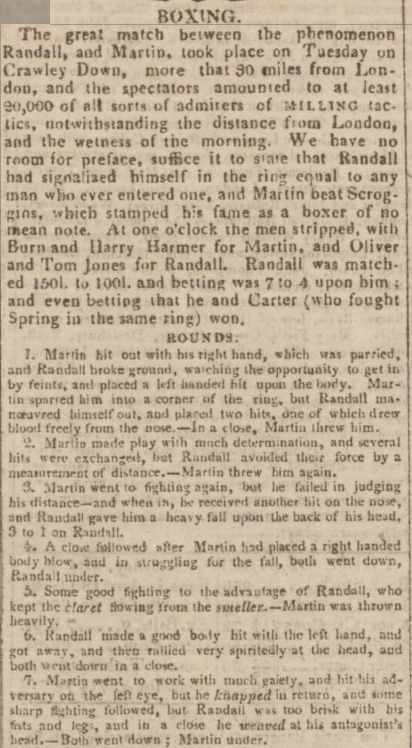
Newspaper report of Randall and Martin’s bout on Crawley Down on the 4th May 1819 (Sussex Advertiser 10 May 1819)
Of the fights themselves, the impression gained from the eyewitness accounts is that many of them were of immense length. The reason for this lies in the rules that were followed. Instead of fights of a fixed length, with a set number of rounds, they lasted as long as the boxers did. Rounds lasted until one boxer was knocked down. If either fighter did not come out of his corner after half a minute, the bout ended and the other was declared the winner. Some fights were over very quickly, as they can be in modern boxing. When Cooper fought Dent at Crawley Down in 1821, Cooper was bribed to make the fight last a little longer for the sake of the spectators, although he had virtually won after one round. As it was, he gave value for money and Dent did not come back after round seven. Rounds could be very short; Sampson beat Belasco in 1823 in 24 rounds, but it took only 24 minutes. Some bouts lasted a very long time. It took champion Tom Spring one hour and 55 minutes, and 71 rounds, to defeat Jack Carter. Both boxers were so exhausted that it was only by dint of remaining on his feet for slightly longer that Spring came through as the victor. On that particular occasion the crowd had good entertainment, having previously watched Randall beat Martin in 19 rounds. Unluckier were the spectators in June 1821 who also watched two fights but had to make do with a mere sixteen rounds between them. The lack of time limit on bouts meant that there could be a good deal of time wasting. It was a full five minutes before Randall and Turner came to blows and, perhaps for this reason the fight lasted all of 2 hours and 19 minutes for 34 rounds. The third round alone took thirteen minutes, and Tom Owen, one of Turner’s seconds, was recommended to have pipe to while away the time!
Not all the tactics in prizefighting have their parallels in modern boxing. Some were more similar to all-in wrestling than to the Queensbury Rules. An example is the ‘suit in chancery’ whereby a boxer would grip his opponent round the neck, underarm, holding him there to punch him until he broke loose or dropped.
The traditional site for the prize-fights at Crawley Down was a field just south of the entrance to Grange Farm, but it is difficult to visualise how any of the fields in the vicinity could have accommodated the thousands of people who are reported to have attended some of the fights. Also it seems unlikely that farmland would have been used with common land so close at hand. On report describes the prize-ring as in ‘the amphitheatre on Crawley Downs’. For the fight between Randall and Martin in 1821, a field was chosen on land belonging to a Mr Jarvis, a game purveyor, about a mile from East Grinstead. Thomas Jarvis was tenant of Hophurst Farm in 1817 and John Jarvis was the tenant in 1819, so it is likely that this was the venue. It appears that Jarvis, with the collusion of Bill Gibbons, one of the organisers, intended charging an admission fee of each spectator. The idea met with considerable opposition and it was decided, at the last minute, to move the venue to Crawley Down itself, though not before many had paid.
Of the boxers, Jack Randall, nicknamed ‘The Nonpareil’, stands pre-eminent among those who fought at Crawley Down. He won three of his undefeated record of twelve fights, on the Down, and attracted some of the largest crowds, for
‘…the favourite boy, they all agree And his name it is Jack Randall, O!’
P. Egan, Boxiana, vol. 3 (1821)
Thomas Moore, the Irish poet and lyricist, and friend of Lord Byron, recorded in his journal that he went to watch Randall’s match against Turner in 1818. Turner’s face, he wrote, was ‘a good deal dehumanised’ but Randall’s had hardly a scratch. He also noted the predominantly male audience, musing that ‘had there been a proportionate mixture of women in the immense ring formed around, it would have been a very brilliant spectacle’. Pigeons were let off at intervals, with dispatches, presenting a picturesque sight with as many as half a dozen taking wing at once. It is said that John Keats, the poet, was brought to see Randall beat Martin in 1819, to take his mind off the death of his brother, Tom. Undoubtedly Randall’s outstanding fight was probably his shortest. He had declared that if ever his friend, Ned Turner, ‘The Out-and-Outer’, was defeated in the prize-ring he would defeat the victor. Accordingly, when Jack Martin beat Turner at Crawley Down in June 1821, Randall challenged Martin for a purse of £300, despite having been out of the ring for two years. The odds were on Martin, ‘The Master of the Rolls’ (he was a baker), but the fight was over in one round, with Martin being carried unconscious to a nearby farmhouse after suffering a ‘suit in chancery’ from Randall.
Martin also fought three times at Crawley Down, although his only victory there was over Ned Turner, which so provoked Randall. Other famous pugilists who fought on the Down were Tom Belcher, Dan Donnelly and Tom Spring. Belcher, the brother of Jem Belcher, was a Bristolian and belonged to a slightly earlier period of prizefighting. His bout against Silverthorne in 1811 was ten years before the heyday of the Down. As still happens today, Belcher retired from the ring to become the landlord of a pub.
‘Sir’ Dan Donnelly, who was supposedly knighted by the Prince Regent, was Irish champion and his fight against Tom Oliver was watched by many of his countrymen. Donnelly was known for his sportsmanship, but his skill had been somewhat of an unknown quantity until he disposed of Oliver using only his left hand. Thomas Winter, who adopted the additional name of Spring, was the successor to Tom Cribb as champion of England, a title to which Jack Randall could never aspire as he was a light-heavyweight. Spring eventually took over the Castle Inn, Holborn, from Tom Belcher.
Crawley Down was a major prizefighting venue for a mere five years, but in that time its name became synonymous with huge crowds and an atmosphere of great occasion. Henry Miles described the morning before a Berkshire prize-fight in 1829 when ‘…carriages, post chaises and gigs kept pouring through the town of Maidenhead all the morning in an almost uninterrupted line, reminding men of the days when Crawley Downs was the favourite resort of the Fancy.’
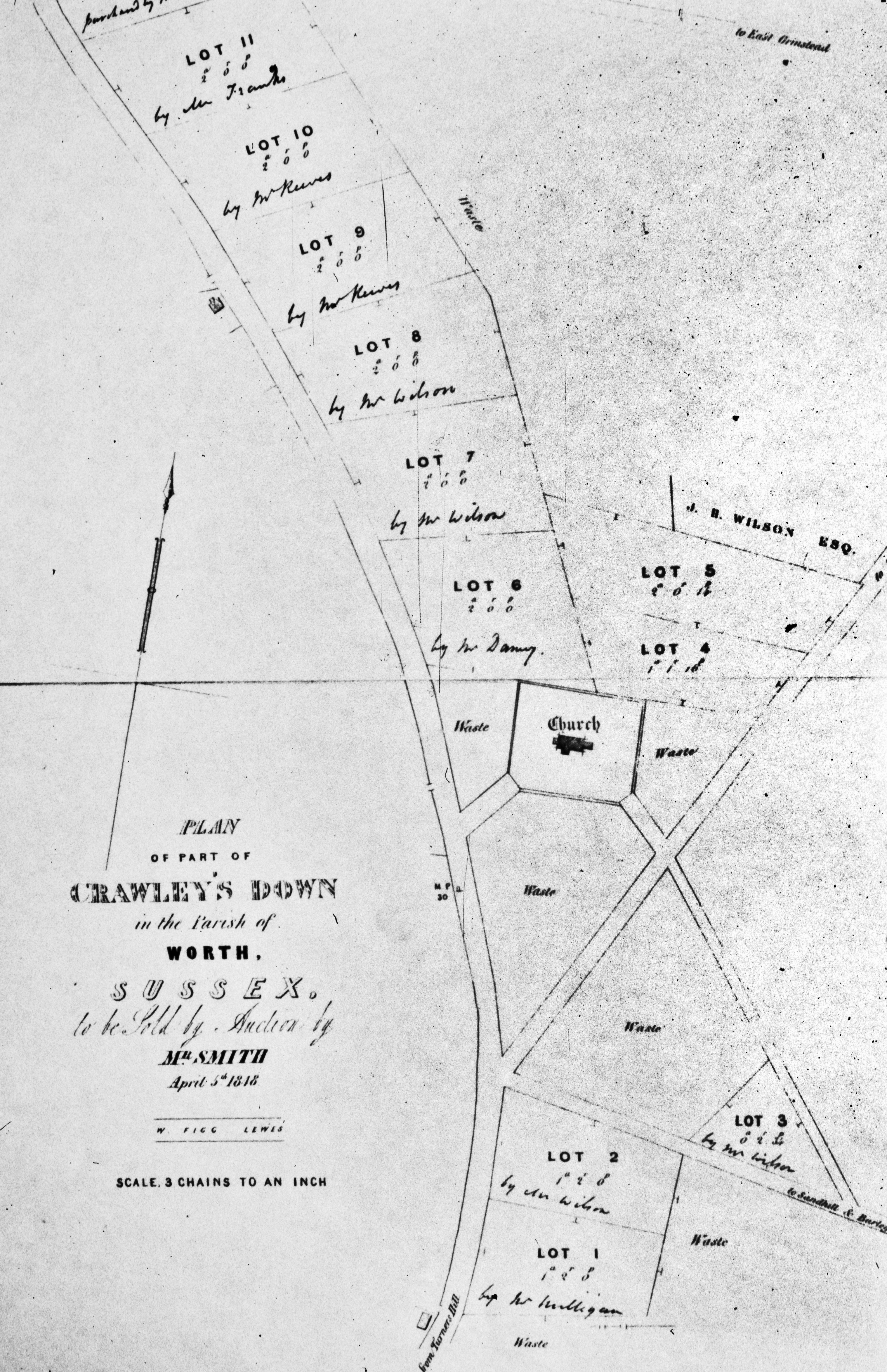
On 5th April 1848, at the Red Lion, Turners Hill, an auction took place which was to be significant in the growth and development of the village of Crawley Down. That afternoon, at two o’clock, twelve parcels of land went under the hammer. Ten of them were sold for around £35 per acre; among them being all the land along the Turners Hill road between Sandy Lane and Vicarage Road, with the exception of the part where the school was subsequently to be built. Most notable at the time, however, must have been the sale of the remaining two lots, of about one and a half acres apiece, along the same side of the road, but to the south of Vicarage Road. In what was rather euphemistically described at the time as ‘a spirit of opposition’ these two lots were sold to John Hewetson Wilson and Charles Milligan, respectively, for £160 and £162; an average price of more than £100 an acre! History does not bequeath to us the background to this ‘spirit of opposition’ but it was to have prolonged consequences.
The plan of lots sold at the auction on 5th April 1848; lots 1 and 2 were the ones in dispute
Mr Milligan promptly built what is now Bankton Lodge on his plot, as an entrance lodge for his house sited where Bankton was to be built some fifteen years later (see The House before Bankton). Mr Wilson did nothing. He was later to claim that it had been his intention to do the same as Milligan, and to build a lodge for his own home, the Grange, but that his plans were delayed by the death of his only surviving son James, a promising young botanist, at the early age of 23.
What had clearly not perturbed Wilson was that plans, for a railway to cut through his newly acquired piece of land had been in existence since the passing, in 1846, of the first East Grinstead Railway Act. That Act was presumably expected to expire for lack of progress, as indeed it did. But what Wilson did not bargain for was the resurrection of those plans, to build a railway from Three Bridges to East Grinstead, so soon after the failure of the earlier attempt.
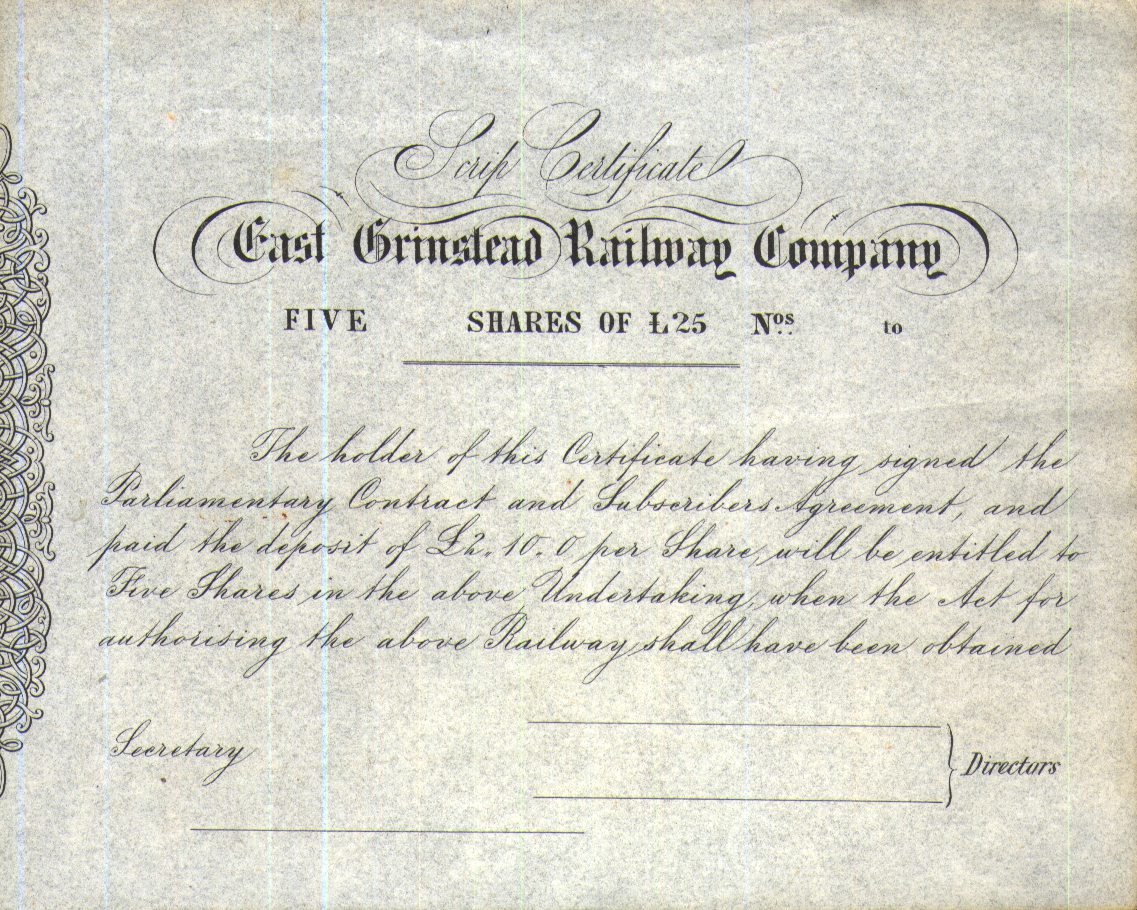
An unused share certificate of the East Grinstead Railway Company
Using the 1846 plans, slightly modified, the East Grinstead Railway Company was formed in the summer of 1852 and Mr Wilson, as a landowner on the route, was duly notified. In a remarkably short time, a contractor was chosen and his estimate of £47,000 agreed. Wilson, however, had already made his objections known, and the Company, and officials from the London, Brighton and South Coast Railway, who were in charge of the project, made every effort to accommodate him. Mr Jacomb Hood, the Chief Engineer, drew up a plan for a tunnel under Crawley Down, largely avoiding Wilson’s land, but Mr. Wythes, the Reigate-based contractor, objected. Wilson suggested a re-routing further north, but this would have entailed a much wider bridge to take the Vicarage Road-Turners Hill Road junction, and it would have made the curve there too sharp for the station they had proposed for Crawley Down. Despite this the suggestion was seriously considered by the Company, as delay was proving embarrassing. Wilson continued to object, as the railway would still pass through the land for which he had paid so much. He employed an engineer, a Mr. Brindley, to draw up an alternative plan, going back to the idea of a wider road bridge and introducing the idea of a goods yard on Wilson’s land. This was rejected by the Company as, in the meantime, they had come to an agreement with Sir Curtis Lampson to build a station at Rowfant, and therefore the cost of a station at Crawley Down was now out of the question.
By the summer of 1853, the second East Grinstead Railway Act had been passed and Wilson had been served with the equivalent of a compulsory purchase order. Time was running out. Work had started on the line and still Wilson ‘dug in his heels’. It should be pointed out at this stage that Wilson had no objection to the railway passing through the thirteen acres he owned on the west of the main road, or indeed to any land other than the precious acre and a half his ‘spirit of opposition’ had cost him. William Peerless, the Company’s Secretary, observed to Wilson that a cutting would be better than an embankment, but such was Wilson’s mood that he said he would have preferred an embankment! By 1854, the matter had gone to arbitration.
Charles Marchant, the surveyor appointed by the magistrates, valued all the four and a half acres which Wilson would lose to the railway at £524. Wilson claimed a staggering £5448 17s 6d. Despite the various plans and counterplans which had been put forward by the railway company and by Wilson, there had been no agreement and, even before the case had gone to arbitration, the Company had taken possession of the piece of land which had been at the root of the problem, and had paid into the Bank of England the £524. It therefore remained for Wilson to exact what reparation he could for his loss.
Mr Wilson rested his case heavily on the damage the railway would do to his land. He claimed that it was affecting the drainage, a fact refuted by local people. He claimed that valuable building stone was being removed, but Wilson’s near neighbour, Benjamin Chandler, a stone mason, testified that local stone was of indifferent quality and that there was little demand. And Wilson claimed that the water level in an ornamental fish, pond (now the lake in the grounds of Bankton) had been affected. but it was pointed out by the Company that, until about five years before, this had been a parish gravel pit and generally dry in the summer months. All in all, Wilson’s claims were seen as unreasonable and, bearing in mind that his objections almost entirely hinged on the particular piece of land he had paid so dearly for, his claim was not met. Nevertheless, the Board of Trade assessor, Mr. Powell, allowed Wilson £1400 which, although a high price, the Company felt bound to accept with relief as the opening of the line was, by then, less than six months away, in July 1855.
Mr Wilson did manage to salvage some credit from the controversy. Another effect of the excavation of the cutting beneath the Turners Hill Road was the disappearance of a public open space upon which the people of the neighbourhood had been able to play cricket or football. As compensation for the loss, in 1857 Mr Wilson acquired a piece of land from Sir Percy Shelley and made it available for public use. Thus the cricket field in Sandy Lane come into being. It was originally intended that it would be placed in the hands of trustees in perpetuity but that never happened, though eventually Mr Wilson’s great-great niece, Miss Louisa Buckley, gave it to the Parish Council in the 1930s.
Crawley Down did, of course, get its station in 1860, but it was further east than it was originally proposed, and it was built, ironically, with the encouragement of Mr Wilson’s nephew, Richard Wilson Buckley, who in 1862 was to inherit the Grange estate. The line, and Grange Road Station as it was to be called, remained open until January 1967.
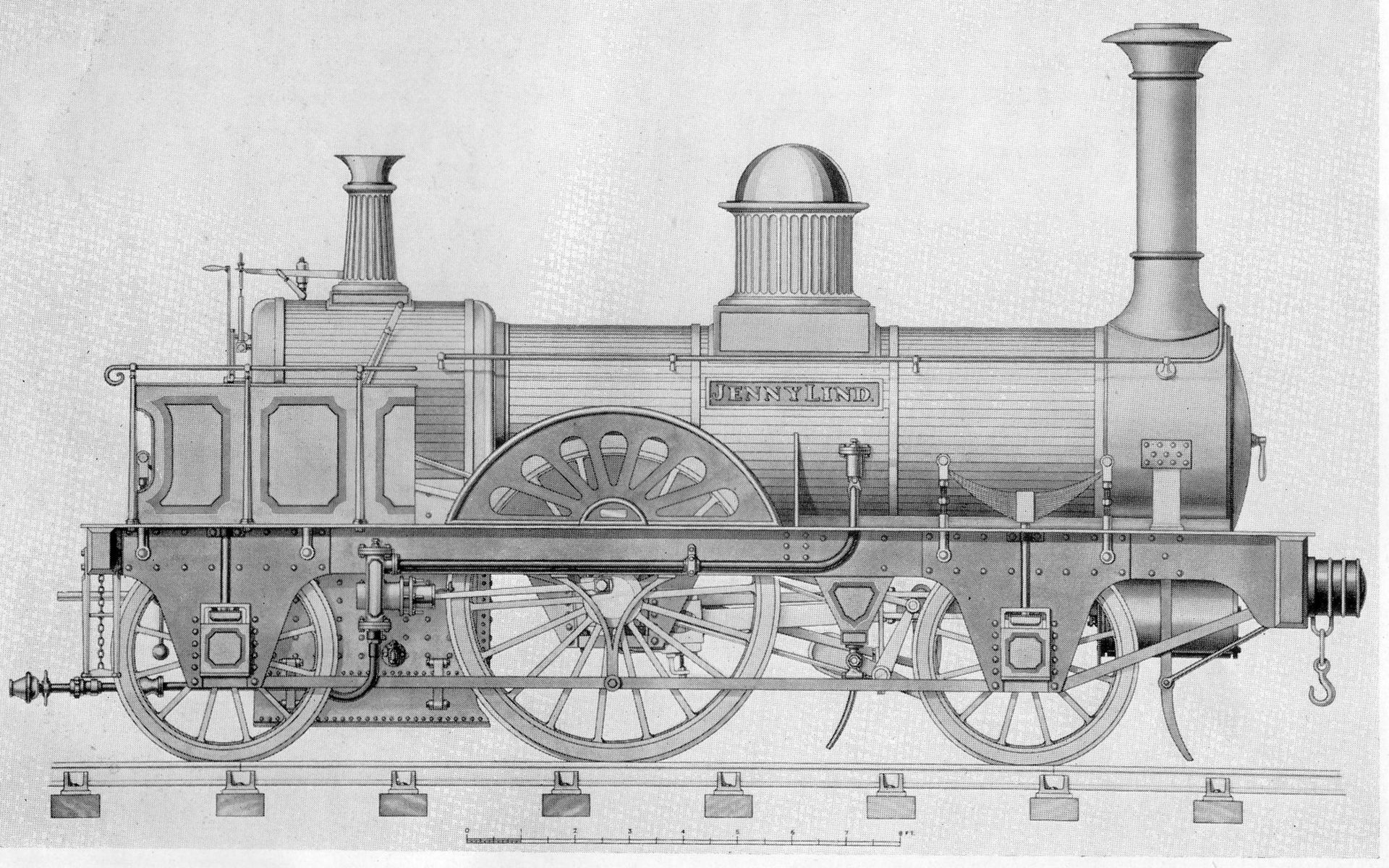
An early locomotive built for the London, Brighton and South Coast Railway, which might have been seen passing through Grange Road station